Proposition 90 Decried at Economic Group Breakfast
By Ben Antonius
VACAVILLE - The future under Proposition 90 is none too cheery, according to speakers at Wednesday morning's Solano Economic Development Corp. breakfast.
That was the general message of the session, which addressed the ramifications of eight of the 13 voter initiatives on the Nov. 7 ballot. Like many lobby groups statewide, the Solano ED has come out in strong opposition to the proposition.
If successful, Proposition 90 would wind up costing the state tens of billions of dollars in lawsuits and cripple the operation of local governments, predicted Chris McKenzie, executive director of the League of California Cities.
The ballot measure would limit the government's ability to seize private property and would allow compensation to anyone whose property is negatively affected by a government decision.
That has many worried, including McKenzie, who said it would lead to frivolous lawsuits, increased energy and transportation costs because of land-acquisition issues and be the demise of urban planning.
"Even things you would never think would result in compensation claims will do that under 90," he said. "This is a constitutional amendment, so once it's in there it would be very hard to change."
The Yes on 90 campaign is being bankrolled by Howie Rich, a New York-based land developer and property-rights activist. Proponents have argued that the government should not force people to use their land a certain way and have pointed to recent controversial decisions on eminent domain to suggest the power is being misused.
McKenzie's talk coincided with the debut of ad campaign by No on 90. The measure has drawn an unusually wide consortium of opponents around the state, including taxpayer and environmental groups, labor groups, both U.S. senators and dozens of local government officials.
Several other ballot initiatives were covered during the meeting by speaker Dan Sharp, including several bond initiatives that would provide billions for schools, roads and security and smaller sums for a variety of other items.
Sharp also gave the audience a summary of how the various measures are doing in recent polls: Proposition 1A is doing well and many of the bonds are not. Proposition 90 has been leading as well, he said, adding that "a lot can change in a month in politics."
Reach Ben Antonius at 427-6977 or bantonius@dailyrepublic.net.
Thursday, October 12, 2006
Wednesday, October 11, 2006
Genentech Soars
Genentech Soars
Profits Surge by 58 Percent
By Paul Elias/AP Biotechnology Writer
SAN FRANCISCO - Third-quarter profits for biotechnology company Genentech Inc. surged 58 percent due to strong drugs sales and the introduction of a new treatment for an eye disorder, the company announced Tuesday.
South San Francisco-based Genentech (which has a facility in Vacaville) reported a profit of $568 million, or 53 cents a share, for the quarter, compared to $359 million, or 33 cents a share, for the same period last year.
If not for special expenses, including employee stock options, the company said it would have earned $637 million, or 59 cents a share. On that basis, the company exceeded Wall Street analysts' expectations by 8 cents a share, according to research firm Thomson Financial.
The company said it expected earnings per share to grow by 65 percent to 70 percent for the full year.
Revenue rose 36 percent to $2.39 billion for the quarter, largely because of the continued popularity of Genentech's pricey cancer-fighting drugs. The sales of non-Hodgkin's lymphoma treatment Rituxan rose 12 percent to $509 million for the quarter while sales for its colon cancer staple Avastin shot up 34 percent to $435 million.
The Food and Drug Administration approved the drug in 2004 for use by the sickest colon cancer patients. But a number of recent scientific studies show it's likely to combat several other forms of cancer, including cancers of the lung and breast.
However, the Food and Drug Administration demanded more scientific data before it approved Avastin for treating breast cancer. The company said it hopes to reapply in the middle of next year.
Avastin is designed to choke the blood supply that feeds tumors and is the first drug of its kind to be approved by the FDA. When used with chemotherapy, it extends the life of the sickest patients by an average of about five months.
Analysts expect the drug, which costs each patient about $4,400 per month, to surpass $2 billion in annual sales by 2007.
Company executives said on a conference call with analysts that they hope to receive FDA approval as soon as today to use Avastin for lung cancer.
The company's newest drug, eye-disease treatment Lucentis, had sales of $153 million in the quarter. The Food and Drug Administration approved Lucentis on June 30. It is rapidly becoming the primary treatment for macular degeneration, the leading cause of blindness among the elderly.
Genentech shares fell 68 cents, or 0.8 percent, to close Tuesday at $85.60 on the New York Stock Exchange. In extended trading, after the release of the results, the shares were down $1.25, or 1.5 percent.
Profits Surge by 58 Percent
By Paul Elias/AP Biotechnology Writer
SAN FRANCISCO - Third-quarter profits for biotechnology company Genentech Inc. surged 58 percent due to strong drugs sales and the introduction of a new treatment for an eye disorder, the company announced Tuesday.
South San Francisco-based Genentech (which has a facility in Vacaville) reported a profit of $568 million, or 53 cents a share, for the quarter, compared to $359 million, or 33 cents a share, for the same period last year.
If not for special expenses, including employee stock options, the company said it would have earned $637 million, or 59 cents a share. On that basis, the company exceeded Wall Street analysts' expectations by 8 cents a share, according to research firm Thomson Financial.
The company said it expected earnings per share to grow by 65 percent to 70 percent for the full year.
Revenue rose 36 percent to $2.39 billion for the quarter, largely because of the continued popularity of Genentech's pricey cancer-fighting drugs. The sales of non-Hodgkin's lymphoma treatment Rituxan rose 12 percent to $509 million for the quarter while sales for its colon cancer staple Avastin shot up 34 percent to $435 million.
The Food and Drug Administration approved the drug in 2004 for use by the sickest colon cancer patients. But a number of recent scientific studies show it's likely to combat several other forms of cancer, including cancers of the lung and breast.
However, the Food and Drug Administration demanded more scientific data before it approved Avastin for treating breast cancer. The company said it hopes to reapply in the middle of next year.
Avastin is designed to choke the blood supply that feeds tumors and is the first drug of its kind to be approved by the FDA. When used with chemotherapy, it extends the life of the sickest patients by an average of about five months.
Analysts expect the drug, which costs each patient about $4,400 per month, to surpass $2 billion in annual sales by 2007.
Company executives said on a conference call with analysts that they hope to receive FDA approval as soon as today to use Avastin for lung cancer.
The company's newest drug, eye-disease treatment Lucentis, had sales of $153 million in the quarter. The Food and Drug Administration approved Lucentis on June 30. It is rapidly becoming the primary treatment for macular degeneration, the leading cause of blindness among the elderly.
Genentech shares fell 68 cents, or 0.8 percent, to close Tuesday at $85.60 on the New York Stock Exchange. In extended trading, after the release of the results, the shares were down $1.25, or 1.5 percent.

Economic Development Corp to Host Discussion on Prop. 90
Economic Development Corp to Host Discussion on Prop. 90
By Ben Antonius
VACAVILLE - As voters work through the 192-page election guide, there are some things local governments want them to know.
The Solano Economic Development Corp. will host a morning discussion of eight of the 13 initiatives on the November ballot. The event, which costs $20, starts at 8 a.m. at Travis Credit Union in Vacaville.
The focus of the event is Proposition 90, a sweeping initiative that would dramatically limit a government's power to forcibly acquire land and regulate or change land-use designations.
Proponents have promoted the proposition as a ban on the eminent domain power, but government advocates say it would be too expensive and cripple their ability to plan their cities.
"Proposition 90 will not only stifle business development and public works projects, but will impact the quality of life in a community and the creation of good jobs," said Solano EDC President Mike Ammann in a statement.
Speaker Dan Sharp will also discuss several other initiatives, including one that would require that gas tax money be spent on road improvements and other infrastructure projects.
He also criticized Proposition 87, which would tax oil companies to fund the creation of alternative energy sources.
"No matter what you think of the oil companies this is a tax on oil production and if anybody thinks they are not going to pass that along to us at the pump they are fooling themselves," he said. "That will certainly have an impact on our economy."
Reach Ben Antonius at 427-6977 or bantonius@dailyrepublic.net.
At a glance:
Who: Solano Economic Development Corp.
What: Discussion of voter initiatives on the Nov. 7 ballot
When: 8 a.m.
Where: Travis Credit Union, 1 Travis Way, Vacaville
Info: 865-1855
By Ben Antonius
VACAVILLE - As voters work through the 192-page election guide, there are some things local governments want them to know.
The Solano Economic Development Corp. will host a morning discussion of eight of the 13 initiatives on the November ballot. The event, which costs $20, starts at 8 a.m. at Travis Credit Union in Vacaville.
The focus of the event is Proposition 90, a sweeping initiative that would dramatically limit a government's power to forcibly acquire land and regulate or change land-use designations.
Proponents have promoted the proposition as a ban on the eminent domain power, but government advocates say it would be too expensive and cripple their ability to plan their cities.
"Proposition 90 will not only stifle business development and public works projects, but will impact the quality of life in a community and the creation of good jobs," said Solano EDC President Mike Ammann in a statement.
Speaker Dan Sharp will also discuss several other initiatives, including one that would require that gas tax money be spent on road improvements and other infrastructure projects.
He also criticized Proposition 87, which would tax oil companies to fund the creation of alternative energy sources.
"No matter what you think of the oil companies this is a tax on oil production and if anybody thinks they are not going to pass that along to us at the pump they are fooling themselves," he said. "That will certainly have an impact on our economy."
Reach Ben Antonius at 427-6977 or bantonius@dailyrepublic.net.
At a glance:
Who: Solano Economic Development Corp.
What: Discussion of voter initiatives on the Nov. 7 ballot
When: 8 a.m.
Where: Travis Credit Union, 1 Travis Way, Vacaville
Info: 865-1855
Dixon Council Discusses Race Track Proposal, But Not Decision
Dixon Council Discusses Race Track Proposal, But Not Decision
By Ian Thompson
DIXON - The Dixon City Council started its own deliberations over whether to approve building a race track in town with all the care of a soldier gingerly feeling his way through a minefield.
After three hours of going through the environmental impact report point-by-point, the council still had not gotten to debating a proposed development agreement with the track's developer as of 10 p.m.
"This is not a no-brainer. This is the most difficult decision I have ever made on this board," said councilman Loren Ferrero, a sentiment with which the other councilmembers agreed.
Mayor Mary Ann Courville reiterated that a lot of work and public testimony has gone into the race track proposal, and that "Dixon will survive with or without this project."
Councilwatchers, both for and against the proposed Dixon Downs race track, did not expect a decision Tuesday but are hoping for one on Friday when the council meets again in special session.
It is now up to the council to vote on changing the city's general plan and rezoning a 260-acre site in northeast Dixon next to Interstate 80 to allow Canadian-based Magna Entertainment to build the Dixon Downs racetrack complex.
Magna wants to build what it says will be a state-of-the-art racetrack that will bring money and jobs to Dixon as well as jump-start commercial development of the city's northeast quadrant.
The track is the first phase of a complex that will also have a hotel, good restaurants and a pedestrian-friendly shopping area.
On Tuesday, Courville sounded the most supportive of the council, saying she was impressed with an agreement between Magna and construction unions over an apprenticeship program to help Dixon youth.
She also pointed out that Magna's project will put in the water, sewer and other infrastructure that will allow more development of the city's largely vacant northeast quadrant.
Councilman Michael Smith addressed public suggestions that the land could have gone to other industries noting that Magna was the only one that did not ask for large subsidies to develop.
He noted that commercial projects in Vacaville such as Genentech and the new Nut Tree were possible only with significant city redevelopment funding.
"Dixon felt that development has to pay its own way," Smith said. "That is why we don't have all the things on the public's wish list."
Its supporters state the track will make Dixon a regional entertainment destination that is a more productive use for the land than what was proposed before.
The track's opponents say the track will bring traffic congestion to northern Dixon, create more crime and harm the community's small-town feel without living up to the promises of economic prosperity that Magna has made.
Reach Ian Thompson at 427-6976 or at ithompson@dailyrepublic.net.
By Ian Thompson
DIXON - The Dixon City Council started its own deliberations over whether to approve building a race track in town with all the care of a soldier gingerly feeling his way through a minefield.
After three hours of going through the environmental impact report point-by-point, the council still had not gotten to debating a proposed development agreement with the track's developer as of 10 p.m.
"This is not a no-brainer. This is the most difficult decision I have ever made on this board," said councilman Loren Ferrero, a sentiment with which the other councilmembers agreed.
Mayor Mary Ann Courville reiterated that a lot of work and public testimony has gone into the race track proposal, and that "Dixon will survive with or without this project."
Councilwatchers, both for and against the proposed Dixon Downs race track, did not expect a decision Tuesday but are hoping for one on Friday when the council meets again in special session.
It is now up to the council to vote on changing the city's general plan and rezoning a 260-acre site in northeast Dixon next to Interstate 80 to allow Canadian-based Magna Entertainment to build the Dixon Downs racetrack complex.
Magna wants to build what it says will be a state-of-the-art racetrack that will bring money and jobs to Dixon as well as jump-start commercial development of the city's northeast quadrant.
The track is the first phase of a complex that will also have a hotel, good restaurants and a pedestrian-friendly shopping area.
On Tuesday, Courville sounded the most supportive of the council, saying she was impressed with an agreement between Magna and construction unions over an apprenticeship program to help Dixon youth.
She also pointed out that Magna's project will put in the water, sewer and other infrastructure that will allow more development of the city's largely vacant northeast quadrant.
Councilman Michael Smith addressed public suggestions that the land could have gone to other industries noting that Magna was the only one that did not ask for large subsidies to develop.
He noted that commercial projects in Vacaville such as Genentech and the new Nut Tree were possible only with significant city redevelopment funding.
"Dixon felt that development has to pay its own way," Smith said. "That is why we don't have all the things on the public's wish list."
Its supporters state the track will make Dixon a regional entertainment destination that is a more productive use for the land than what was proposed before.
The track's opponents say the track will bring traffic congestion to northern Dixon, create more crime and harm the community's small-town feel without living up to the promises of economic prosperity that Magna has made.
Reach Ian Thompson at 427-6976 or at ithompson@dailyrepublic.net.
Tuesday, October 10, 2006
Arrested Development -- Elmira Enjoys Unfettered, Quiet Life
Arrested Development -- Elmira Enjoys Unfettered, Quiet Life
By Barry Eberling

An old Ford truck finds its resting place in rural Elmira. (Gary Goldsmith/Daily Republic)
Editor's note: Solano County in the late 1800s had a half-dozen additional towns trying to become the next Big Thing, only to disappear or enter long twilights. But these towns are more than colorful stories from the county's Wild West past. Some linger today as peaceful places threatened by subdivisions creeping from nearby cities. Others are remote and all-but-forgotten, yet are still candidates to play in important role in the county's future. This series is about Solano County towns that disappeared or faded. Today's installment looks at Elmira.
ELMIRA - Lupe Torres is a newcomer to one of Solano County's rare old towns that through the decades neither grew rapidly to become a city nor faded into oblivion: Elmira.
He's worked at "The Cabin" bar for seven years, but only in December 2005 did he move to Elmira. He preferred the quiet, small town to the bustling suburbs.
"I lived in Vacaville, but it's getting too crowded over there," Torres said recently as he did maintenance work on the roof of the bar, one of Elmira's few businesses. "I found a place over here. I jumped at the chance."
He now lives in a town without sidewalks, where one yard has roosters strutting through it and another stores a rusty Ford pickup so old the headlights are mounted on the fenders. He's joined about 300 other Elmira residents.
"I like it the way it is," Torres said from his rooftop perch. "But it's going to change. The way it's going now, it seems the houses are coming out this way from Vacaville."
Torres and other Elmira residents would seem to have reason for concern. About a mile of flat fields dominated by sunflowers separate Elmira from Vacaville. It almost looks as if Vacaville is chasing Torres, with its fast-growing subdivisions and business parks.
But Vacaville can't leap all the way into Elmira. The city has an agreement with the Solano Irrigation District that bans growth onto prime farmlands more than 1,700 feet east of Leisure Town Road through at least 2050. Vacaville got SID water for homes and businesses elsewhere in its borders out of the deal.
So Elmira is a rarity in Solano County - a slice of the area's semi-rural past surrounded by a growth force field.
Yet that greenbelt agreement also has a clause permitting Vacaville and SID to change the growth boundary to 4,000 feet east of Leisure Town Road, should they desire. That's about two-thirds of a mile, almost to the entrance of Elmira. Vacaville still couldn't swallow Elmira, but it could grow to the town's front doorstep.
It's a possibility that weighs on the minds of some residents in the small town.
Sue Johnson has lived in Elmira for 21 years. She works at what might be Elmira's heart-and-soul, the town's post office. The Postal Service doesn't deliver to Elmira homes, so residents have to stop by the post office to pick up their mail.
People from eastern Vacaville also stop by the modest, wooden, 1986 building that houses the post office.
"It's close. There's no wait. There's no crowd. We're also friendlier out here," Johnson said as she stood behind the counter.
Like Torres, she moved to the town from Vacaville, in her case to find an affordable house. Like Torres, she sees Vacaville looming nearby and wants the big city to keep its distance.
P.J. Huffman moved to Elmira 15 years ago to start an auction business.
"I had a small business going then and it got me out of Vacaville," Huffman said. "(Vacaville) was too strict and wouldn't let a little man in . . . so I went to Elmira, started my business and went from there."
He likes what he found.
"It's small and everybody keeps to themselves, but they kind of look out for each other," Huffman said.
Elmira is governed by the county Board of Supervisors and is under the rules and regulations for the unincorporated county. Huffman sees these laws as less onerous than those in cities, such as Vacaville.
"If you don't make waves, they let you alone," Huffman said.
But sometimes the outside world intrudes on Elmira. Then Huffman and other Elmira residents are willing to make waves.
In 1996, Elmira residents learned that a regional, underground fuel pipeline was leaking near the railroad tracks. Residents feared the fuel would poison their water supplies. About 280 residents joined a lawsuit against the pipeline owner. Huffman kept an eye on the pipeline, looking for more leaks and investigating how the pipeline was operated, becoming what he called "a junkyard dog" on the topic.
The message is clear: Don't tread on Elmira. This quiet place can make itself heard, when the need arises.
Torres thought of only one downside to Elmira. Over and over again each day, trains rush down the tracks in the town, passing a rusty water tower left over from ages ago. Each time they come, they let out a loud warning on their whistle.
It's a clamor that conjures up stories of Elmira's birth. Like many a Solano County town, the railroad made Elmira.
Stephen Hoyt, the town's founder, is among Solano County's pioneers. He came to the area in 1853 and raised barley. In 1868, he drew up the map for a town on 40 acres he owned along the new California Pacific railroad line.
People called the new town "Vaca Station." It was renamed "Elmira" in 1871 after the town of Elmira, N.Y. That was the birthplace of a prominent town citizen.
By 1879, historian J.P. Munro Fraser could describe Elmira as a "thriving little town" with 500 residents. It had two general merchandise stores, three blacksmith shops, two warehouses, a lumber yard, a livery stable, two hotels, churches and schools.
A series of fires in the 1890s hurt Elmira. Then, around 1915, the state highway was built several miles to the west through Vacaville and that hurt even more. Autos and Vacaville thrived in coming decades, while trains and Elmira fell into decline.
Yet it's that very state of arrested development, that very feeling that Elmira has somehow escaped the growth spurts and associated headaches of nearby communities, that makes it attractive to some people. This is that rare Solano County town where change comes slowly, rather than seemingly overnight.
The growth force field formulated by Vacaville and SID will remain in place for the foreseeable future. That means that, barring some new direction by the Board of Supervisors, Elmira's future should be much like its recent past.
Next Monday: The towns that disappeared.
Reach Barry Eberling at 425-4646 Ext. 232 or at beberling@dailyrepublic.net.
By Barry Eberling

An old Ford truck finds its resting place in rural Elmira. (Gary Goldsmith/Daily Republic)
Editor's note: Solano County in the late 1800s had a half-dozen additional towns trying to become the next Big Thing, only to disappear or enter long twilights. But these towns are more than colorful stories from the county's Wild West past. Some linger today as peaceful places threatened by subdivisions creeping from nearby cities. Others are remote and all-but-forgotten, yet are still candidates to play in important role in the county's future. This series is about Solano County towns that disappeared or faded. Today's installment looks at Elmira.
ELMIRA - Lupe Torres is a newcomer to one of Solano County's rare old towns that through the decades neither grew rapidly to become a city nor faded into oblivion: Elmira.
He's worked at "The Cabin" bar for seven years, but only in December 2005 did he move to Elmira. He preferred the quiet, small town to the bustling suburbs.
"I lived in Vacaville, but it's getting too crowded over there," Torres said recently as he did maintenance work on the roof of the bar, one of Elmira's few businesses. "I found a place over here. I jumped at the chance."
He now lives in a town without sidewalks, where one yard has roosters strutting through it and another stores a rusty Ford pickup so old the headlights are mounted on the fenders. He's joined about 300 other Elmira residents.
"I like it the way it is," Torres said from his rooftop perch. "But it's going to change. The way it's going now, it seems the houses are coming out this way from Vacaville."
Torres and other Elmira residents would seem to have reason for concern. About a mile of flat fields dominated by sunflowers separate Elmira from Vacaville. It almost looks as if Vacaville is chasing Torres, with its fast-growing subdivisions and business parks.
But Vacaville can't leap all the way into Elmira. The city has an agreement with the Solano Irrigation District that bans growth onto prime farmlands more than 1,700 feet east of Leisure Town Road through at least 2050. Vacaville got SID water for homes and businesses elsewhere in its borders out of the deal.
So Elmira is a rarity in Solano County - a slice of the area's semi-rural past surrounded by a growth force field.
Yet that greenbelt agreement also has a clause permitting Vacaville and SID to change the growth boundary to 4,000 feet east of Leisure Town Road, should they desire. That's about two-thirds of a mile, almost to the entrance of Elmira. Vacaville still couldn't swallow Elmira, but it could grow to the town's front doorstep.
It's a possibility that weighs on the minds of some residents in the small town.
Sue Johnson has lived in Elmira for 21 years. She works at what might be Elmira's heart-and-soul, the town's post office. The Postal Service doesn't deliver to Elmira homes, so residents have to stop by the post office to pick up their mail.
People from eastern Vacaville also stop by the modest, wooden, 1986 building that houses the post office.
"It's close. There's no wait. There's no crowd. We're also friendlier out here," Johnson said as she stood behind the counter.
Like Torres, she moved to the town from Vacaville, in her case to find an affordable house. Like Torres, she sees Vacaville looming nearby and wants the big city to keep its distance.
P.J. Huffman moved to Elmira 15 years ago to start an auction business.
"I had a small business going then and it got me out of Vacaville," Huffman said. "(Vacaville) was too strict and wouldn't let a little man in . . . so I went to Elmira, started my business and went from there."
He likes what he found.
"It's small and everybody keeps to themselves, but they kind of look out for each other," Huffman said.
Elmira is governed by the county Board of Supervisors and is under the rules and regulations for the unincorporated county. Huffman sees these laws as less onerous than those in cities, such as Vacaville.
"If you don't make waves, they let you alone," Huffman said.
But sometimes the outside world intrudes on Elmira. Then Huffman and other Elmira residents are willing to make waves.
In 1996, Elmira residents learned that a regional, underground fuel pipeline was leaking near the railroad tracks. Residents feared the fuel would poison their water supplies. About 280 residents joined a lawsuit against the pipeline owner. Huffman kept an eye on the pipeline, looking for more leaks and investigating how the pipeline was operated, becoming what he called "a junkyard dog" on the topic.
The message is clear: Don't tread on Elmira. This quiet place can make itself heard, when the need arises.
Torres thought of only one downside to Elmira. Over and over again each day, trains rush down the tracks in the town, passing a rusty water tower left over from ages ago. Each time they come, they let out a loud warning on their whistle.
It's a clamor that conjures up stories of Elmira's birth. Like many a Solano County town, the railroad made Elmira.
Stephen Hoyt, the town's founder, is among Solano County's pioneers. He came to the area in 1853 and raised barley. In 1868, he drew up the map for a town on 40 acres he owned along the new California Pacific railroad line.
People called the new town "Vaca Station." It was renamed "Elmira" in 1871 after the town of Elmira, N.Y. That was the birthplace of a prominent town citizen.
By 1879, historian J.P. Munro Fraser could describe Elmira as a "thriving little town" with 500 residents. It had two general merchandise stores, three blacksmith shops, two warehouses, a lumber yard, a livery stable, two hotels, churches and schools.
A series of fires in the 1890s hurt Elmira. Then, around 1915, the state highway was built several miles to the west through Vacaville and that hurt even more. Autos and Vacaville thrived in coming decades, while trains and Elmira fell into decline.
Yet it's that very state of arrested development, that very feeling that Elmira has somehow escaped the growth spurts and associated headaches of nearby communities, that makes it attractive to some people. This is that rare Solano County town where change comes slowly, rather than seemingly overnight.
The growth force field formulated by Vacaville and SID will remain in place for the foreseeable future. That means that, barring some new direction by the Board of Supervisors, Elmira's future should be much like its recent past.
Next Monday: The towns that disappeared.
Reach Barry Eberling at 425-4646 Ext. 232 or at beberling@dailyrepublic.net.
Lennar, Touro to Discuss Future of M. Island
Lennar, Touro to Discuss Future of M. Island
By CHRIS G. DENINA, Times-Herald staff writer
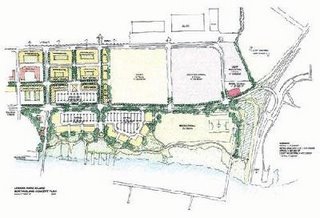
An artist's rendering of Lennar's tentative proposal for the development of Mare Island's north end. Photo: Courtesy Lennar Mare Island LLC
Vallejo's had bad luck finding a developer able to inject some life into Mare Island's north end, once home to an old gas station, supermarket and department store.
Now, the city has two groups vying to rejuvenate the 191 acres.
Today, the Vallejo City Council is slated to discuss how to approach the conundrum of appeasing two groups both key to Mare Island's future.
On one side, Lennar Mare Island LLC already is developing 650 acres and wants to extend its reach to the north end. Meanwhile, Touro University, a major tenant on the former base, wants to create a university village with its own development team.
Both sides said they plan to meet today, before the council session, to discuss their plans.
"Any delay on the north island that is caused by the introduction of a new party or alternate developer would be to the extreme detriment of island-wide progress," Lennar spokesman Jason Keadjian said Tuesday.
Touro is hopeful it can work with Lennar, said Richard Hassel, Touro vice president of administration.
"I don't see competition here at all," Hassel said. "Lennar is a home builder. We are a university. We would like to create a university village."
The Vallejo City Council is being asked to approve a deal to negotiate with only Lennar Mare Island for the renewal of Mare Island's north end. Lennar's exclusive right to iron out an agreement expired in April.
The council's alternatives include sitting on the property until the real estate market improves, seeking new pitches from other developers or considering unsolicited proposals that have flowed in since Lennar's exclusive negotiations period ended.
Lennar's proposal includes developing office, retail, residential and industrial uses. The firm has sought to develop Mare Island's north end, which impacts Lennar's development on the former shipyard's east side. That includes housing and offices.
Lennar already has invested tens of millions of dollars into island-wide infrastructure improvements.
"Ironically, what Touro is proposing is not so dissimilar from what Lennar has proposed in the past," Keadjian said, noting Touro's university village idea.
Touro's plans include a research park, shopping area and community cultural center.
"Our intent is to work with the development team as a team on the whole of Mare Island," Hassel said recently. "We feel that we're bringing some resources to the table that are going to beneficial to the entire island."
Touro is seeking to work with Lennar on issues including the cleanup of the former Navy base and the Navy transferring ownership of the property so it can be developed.
"There currently is not an exclusive right to negotiation in effect," Hassel said. "And we're just asking the city consider Touro as a resource of the community."
Two other groups have failed to redevelop Mare Island's north end.
The team of Weston Solutions Inc. and Harvest Properties withdrew from the project in 2004, citing issues including Mare Island's aging infrastructure and the city's requirement of putting up more than $2.5 million in earnest money.
Before that, Legacy Partners Commercial Inc. backed out because of a dispute over district taxes.
"Lennar Mare Island has already made substantial progress related to the future development of the north island," Lennar's Keadjian said. "And the reuse cannot afford another restart on the north island."
Whoever is given the rights to Mare Island's north end will have to reach a deal with the city on matters including a price for the property and a plan for upgrading the infrastructure and developing the land. For instance, the Highway 37 interchange at Mare Island's north entrance requires major improvements
E-mail Chris G. Denina at cdenina@thnewsnet.com or call 553-6835.
By CHRIS G. DENINA, Times-Herald staff writer
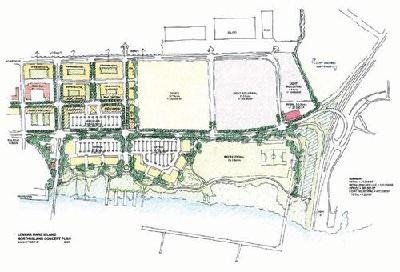
An artist's rendering of Lennar's tentative proposal for the development of Mare Island's north end. Photo: Courtesy Lennar Mare Island LLC
Vallejo's had bad luck finding a developer able to inject some life into Mare Island's north end, once home to an old gas station, supermarket and department store.
Now, the city has two groups vying to rejuvenate the 191 acres.
Today, the Vallejo City Council is slated to discuss how to approach the conundrum of appeasing two groups both key to Mare Island's future.
On one side, Lennar Mare Island LLC already is developing 650 acres and wants to extend its reach to the north end. Meanwhile, Touro University, a major tenant on the former base, wants to create a university village with its own development team.
Both sides said they plan to meet today, before the council session, to discuss their plans.
"Any delay on the north island that is caused by the introduction of a new party or alternate developer would be to the extreme detriment of island-wide progress," Lennar spokesman Jason Keadjian said Tuesday.
Touro is hopeful it can work with Lennar, said Richard Hassel, Touro vice president of administration.
"I don't see competition here at all," Hassel said. "Lennar is a home builder. We are a university. We would like to create a university village."
The Vallejo City Council is being asked to approve a deal to negotiate with only Lennar Mare Island for the renewal of Mare Island's north end. Lennar's exclusive right to iron out an agreement expired in April.
The council's alternatives include sitting on the property until the real estate market improves, seeking new pitches from other developers or considering unsolicited proposals that have flowed in since Lennar's exclusive negotiations period ended.
Lennar's proposal includes developing office, retail, residential and industrial uses. The firm has sought to develop Mare Island's north end, which impacts Lennar's development on the former shipyard's east side. That includes housing and offices.
Lennar already has invested tens of millions of dollars into island-wide infrastructure improvements.
"Ironically, what Touro is proposing is not so dissimilar from what Lennar has proposed in the past," Keadjian said, noting Touro's university village idea.
Touro's plans include a research park, shopping area and community cultural center.
"Our intent is to work with the development team as a team on the whole of Mare Island," Hassel said recently. "We feel that we're bringing some resources to the table that are going to beneficial to the entire island."
Touro is seeking to work with Lennar on issues including the cleanup of the former Navy base and the Navy transferring ownership of the property so it can be developed.
"There currently is not an exclusive right to negotiation in effect," Hassel said. "And we're just asking the city consider Touro as a resource of the community."
Two other groups have failed to redevelop Mare Island's north end.
The team of Weston Solutions Inc. and Harvest Properties withdrew from the project in 2004, citing issues including Mare Island's aging infrastructure and the city's requirement of putting up more than $2.5 million in earnest money.
Before that, Legacy Partners Commercial Inc. backed out because of a dispute over district taxes.
"Lennar Mare Island has already made substantial progress related to the future development of the north island," Lennar's Keadjian said. "And the reuse cannot afford another restart on the north island."
Whoever is given the rights to Mare Island's north end will have to reach a deal with the city on matters including a price for the property and a plan for upgrading the infrastructure and developing the land. For instance, the Highway 37 interchange at Mare Island's north entrance requires major improvements
E-mail Chris G. Denina at cdenina@thnewsnet.com or call 553-6835.
Major Retailers Make Inroads in Outlying Areas
Major Retailers Make Inroads in Outlying Areas
Sacramento-Area Stores Will Feel Some Impact, But Growth Will Limit Damage
Sacramento Business Journal - October 6, 2006
by Kelly Johnson
Staff Writer
The outlying areas of Sacramento are increasingly getting their own big stores and don't need us as much.
Vacaville is slated for an almost 700,000-square-foot regional center. And stores have started opening in Amador County's largest shopping center, a 35-acre development that will house big-box outlets including Lowe's and Staples.
Large-scale retail development in these outlying communities means those residents won't have to trek into the capital region for big purchases -- or deposit their sales-tax dollars in the coffers of Greater Sacramento's communities.
The four-county Sacramento area will lose out on some dollars, but the impact won't be significant, local retail real estate brokers and economic development officials said. This area is growing its population and retail offerings to mostly or completely offset losses, they said.
Also, Greater Sacramento still has several big draws that will continue to attract consumers from afar. Home furnishings giant IKEA tops that list.
"It takes a toll, but I don't think you can quantify it easily," said Scott Reynolds, an independent Sacramento retail real estate broker.
"There will be some impact," said Jon Schultz, a CB Richard Ellis broker who is marketing the Vacaville center.
"I don't think it's really going to disrupt Sacramento because Sacramento is growing like a weed," said Boyd Cahill, a retail broker with TRI Commercial/CORFAC International.
Big retail, small cities
Major retailers are expanding out into smaller communities for several reasons.
"They're realizing these outlying communities have significant demand for these services, and they're a large trade area," said Heath Kastner, one of the CB Richard Ellis brokers leasing the Amador Ridge shopping center.
These outlying communities are growing their population, and as traffic congestion worsens in metro areas, their residents are less willing to travel far to shop elsewhere. Retailers have found that by locating in strategic locations, they can capture most people in a particular area, Kastner said.
The Amador County Lowe's, which in April was the first retailer to open in Amador Ridge, might be an example of that.
Dixon, a Solano County community just outside of Greater Sacramento, landed a Wal-Mart Supercenter and is getting a Home Depot. With 20,000 residents, "we don't have that many rooftops," said Dixon economic development director Mark Heckey.
But Dixon's relatively cheap land, its access to busy Interstate 80 and its location between Bay Area and Sacramento employment centers makes the community desirable to major retailers, he said. Developers and retailers also will pounce on Dixon if the proposed horse racetrack gets built.
Part of the attraction of Vacaville, likewise, is the expanded trade area it can reach as thousands of cars drive by daily between San Francisco and Tahoe.
Solano County's population also is growing, some of its big employers are expanding, and it is attracting new companies. At 645,000 square feet, Vacaville Pavilion would rival the city's largest retail development, the outlet mall, said Eric Luchini, Vacaville associate planner and the project manager of the proposed regional center. Vacaville Pavilion would be larger than the Nut Tree redevelopment, which is bringing big-box stores including Best Buy, Borders, Old Navy and Sport Chalet.
Retail chains also are expanding in suburban or rural areas to satisfy Wall Street's demand for growth as they run out of places in metro areas. Major retailers have figured out they can survive with the population base those areas offer without cannibalizing their other stores, said Dave Mossman, vice president of development for Donahue Schriber, which operates 16 Sacramento-area shopping centers.
Some retailers have created smaller stores for less densely populated communities. Lowe's, for example, opened its smaller format home-improvement store in Amador Ridge, spokeswoman Jennifer Smith said. Smaller stores cost less to develop and can pencil out for the retailer. About 20 percent of new store openings will be the smaller format, she said.
Shopping close to home
Communities hate to lose sales-tax revenue, but some realize they shouldn't depend on shoppers from afar. Encouraging shopping closer to home helps reduce traffic congestion and air pollution.
Some communities, including Roseville, are trying to rely less on retail sales-tax revenue by diversifying income. Property taxes, hotel taxes and business-to-business sales can help, said Julia Burrows, Roseville deputy city manager and economic development director. When a new employer comes to town, for example, the city of Roseville encourages the company to buy supplies locally instead of from an out-of-the-area corporate office.
Residents in Jackson and elsewhere in Amador County have mixed feelings about the arrival of that county's largest shopping center, said Susan Peters, a planner with the city of Jackson. "It's kind of a doubled-edge sword." Residents are glad for the convenience of buying school clothes and home furnishings closer to home -- most shop in Sacramento or Stockton -- but they fear their own traffic congestion and a loss of business for the smaller shops.
Vacaville's Luchini reckons that the community's residents primarily head toward the Bay Area to shop. If Vacaville Pavilion lands R.C. Willey or other big retailers for which Sacramento has a monopoly in Northern California, Greater Sacramento will hurt more from the Vacaville development, Luchini said.
A large focus of Vacaville Pavilion will be home furnishings and other home-related stores that didn't find a home at the Nut Tree, broker Schultz said.
Retail growth in the outlying communities, he said, is "a typical example of the retail environment maturing."
Greater Sacramento should know about that. Not long ago, the Sacramento community's residents journeyed to Emeryville to load up at IKEA. Now in a loss to the Bay Area, West Sacramento has its own IKEA.
Vacaville Pavilion
Location: Vacaville
Developer: Kornwasser Shopping Center Properties LLC
Brokerage: CB Richard Ellis
Size: 675,400 square feet
Opening: Summer 2008
Anchors: Not yet disclosed
Amador Ridge
Location: Amador County's town of Martell, near Jackson
Developer: Catlin Properties Inc.
Brokerage: CB Richard Ellis
Size: Eventually 448,714 square feet
Opening: Lowe's open; more stores by December
Anchors: Lowe's, Staples, Safeway, likely Target
kjohnson@bizjournals.com | 916-558-7860
Sacramento-Area Stores Will Feel Some Impact, But Growth Will Limit Damage
Sacramento Business Journal - October 6, 2006
by Kelly Johnson
Staff Writer
The outlying areas of Sacramento are increasingly getting their own big stores and don't need us as much.
Vacaville is slated for an almost 700,000-square-foot regional center. And stores have started opening in Amador County's largest shopping center, a 35-acre development that will house big-box outlets including Lowe's and Staples.
Large-scale retail development in these outlying communities means those residents won't have to trek into the capital region for big purchases -- or deposit their sales-tax dollars in the coffers of Greater Sacramento's communities.
The four-county Sacramento area will lose out on some dollars, but the impact won't be significant, local retail real estate brokers and economic development officials said. This area is growing its population and retail offerings to mostly or completely offset losses, they said.
Also, Greater Sacramento still has several big draws that will continue to attract consumers from afar. Home furnishings giant IKEA tops that list.
"It takes a toll, but I don't think you can quantify it easily," said Scott Reynolds, an independent Sacramento retail real estate broker.
"There will be some impact," said Jon Schultz, a CB Richard Ellis broker who is marketing the Vacaville center.
"I don't think it's really going to disrupt Sacramento because Sacramento is growing like a weed," said Boyd Cahill, a retail broker with TRI Commercial/CORFAC International.
Big retail, small cities
Major retailers are expanding out into smaller communities for several reasons.
"They're realizing these outlying communities have significant demand for these services, and they're a large trade area," said Heath Kastner, one of the CB Richard Ellis brokers leasing the Amador Ridge shopping center.
These outlying communities are growing their population, and as traffic congestion worsens in metro areas, their residents are less willing to travel far to shop elsewhere. Retailers have found that by locating in strategic locations, they can capture most people in a particular area, Kastner said.
The Amador County Lowe's, which in April was the first retailer to open in Amador Ridge, might be an example of that.
Dixon, a Solano County community just outside of Greater Sacramento, landed a Wal-Mart Supercenter and is getting a Home Depot. With 20,000 residents, "we don't have that many rooftops," said Dixon economic development director Mark Heckey.
But Dixon's relatively cheap land, its access to busy Interstate 80 and its location between Bay Area and Sacramento employment centers makes the community desirable to major retailers, he said. Developers and retailers also will pounce on Dixon if the proposed horse racetrack gets built.
Part of the attraction of Vacaville, likewise, is the expanded trade area it can reach as thousands of cars drive by daily between San Francisco and Tahoe.
Solano County's population also is growing, some of its big employers are expanding, and it is attracting new companies. At 645,000 square feet, Vacaville Pavilion would rival the city's largest retail development, the outlet mall, said Eric Luchini, Vacaville associate planner and the project manager of the proposed regional center. Vacaville Pavilion would be larger than the Nut Tree redevelopment, which is bringing big-box stores including Best Buy, Borders, Old Navy and Sport Chalet.
Retail chains also are expanding in suburban or rural areas to satisfy Wall Street's demand for growth as they run out of places in metro areas. Major retailers have figured out they can survive with the population base those areas offer without cannibalizing their other stores, said Dave Mossman, vice president of development for Donahue Schriber, which operates 16 Sacramento-area shopping centers.
Some retailers have created smaller stores for less densely populated communities. Lowe's, for example, opened its smaller format home-improvement store in Amador Ridge, spokeswoman Jennifer Smith said. Smaller stores cost less to develop and can pencil out for the retailer. About 20 percent of new store openings will be the smaller format, she said.
Shopping close to home
Communities hate to lose sales-tax revenue, but some realize they shouldn't depend on shoppers from afar. Encouraging shopping closer to home helps reduce traffic congestion and air pollution.
Some communities, including Roseville, are trying to rely less on retail sales-tax revenue by diversifying income. Property taxes, hotel taxes and business-to-business sales can help, said Julia Burrows, Roseville deputy city manager and economic development director. When a new employer comes to town, for example, the city of Roseville encourages the company to buy supplies locally instead of from an out-of-the-area corporate office.
Residents in Jackson and elsewhere in Amador County have mixed feelings about the arrival of that county's largest shopping center, said Susan Peters, a planner with the city of Jackson. "It's kind of a doubled-edge sword." Residents are glad for the convenience of buying school clothes and home furnishings closer to home -- most shop in Sacramento or Stockton -- but they fear their own traffic congestion and a loss of business for the smaller shops.
Vacaville's Luchini reckons that the community's residents primarily head toward the Bay Area to shop. If Vacaville Pavilion lands R.C. Willey or other big retailers for which Sacramento has a monopoly in Northern California, Greater Sacramento will hurt more from the Vacaville development, Luchini said.
A large focus of Vacaville Pavilion will be home furnishings and other home-related stores that didn't find a home at the Nut Tree, broker Schultz said.
Retail growth in the outlying communities, he said, is "a typical example of the retail environment maturing."
Greater Sacramento should know about that. Not long ago, the Sacramento community's residents journeyed to Emeryville to load up at IKEA. Now in a loss to the Bay Area, West Sacramento has its own IKEA.
Vacaville Pavilion
Location: Vacaville
Developer: Kornwasser Shopping Center Properties LLC
Brokerage: CB Richard Ellis
Size: 675,400 square feet
Opening: Summer 2008
Anchors: Not yet disclosed
Amador Ridge
Location: Amador County's town of Martell, near Jackson
Developer: Catlin Properties Inc.
Brokerage: CB Richard Ellis
Size: Eventually 448,714 square feet
Opening: Lowe's open; more stores by December
Anchors: Lowe's, Staples, Safeway, likely Target
kjohnson@bizjournals.com | 916-558-7860
Initiatives up for Discussion
Initiatives up for Discussion
A breakfast panel discussion regarding state initiatives on the November ballot will be hosted by the Solano Economic Development Corporation, in conjunction with the Fairfield-Suisun and Vacaville chambers of commerce.
Amy O'Gorman, of the League of California Cities, and Dan Sharp, of Sharp Public Affairs, will be guest speakers at the event.
"Key state ballot initiatives that affect your bottom line," begins at 8 a.m. Wednesday, at Travis Credit Union, One Travis Way, Vacaville. The cost is $20, though complimentary tickets are available to Solano EDC members depending on member level.
A breakfast panel discussion regarding state initiatives on the November ballot will be hosted by the Solano Economic Development Corporation, in conjunction with the Fairfield-Suisun and Vacaville chambers of commerce.
Amy O'Gorman, of the League of California Cities, and Dan Sharp, of Sharp Public Affairs, will be guest speakers at the event.
"Key state ballot initiatives that affect your bottom line," begins at 8 a.m. Wednesday, at Travis Credit Union, One Travis Way, Vacaville. The cost is $20, though complimentary tickets are available to Solano EDC members depending on member level.
Meeting Demands
Meeting Demands
Project Makes Room for Fight Against Cancers
By Amanda Janis/Business Editor
· Construction continues at Genentech. The $600 million expansion will make its Vacaville site...
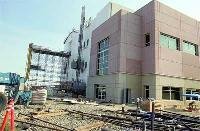
The trailers ringing Genentech's Vacaville facility are no ordinary offices on wheels.
A walk through the portables - inhabited by firms hard at work on the biotechnology company's $600 million expansion - reveals full-scale, fully-functioning workplaces. Flat-screen computers and family photos dot desks in row upon row of cubicles, framed art graces corridors, and project managers confer with executives and employees behind the doors of their window offices.
The permanence of these temporary offices is less surprising when you realize more than 1,200 construction workers are on-site each day, working on a high-precision project that broke ground two-and-a-half years ago.
Dubbed "Cell Culture Production 2," or CCP2, the expansion project will more than double Genentech's existing 427,000 square foot facilities in the Vaca Valley Business Park. Three new manufacturing buildings, totaling 380,000 square feet, along with a 135,000 square foot administration building will be added to the 97-acre parcel Genentech purchased in 1994, making it the largest biotech facility of its kind worldwide.
Demand for its blockbuster products is the driving force behind the expansion, explained Frank A. Jackson, the vice-president and general manager of Genentech's Vacaville operations.
That demand, Jackson said, "is stimulated by the great results we've had for Avastin, great results for Rituxan, and also Herceptin for metastatic breast cancer. Those are all products that we make here."
(Rituxan has won numerous Food and Drug Administration approvals for treatment of various types of non-Hodgkin's lymphoma, and was recently approved to treat rheumatoid arthritis. Avastin has been approved as treatment for colon and rectal cancer patients, and may win even wider approval; applications have been submitted to the FDA for its use in treating some forms of breast cancer and lung cancer, and it is currently being studied in 130 clinical trials for patients with 25 different types of cancer.)
"The growth of those products is driving demand for additional manufacturing capacity from Genentech, and Vacaville's role is to be a significant supplier," Jackson said.
It's also likely that Vacaville will play a role in supplying future drugs developed by the biotech firm.
"Genentech has about 40 products in clinical development right now - about 25 in late stage development - so many of those will very likely come to the Vacaville facility," Jackson said.
The current expansion will enable the Vacaville facility to manufacture future products, he noted.
"We're adding 200,000 liters of capacity," he said. "At the moment we have 144,000 liters, so it's a really significant amount of additional capacity. We don't expect to use that all on day one, so it'll be a gradual ramp up of utilization throughout the years after it licenses."
The facility is expected to be finished next year and licensed to manufacture products in the latter part of 2009, he said, at which time Genentech will need to hire additional employees.
Already, it's begun increasing staff levels in preparation, Jackson said. At the end of 2004, the year the expansion broke ground, there were 685 Vacaville employees.
"Currently there are about 800 employees," he said, "and when the new plant is finished and fully operating there'll probably be about 1,200 employees."
The expansion and the facility's potential is, indeed, exciting, Jackson said.
But, he noted, "For me and for all of us here, the exciting thing is what we do everyday, which is making products for the patients.
"These are difficult diseases to treat," he said. "I think every employee at Genentech has a connection with what we're doing, which is meeting unmet medical needs in these very critical indications."
Amanda Janis can be reached at business@thereporter.com.
Project Makes Room for Fight Against Cancers
By Amanda Janis/Business Editor
· Construction continues at Genentech. The $600 million expansion will make its Vacaville site...
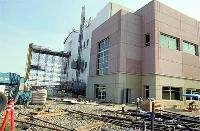
The trailers ringing Genentech's Vacaville facility are no ordinary offices on wheels.
A walk through the portables - inhabited by firms hard at work on the biotechnology company's $600 million expansion - reveals full-scale, fully-functioning workplaces. Flat-screen computers and family photos dot desks in row upon row of cubicles, framed art graces corridors, and project managers confer with executives and employees behind the doors of their window offices.
The permanence of these temporary offices is less surprising when you realize more than 1,200 construction workers are on-site each day, working on a high-precision project that broke ground two-and-a-half years ago.
Dubbed "Cell Culture Production 2," or CCP2, the expansion project will more than double Genentech's existing 427,000 square foot facilities in the Vaca Valley Business Park. Three new manufacturing buildings, totaling 380,000 square feet, along with a 135,000 square foot administration building will be added to the 97-acre parcel Genentech purchased in 1994, making it the largest biotech facility of its kind worldwide.
Demand for its blockbuster products is the driving force behind the expansion, explained Frank A. Jackson, the vice-president and general manager of Genentech's Vacaville operations.
That demand, Jackson said, "is stimulated by the great results we've had for Avastin, great results for Rituxan, and also Herceptin for metastatic breast cancer. Those are all products that we make here."
(Rituxan has won numerous Food and Drug Administration approvals for treatment of various types of non-Hodgkin's lymphoma, and was recently approved to treat rheumatoid arthritis. Avastin has been approved as treatment for colon and rectal cancer patients, and may win even wider approval; applications have been submitted to the FDA for its use in treating some forms of breast cancer and lung cancer, and it is currently being studied in 130 clinical trials for patients with 25 different types of cancer.)
"The growth of those products is driving demand for additional manufacturing capacity from Genentech, and Vacaville's role is to be a significant supplier," Jackson said.
It's also likely that Vacaville will play a role in supplying future drugs developed by the biotech firm.
"Genentech has about 40 products in clinical development right now - about 25 in late stage development - so many of those will very likely come to the Vacaville facility," Jackson said.
The current expansion will enable the Vacaville facility to manufacture future products, he noted.
"We're adding 200,000 liters of capacity," he said. "At the moment we have 144,000 liters, so it's a really significant amount of additional capacity. We don't expect to use that all on day one, so it'll be a gradual ramp up of utilization throughout the years after it licenses."
The facility is expected to be finished next year and licensed to manufacture products in the latter part of 2009, he said, at which time Genentech will need to hire additional employees.
Already, it's begun increasing staff levels in preparation, Jackson said. At the end of 2004, the year the expansion broke ground, there were 685 Vacaville employees.
"Currently there are about 800 employees," he said, "and when the new plant is finished and fully operating there'll probably be about 1,200 employees."
The expansion and the facility's potential is, indeed, exciting, Jackson said.
But, he noted, "For me and for all of us here, the exciting thing is what we do everyday, which is making products for the patients.
"These are difficult diseases to treat," he said. "I think every employee at Genentech has a connection with what we're doing, which is meeting unmet medical needs in these very critical indications."
Amanda Janis can be reached at business@thereporter.com.
A Sweet Two Decades: Jelly Belly Gives Fairfield Instant Recognition
A Sweet Two Decades: Jelly Belly Gives Fairfield Instant Recognition
By Brad Stanhope

Quality control inspector Camilo Montenegro checks the jelly beans for imperfections before they are packaged and shipped. (Zachary Kaufman/Daily Republic)
FAIRFIELD - When Fairfield Mayor Harry Price travels, his city's flagship business always catches attention.
"As soon as you say Jelly Belly, they know, they know," he said. "Jelly Belly opens the door. People always say it with a smile."
Price - who often quotes ex-mayor George Pettygrove's description of Fairfield as "the sweetest city west of the Mississippi" because of its connection to the candy manufacturer - takes the jelly beans with him for gifts. Whether its members of Congress, workers at the Pentagon or business people, Jelly Bellys are a favorite.
Former mayor Gary Falati - who helped lure the company here 20 years ago - gives Jelly Belly credit for making the city known.
"It put Fairfield on the map, that's what it did," he said. "It's a world-class name - along with Travis Air Force Base and Anheuser-Busch. People recognize all three."
It's been that way for two decades. This is a landmark year for Jelly Belly - it was 30 years ago the Herman Goelitz Candy Co. invented Jelly Bellys and 20 years ago that the company moved its headquarters to Fairfield. That year it also began offering tours - it was named the best factory tour in America by Readers Digest in 2005 - and last month, the company celebrated the 3 millionth visitor by showering Chuck LaGrave of Hercules with balloons and his weight in belly flops - the popular misshapen beans.
Since 1986, Jelly Belly and Fairfield have been joined, with the candy company drawing hundreds of thousands of people annually to the Jelly Belly Lane complex. In fact, next weekend's Candy Festival in downtown Fairfield is largely due to the impact of Jelly Belly.
"It's the flagship for economic development here," Price said.
'A coup for Fairfield'
While Jelly Belly wasn't the first company in the now-thriving Solano Business Park - Anheuser-Busch was - it was crucial.
"Getting Jelly Belly was a major coup for Fairfield," Falati said. "Every community would be blessed to have a Jelly Belly. They're so involved in the community - they're simply first class and the people that work with them are first class."
And Jelly Belly, run by company founder Herman Goelitz's grandson Herm Rowland, has increased in size since arriving, growing from the original 100,000-square-foot factory to a sprawling 35-acre, five-building campus with nearly a 500,000 square feet of office and factory space.
In 1986, it was simply a good acquisition for the city, which landed a company that needed space to grow after President Ronald Reagan helped make it a cultural phenomenon.
"One attraction was the affordable land and homes for their employees," Falati said.
"It was a huge shift," said Tomi Holt, who has worked for the company since 1984 and now runs public relations for it. "Herm's vision was to build a new factory. He found property in Fairfield and it was nothing but fields."
John Pola, then a salesman but now the company's vice president of sales, recalled the opening of the new plant.
"The day of the grand opening, we looked out at a field," he said. "I remember thinking it must have been a good deal on the land . . . it was so empty. I thought 'Oh my God, was this the right decision?' "
The Reagan impact
How Jelly Belly became wildly popular - necessitating the move to Fairfield - is a story that is part of candy lore. The Herman Goelitz Candy Co. operated in Oakland for more than five decades with modest success until 1976 when - acting on the suggestion of a Los Angeles-based entrepreneur, who wanted a jelly bean made from natural ingredients - they created the Jelly Belly, a "gourmet treat." Made with fruit juices and other natural flavors, the new - and more expensive - candy began to gain a foothold in the market.
Then President Reagan discovered them - using them as a device to stop smoking. By the time he was elected in 1980, news outlets were running with the story of how he fancied Jelly Bellys which served to increase the popularity. For Reagan's inauguration, organizers ordered 7,000 pounds of red, white and blue beans - and the boon started.
"It was unbelievable," said Pola, the former salesman. "Stores would call me and tell me they sold out in four days and wanted more. I would tell them I'd get it in seven or eight months. Then it became nine or 10 months."
The volume became so great the Oakland plant couldn't produce enough. So Rowland moved the company and its two dozen or so employees north to Fairfield and the business exploded. Now there are more than 400 employees in Fairfield, 700 including the distribution center in Pleasant Prairie, Wis.
Magical, mystical tour
What wasn't an attraction at the Fairfield plant - initially - become the most prominent part of the business: Factory tours.
"They were low key at the start," Holt remembered. "You had to call and find out a time. We'd take a group around the plant. A plant manager would do it in the beginning - and then people would want to know where they could buy the candy."
It got bigger and bigger.
"Within a couple of years, the volume of people became difficult to manage," Holt said. "We had to get tour guides. Then tour buses started arriving. Once we began to accommodate more people, that's when Herm Rowland decided to expand."
By 1992, the plant doubled its size, adding elevators and walkways for the tours. This year, more than 500,000 people will take the tour, said Sean Pakenham, general manager of the visitor's center.
The tours are "extremely important because it shows the consumer how much care and attention goes into the product," Holt said. "It allows them to see how it is developed. People leave as ambassadors for Jelly Belly."
That's a description that fits Verlin and Mary Belarde of Billings, Mont., who recently made their annual pilgrimage to the plant while visiting their daughter in San Rafael.
"We're here to pick out candy for our grandkids," Mary Belarde said.
Kim Larson and B.J. Lopez of San Francisco also took a tour of the plant.
"I've been here before," Larson said. "I just remember I loved it."
Larson is a Jelly Belly minority, Pakenham said, adding their surveys show that 70 percent of people who take the tours are doing it for the first time.
"And most hear about it from a relative," he said. "We've become one of the destination places - if you come to Fairfield or Vacaville or Vallejo or even Napa, it's kind of a must-see, which is great for us."
And, according to Fairfield's mayor, it's good for the town.
"Somebody gets off the freeway and does the tour and maybe they also do the Anheuser-Busch tour," Price said. "Then they're going to shop in stores and eat at restaurants."
Into a new century
While most businesses have critics, Price said there aren't many Jelly Belly detractors - "maybe a few Fairfield residents concerned about obesity and a few diabetics," he suggested.
For 20 years, the company and the city have enjoyed a love-in.
"Every single head of state got a gift from Fairfield in their hands," Pola said, referring to the Jelly Belly gifts Reagan would hand out.
And six years into a new century, Jelly Belly is still growing.
In the past few years, the company launched Bertie Bott's Jelly Beans - based on the Harry Potter books and movies - as well as sports beans and other products.
Jelly Belly also sponsors a bicycle racing team, auto racers Jim Inglebright and Jim Pace, LPGA golfer Karen Cotch, a drag racer, a steer roper, a motorcycle racer and myriad events.
"We're out there," Pola said. "Promoting Jelly Belly and Fairfield."
And like Pettygrove and Falati, Pola said the name Jelly Belly still carries magic - 30 years after its invention and 20 years in Fairfield.
"I can be in a room of 100 people and I say what I do for a living and all 100 smile," he said.
Reach Brad Stanhope at 427-6925 or bstanhope@dailyrepublic.net.
MILESTONES
1869: Gustav Goelitz begins making candy in Belleville, Ill.
1898: Goelitz Confectionery Co. is founded in Cincinnati, Ohio.
1921: Herman Goelitz strikes out and forms his own company in Portland, Ore.
1923: Goelitz moves company from Portland, Ore., to Oakland.
1976: Jelly Belly jelly bean introduced with "natural" ingredients.
1980: Jelly Bellys become nationally prominent when presidential candidate Ronald Reagan professes his affection for them. At his inauguration in 1981, 3.5 tons of the jelly beans are consumed.
1986: Company moves headquarters from Oakland to Fairfield and begins offering tours.
1992: Plant size doubles.
2001: Company changes name to Jelly Belly Candy Co.
2006: Jelly Belly announces plans to build a plant in Thailand.
Source: Jelly Belly Candy Co.
BY THE NUMBERS
4: Calories per Jelly Belly
5: Number of times the Jelly Bellys eaten this year would circle the earth.
7 to 21: Days it takes to make a Jelly Belly.
21: Countries in which Jelly Bellys are sold.
30: Percent of people taking the tours who are from out of state.
50: Official Jelly Belly flavors.
75: Percent of people taking the tours who are doing it for the first time.
7,000: Pounds of Jelly Bellys ordered for President Reagan's inauguration in 1980.
250,000: Pounds of Jelly Bellys per day produced by the company
500,000: Number of people expected to take the Jelly Belly Tour this year.
3,160,000: Approximate number of pages that turn up on a Google search for "Jelly Belly."
5,000,000: Number of Jelly Belly beans eaten each Easter.
34,000,000: Pounds of Jelly Bellys produced annually.
Source: Jelly Belly Candy Company
By Brad Stanhope
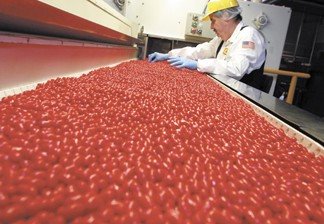
Quality control inspector Camilo Montenegro checks the jelly beans for imperfections before they are packaged and shipped. (Zachary Kaufman/Daily Republic)
FAIRFIELD - When Fairfield Mayor Harry Price travels, his city's flagship business always catches attention.
"As soon as you say Jelly Belly, they know, they know," he said. "Jelly Belly opens the door. People always say it with a smile."
Price - who often quotes ex-mayor George Pettygrove's description of Fairfield as "the sweetest city west of the Mississippi" because of its connection to the candy manufacturer - takes the jelly beans with him for gifts. Whether its members of Congress, workers at the Pentagon or business people, Jelly Bellys are a favorite.
Former mayor Gary Falati - who helped lure the company here 20 years ago - gives Jelly Belly credit for making the city known.
"It put Fairfield on the map, that's what it did," he said. "It's a world-class name - along with Travis Air Force Base and Anheuser-Busch. People recognize all three."
It's been that way for two decades. This is a landmark year for Jelly Belly - it was 30 years ago the Herman Goelitz Candy Co. invented Jelly Bellys and 20 years ago that the company moved its headquarters to Fairfield. That year it also began offering tours - it was named the best factory tour in America by Readers Digest in 2005 - and last month, the company celebrated the 3 millionth visitor by showering Chuck LaGrave of Hercules with balloons and his weight in belly flops - the popular misshapen beans.
Since 1986, Jelly Belly and Fairfield have been joined, with the candy company drawing hundreds of thousands of people annually to the Jelly Belly Lane complex. In fact, next weekend's Candy Festival in downtown Fairfield is largely due to the impact of Jelly Belly.
"It's the flagship for economic development here," Price said.
'A coup for Fairfield'
While Jelly Belly wasn't the first company in the now-thriving Solano Business Park - Anheuser-Busch was - it was crucial.
"Getting Jelly Belly was a major coup for Fairfield," Falati said. "Every community would be blessed to have a Jelly Belly. They're so involved in the community - they're simply first class and the people that work with them are first class."
And Jelly Belly, run by company founder Herman Goelitz's grandson Herm Rowland, has increased in size since arriving, growing from the original 100,000-square-foot factory to a sprawling 35-acre, five-building campus with nearly a 500,000 square feet of office and factory space.
In 1986, it was simply a good acquisition for the city, which landed a company that needed space to grow after President Ronald Reagan helped make it a cultural phenomenon.
"One attraction was the affordable land and homes for their employees," Falati said.
"It was a huge shift," said Tomi Holt, who has worked for the company since 1984 and now runs public relations for it. "Herm's vision was to build a new factory. He found property in Fairfield and it was nothing but fields."
John Pola, then a salesman but now the company's vice president of sales, recalled the opening of the new plant.
"The day of the grand opening, we looked out at a field," he said. "I remember thinking it must have been a good deal on the land . . . it was so empty. I thought 'Oh my God, was this the right decision?' "
The Reagan impact
How Jelly Belly became wildly popular - necessitating the move to Fairfield - is a story that is part of candy lore. The Herman Goelitz Candy Co. operated in Oakland for more than five decades with modest success until 1976 when - acting on the suggestion of a Los Angeles-based entrepreneur, who wanted a jelly bean made from natural ingredients - they created the Jelly Belly, a "gourmet treat." Made with fruit juices and other natural flavors, the new - and more expensive - candy began to gain a foothold in the market.
Then President Reagan discovered them - using them as a device to stop smoking. By the time he was elected in 1980, news outlets were running with the story of how he fancied Jelly Bellys which served to increase the popularity. For Reagan's inauguration, organizers ordered 7,000 pounds of red, white and blue beans - and the boon started.
"It was unbelievable," said Pola, the former salesman. "Stores would call me and tell me they sold out in four days and wanted more. I would tell them I'd get it in seven or eight months. Then it became nine or 10 months."
The volume became so great the Oakland plant couldn't produce enough. So Rowland moved the company and its two dozen or so employees north to Fairfield and the business exploded. Now there are more than 400 employees in Fairfield, 700 including the distribution center in Pleasant Prairie, Wis.
Magical, mystical tour
What wasn't an attraction at the Fairfield plant - initially - become the most prominent part of the business: Factory tours.
"They were low key at the start," Holt remembered. "You had to call and find out a time. We'd take a group around the plant. A plant manager would do it in the beginning - and then people would want to know where they could buy the candy."
It got bigger and bigger.
"Within a couple of years, the volume of people became difficult to manage," Holt said. "We had to get tour guides. Then tour buses started arriving. Once we began to accommodate more people, that's when Herm Rowland decided to expand."
By 1992, the plant doubled its size, adding elevators and walkways for the tours. This year, more than 500,000 people will take the tour, said Sean Pakenham, general manager of the visitor's center.
The tours are "extremely important because it shows the consumer how much care and attention goes into the product," Holt said. "It allows them to see how it is developed. People leave as ambassadors for Jelly Belly."
That's a description that fits Verlin and Mary Belarde of Billings, Mont., who recently made their annual pilgrimage to the plant while visiting their daughter in San Rafael.
"We're here to pick out candy for our grandkids," Mary Belarde said.
Kim Larson and B.J. Lopez of San Francisco also took a tour of the plant.
"I've been here before," Larson said. "I just remember I loved it."
Larson is a Jelly Belly minority, Pakenham said, adding their surveys show that 70 percent of people who take the tours are doing it for the first time.
"And most hear about it from a relative," he said. "We've become one of the destination places - if you come to Fairfield or Vacaville or Vallejo or even Napa, it's kind of a must-see, which is great for us."
And, according to Fairfield's mayor, it's good for the town.
"Somebody gets off the freeway and does the tour and maybe they also do the Anheuser-Busch tour," Price said. "Then they're going to shop in stores and eat at restaurants."
Into a new century
While most businesses have critics, Price said there aren't many Jelly Belly detractors - "maybe a few Fairfield residents concerned about obesity and a few diabetics," he suggested.
For 20 years, the company and the city have enjoyed a love-in.
"Every single head of state got a gift from Fairfield in their hands," Pola said, referring to the Jelly Belly gifts Reagan would hand out.
And six years into a new century, Jelly Belly is still growing.
In the past few years, the company launched Bertie Bott's Jelly Beans - based on the Harry Potter books and movies - as well as sports beans and other products.
Jelly Belly also sponsors a bicycle racing team, auto racers Jim Inglebright and Jim Pace, LPGA golfer Karen Cotch, a drag racer, a steer roper, a motorcycle racer and myriad events.
"We're out there," Pola said. "Promoting Jelly Belly and Fairfield."
And like Pettygrove and Falati, Pola said the name Jelly Belly still carries magic - 30 years after its invention and 20 years in Fairfield.
"I can be in a room of 100 people and I say what I do for a living and all 100 smile," he said.
Reach Brad Stanhope at 427-6925 or bstanhope@dailyrepublic.net.
MILESTONES
1869: Gustav Goelitz begins making candy in Belleville, Ill.
1898: Goelitz Confectionery Co. is founded in Cincinnati, Ohio.
1921: Herman Goelitz strikes out and forms his own company in Portland, Ore.
1923: Goelitz moves company from Portland, Ore., to Oakland.
1976: Jelly Belly jelly bean introduced with "natural" ingredients.
1980: Jelly Bellys become nationally prominent when presidential candidate Ronald Reagan professes his affection for them. At his inauguration in 1981, 3.5 tons of the jelly beans are consumed.
1986: Company moves headquarters from Oakland to Fairfield and begins offering tours.
1992: Plant size doubles.
2001: Company changes name to Jelly Belly Candy Co.
2006: Jelly Belly announces plans to build a plant in Thailand.
Source: Jelly Belly Candy Co.
BY THE NUMBERS
4: Calories per Jelly Belly
5: Number of times the Jelly Bellys eaten this year would circle the earth.
7 to 21: Days it takes to make a Jelly Belly.
21: Countries in which Jelly Bellys are sold.
30: Percent of people taking the tours who are from out of state.
50: Official Jelly Belly flavors.
75: Percent of people taking the tours who are doing it for the first time.
7,000: Pounds of Jelly Bellys ordered for President Reagan's inauguration in 1980.
250,000: Pounds of Jelly Bellys per day produced by the company
500,000: Number of people expected to take the Jelly Belly Tour this year.
3,160,000: Approximate number of pages that turn up on a Google search for "Jelly Belly."
5,000,000: Number of Jelly Belly beans eaten each Easter.
34,000,000: Pounds of Jelly Bellys produced annually.
Source: Jelly Belly Candy Company
Touro University Reveals M.I. Plan
Touro University Reveals M.I. Plan
School Assembles 'Dream Team' to Design North End of Island
By RACHEL RASKIN-ZRIHEN, Times-Herald staff writer
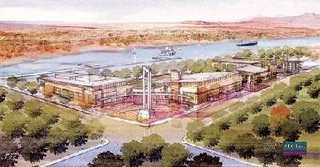
The two entities vying for a slice of the Mare Island redevelopment pie may be on a collision course.
One entity, homebuilder Lennar Mare Island, has a long track record on the former naval shipyard site. On the other, Touro University has assembled a "dream team" to turn Mare Island's north end into a sort of Berkeley-esque village.
The Touro plan, revealed Thursday, includes high-tech jobs, educational opportunities, a community cultural center and an international trade zone.
The proposal, to be presented at Tuesday's Vallejo City Council meeting, also includes affordable student and faculty housing, retail stores, research facilities and parkland, in an atmosphere designed to rival university towns like Davis, Stanford and Berkeley, said Touro vice president Dick Hassel.
"This is a major turning point for the community," Hassel said. "And it's a long time coming."
The original Mare Island reuse plan called for its north end to be developed first, to include light industry, commercial and retail as an economic generator to help fund the rest of the redevelopment, Hassel said. That vision hasn't materialized.
"It was supposed to generate state tax revenues to help Vallejo recover after the loss of shipyard jobs," Hassel said. "But for one reason or another, we've had three developers that haven't done it. I think it's one of the major causes of the city's economic problems."
Touro's plan, developed by a "dream team" of developers, environmental cleanup experts and others, has a "central theme," and that, Hassel said, will make this one succeed where others haven't.
"The theme is using the community's resources to make things happen. To create a university village that's synergistic to the educational theme of the community," Hassel said.
The idea is to make Touro - one of California's four medical schools - a community hub that attracts businesses and institutions with which it is compatible, Hassel said.
"There are investors and firms lined up to get involved with this," he said. A cancer treatment technology firm, an FDA certification testing firm, a pharmaceutical group and others are among those waiting for the go-ahead, he said. The green light is predicated on Touro being granted the exclusive right to negotiate the area's redevelopment. Hassel said he couldn't reveal details about specific firms.
Touro and its partners, which include firms that would ensure the development is "environmentally and ergonomically friendly," believe it's logical to make Mare Island a destination along Solano County's growing medical and high-tech corridor.
"Touro's founder and president, Dr. Bernard Lander, was in Vallejo in June and met with the mayor and others, and told them Touro is a permanent member of the community of Vallejo, and is prepared to make a huge investment in the city's future," Hassel said.
The project's projected cost is between a quarter to a half billion dollars, he added.
One plan feature is a 50,000 square foot community and cultural center just off Highway 37's Mare Island exit. It would "create a visual gateway to Vallejo and make a statement that Vallejo is a university town," Hassel said.
The plan also calls for a trade zone to promote international commerce and give Vallejo special tax incentives, Hassel said.
"It will be an immediate revenue generator," he said.
Vallejo Mayor Anthony Intintoli, Jr., who said he hasn't thoroughly reviewed the proposal, added the city still hopes to find a way for the Touro group to partner with Lennar Mare Island, the island's main developer.
"As far as I recall, the idea is to work with the two applicants for developing the north end of Mare Island, and get them to work together," Intintoli said. "To my knowledge, that's still the direction."
That doesn't appear likely, since Touro's consortium members don't feel the home building giant shares their vision for the island, Hassel said.
"If you want to turn the north end of the island into another residential community, then Lennar is the developer for you," Hassel said. "If you want jobs and sales tax revenues as called for in the original reuse plan, then it's time for a change. This is the right time and the right place."
Lennar spokesman Jason Keadjian said Lennar officials can't comment on Touro's plan because they haven't seen it.
"To date, Touro has not provided us with a copy of their proposal," Keadjian said.
City Councilman Tom Bartee said he hasn't had a chance to review the plan's details, either, but from what he's heard, it "looks interesting." He's willing to hear the Touro group out.
Interim City Manager John Thompson said he, too, finds the Touro group's concepts "interesting," and the assembled team "impressive." Concerns remain, however, he said. He also reiterated the city's desire to see the Touro group work with Lennar.
"We're still analyzing it, but it has a lot of potential," he said of the Touro concept. "We have concerns about their environmental cleanup capacity, where the funding is coming from, and we're concerned we not jeopardize the progress of the early transfer of the land from the Navy."
Touro team members plan to address those concerns at Tuesday's meeting, Hassel said. No vote on the matter will likely be taken that day, Thompson said.
Touro University plans include:
- Developing 191-acres bordered by Highway 37, Mare Island Strait, G Street and Azuar Avenue.
- Creating a University Village and Research Park and associated private development including a pedestrian river walk, park and athletic fields. Protected wildlife habitat areas, classroom facilities, housing, associated research companies, a shopping area and other amenities will also be included.
- Creating the village and research park on 35 acres at the area's southwest end and the community cultural center on 15 acres on the north end. The rest of the 191 acres will combine private development and public amenities, including affordable housing for Touro students and staff.
Source: Touro University
E-mail Rachel Raskin-Zrihen at RachelZ@thnewsnet.com or call 553-6824.
School Assembles 'Dream Team' to Design North End of Island
By RACHEL RASKIN-ZRIHEN, Times-Herald staff writer
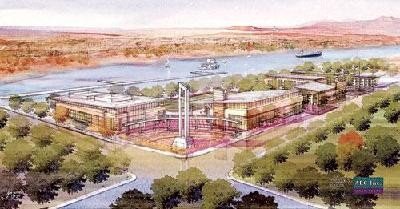
The two entities vying for a slice of the Mare Island redevelopment pie may be on a collision course.
One entity, homebuilder Lennar Mare Island, has a long track record on the former naval shipyard site. On the other, Touro University has assembled a "dream team" to turn Mare Island's north end into a sort of Berkeley-esque village.
The Touro plan, revealed Thursday, includes high-tech jobs, educational opportunities, a community cultural center and an international trade zone.
The proposal, to be presented at Tuesday's Vallejo City Council meeting, also includes affordable student and faculty housing, retail stores, research facilities and parkland, in an atmosphere designed to rival university towns like Davis, Stanford and Berkeley, said Touro vice president Dick Hassel.
"This is a major turning point for the community," Hassel said. "And it's a long time coming."
The original Mare Island reuse plan called for its north end to be developed first, to include light industry, commercial and retail as an economic generator to help fund the rest of the redevelopment, Hassel said. That vision hasn't materialized.
"It was supposed to generate state tax revenues to help Vallejo recover after the loss of shipyard jobs," Hassel said. "But for one reason or another, we've had three developers that haven't done it. I think it's one of the major causes of the city's economic problems."
Touro's plan, developed by a "dream team" of developers, environmental cleanup experts and others, has a "central theme," and that, Hassel said, will make this one succeed where others haven't.
"The theme is using the community's resources to make things happen. To create a university village that's synergistic to the educational theme of the community," Hassel said.
The idea is to make Touro - one of California's four medical schools - a community hub that attracts businesses and institutions with which it is compatible, Hassel said.
"There are investors and firms lined up to get involved with this," he said. A cancer treatment technology firm, an FDA certification testing firm, a pharmaceutical group and others are among those waiting for the go-ahead, he said. The green light is predicated on Touro being granted the exclusive right to negotiate the area's redevelopment. Hassel said he couldn't reveal details about specific firms.
Touro and its partners, which include firms that would ensure the development is "environmentally and ergonomically friendly," believe it's logical to make Mare Island a destination along Solano County's growing medical and high-tech corridor.
"Touro's founder and president, Dr. Bernard Lander, was in Vallejo in June and met with the mayor and others, and told them Touro is a permanent member of the community of Vallejo, and is prepared to make a huge investment in the city's future," Hassel said.
The project's projected cost is between a quarter to a half billion dollars, he added.
One plan feature is a 50,000 square foot community and cultural center just off Highway 37's Mare Island exit. It would "create a visual gateway to Vallejo and make a statement that Vallejo is a university town," Hassel said.
The plan also calls for a trade zone to promote international commerce and give Vallejo special tax incentives, Hassel said.
"It will be an immediate revenue generator," he said.
Vallejo Mayor Anthony Intintoli, Jr., who said he hasn't thoroughly reviewed the proposal, added the city still hopes to find a way for the Touro group to partner with Lennar Mare Island, the island's main developer.
"As far as I recall, the idea is to work with the two applicants for developing the north end of Mare Island, and get them to work together," Intintoli said. "To my knowledge, that's still the direction."
That doesn't appear likely, since Touro's consortium members don't feel the home building giant shares their vision for the island, Hassel said.
"If you want to turn the north end of the island into another residential community, then Lennar is the developer for you," Hassel said. "If you want jobs and sales tax revenues as called for in the original reuse plan, then it's time for a change. This is the right time and the right place."
Lennar spokesman Jason Keadjian said Lennar officials can't comment on Touro's plan because they haven't seen it.
"To date, Touro has not provided us with a copy of their proposal," Keadjian said.
City Councilman Tom Bartee said he hasn't had a chance to review the plan's details, either, but from what he's heard, it "looks interesting." He's willing to hear the Touro group out.
Interim City Manager John Thompson said he, too, finds the Touro group's concepts "interesting," and the assembled team "impressive." Concerns remain, however, he said. He also reiterated the city's desire to see the Touro group work with Lennar.
"We're still analyzing it, but it has a lot of potential," he said of the Touro concept. "We have concerns about their environmental cleanup capacity, where the funding is coming from, and we're concerned we not jeopardize the progress of the early transfer of the land from the Navy."
Touro team members plan to address those concerns at Tuesday's meeting, Hassel said. No vote on the matter will likely be taken that day, Thompson said.
Touro University plans include:
- Developing 191-acres bordered by Highway 37, Mare Island Strait, G Street and Azuar Avenue.
- Creating a University Village and Research Park and associated private development including a pedestrian river walk, park and athletic fields. Protected wildlife habitat areas, classroom facilities, housing, associated research companies, a shopping area and other amenities will also be included.
- Creating the village and research park on 35 acres at the area's southwest end and the community cultural center on 15 acres on the north end. The rest of the 191 acres will combine private development and public amenities, including affordable housing for Touro students and staff.
Source: Touro University
E-mail Rachel Raskin-Zrihen at RachelZ@thnewsnet.com or call 553-6824.
Monday, October 09, 2006
State Ballot Initiatives up for discussion @ Solano EDC Breakfast - Oct 11 - 7:30 am Travis Credit Union Vacaville
Financial File - Week of October 8
Article Launched:10/08/2006 08:04:09 AM PDT
Initiatives up for discussion
A breakfast panel discussion regarding state initiatives on the November ballot will be hosted by the Solano Economic Development Corporation, in conjunction with the Fairfield-Suisun and Vacaville chambers of commerce.
Amy O'Gorman, of the League of California Cities, and Dan Sharp, of Sharp Public Affairs, will be guest speakers at the event.
"Key state ballot initiatives that affect your bottom line," begins at 8 a.m. Wednesday, at Travis Credit Union, One Travis Way, Vacaville. The cost is $20, though complimentary tickets are available to Solano EDC members depending on member level.
Article Launched:10/08/2006 08:04:09 AM PDT
Initiatives up for discussion
A breakfast panel discussion regarding state initiatives on the November ballot will be hosted by the Solano Economic Development Corporation, in conjunction with the Fairfield-Suisun and Vacaville chambers of commerce.
Amy O'Gorman, of the League of California Cities, and Dan Sharp, of Sharp Public Affairs, will be guest speakers at the event.
"Key state ballot initiatives that affect your bottom line," begins at 8 a.m. Wednesday, at Travis Credit Union, One Travis Way, Vacaville. The cost is $20, though complimentary tickets are available to Solano EDC members depending on member level.
Vallejo's battleship museum campaign continues
Battleship museum campaign continues
Navy's USS Iowa deadline extended
By CHRIS G. DENINA/Times-Herald staff writer
Article Launched:10/08/2006 09:45:44 AM PDT
A group trying to open a World War II battleship as a Mare Island museum has another month to get its application to the Navy.
Because of a summer power outage on the former USS Iowa, the group has been given until Oct. 31 to prove to the military it has lined up the cash to transform the ship into a floating museum.
San Francisco-based Historic Ships Memorial at Pacific Square is using the time to make a final campaign push, including continued fundraising for the estimated $18 million project.
Meanwhile, the Port of Stockton also is seeking to acquire the ship for a museum, but officials there estimate the project will cost millions more. Port officials working on the Iowa project couldn't immediately be reached for comment Friday.
FYI:
For more information about a group's efforts to bring the USS Iowa to Vallejo as a floating museum, call (415) 905-5700. Or send checks payable to: Historic Ships Memorial at Pacific Square, PO Box 361, Vallejo, CA 94590.
Source: HSMPS
Merylin Wong, president of the group supporting a Vallejo home for the battleship, said the former Mare Island Naval Shipyard is a better fit than the Port of Stockton.
"Everything's here," Wong said. "It's not inland, 100 miles from the ocean."
The Iowa is a relatively short sail away, mothballed at the Suisun Bay Reserve Fleet. The blackout created delays for group members trying to get on the boat to see how much maintenance the ship needs, Wong said.
She said her group is printing posters for stores, planning to run newspaper and television ads and attending events to collect petition signatures. She added she also may hold an open house inviting the public to hear more about her group's plans.
The Historic Ships group estimates the Iowa could draw as many as 400,000 visitors a year to Vallejo. The city wouldn't have to pay a dime, and may even get a cut of parking ticket sales, the group said.
The earliest the ship could berth in Vallejo may be September or October 2007, if the Navy approves their plans, Wong said.
During this weekend's Fleet Week events in San Francisco, Wong's group plans to seek petition signatures to add to the more than 4,000 already collected, mostly from Vallejo residents, she said.
The group also needs to confirm how much landlord Lennar Mare Island would charge the group to berth the ship at the old base, Wong said.
With two teams competing for the ship, Wong said she's trying to keep her side's information secret, including how much it's raised. She only said the $18 million goal has not been reached.
"We've identified a good number of sources with that ability to fund," Wong said. "I think given a sufficient amount of time it can be attained."
Navy officials will decide in coming months which side gets the ship.
Both Stockton and Vallejo have their advantages, said Stan Golovich of Benicia, former berthing master for Mare Island. In that job, he was responsible for ships' arrivals and departures.
In 25 years at Mare Island, Golovich said he doesn't recall any battleships - aside from one being built there - berthing at the shipyard. The strait isn't very deep and the water is brackish.
"Those are the points the navy considers when it assigns these vessels," Golovich said.
The Port of Stockton has deep fresh water, so a ship would be less prone to rusting there, he said. But as the first naval shipyard in the west, Mare Island should get the Iowa, Golovich said.
"I don't think the chances are very good, but absolutely sure I want to see it there," Golovich said.
- E-mail Chris G. Denina at cdenina@thnewsnet.com or call 553-6835.
Navy's USS Iowa deadline extended
By CHRIS G. DENINA/Times-Herald staff writer
Article Launched:10/08/2006 09:45:44 AM PDT
A group trying to open a World War II battleship as a Mare Island museum has another month to get its application to the Navy.
Because of a summer power outage on the former USS Iowa, the group has been given until Oct. 31 to prove to the military it has lined up the cash to transform the ship into a floating museum.
San Francisco-based Historic Ships Memorial at Pacific Square is using the time to make a final campaign push, including continued fundraising for the estimated $18 million project.
Meanwhile, the Port of Stockton also is seeking to acquire the ship for a museum, but officials there estimate the project will cost millions more. Port officials working on the Iowa project couldn't immediately be reached for comment Friday.
FYI:
For more information about a group's efforts to bring the USS Iowa to Vallejo as a floating museum, call (415) 905-5700. Or send checks payable to: Historic Ships Memorial at Pacific Square, PO Box 361, Vallejo, CA 94590.
Source: HSMPS
Merylin Wong, president of the group supporting a Vallejo home for the battleship, said the former Mare Island Naval Shipyard is a better fit than the Port of Stockton.
"Everything's here," Wong said. "It's not inland, 100 miles from the ocean."
The Iowa is a relatively short sail away, mothballed at the Suisun Bay Reserve Fleet. The blackout created delays for group members trying to get on the boat to see how much maintenance the ship needs, Wong said.
She said her group is printing posters for stores, planning to run newspaper and television ads and attending events to collect petition signatures. She added she also may hold an open house inviting the public to hear more about her group's plans.
The Historic Ships group estimates the Iowa could draw as many as 400,000 visitors a year to Vallejo. The city wouldn't have to pay a dime, and may even get a cut of parking ticket sales, the group said.
The earliest the ship could berth in Vallejo may be September or October 2007, if the Navy approves their plans, Wong said.
During this weekend's Fleet Week events in San Francisco, Wong's group plans to seek petition signatures to add to the more than 4,000 already collected, mostly from Vallejo residents, she said.
The group also needs to confirm how much landlord Lennar Mare Island would charge the group to berth the ship at the old base, Wong said.
With two teams competing for the ship, Wong said she's trying to keep her side's information secret, including how much it's raised. She only said the $18 million goal has not been reached.
"We've identified a good number of sources with that ability to fund," Wong said. "I think given a sufficient amount of time it can be attained."
Navy officials will decide in coming months which side gets the ship.
Both Stockton and Vallejo have their advantages, said Stan Golovich of Benicia, former berthing master for Mare Island. In that job, he was responsible for ships' arrivals and departures.
In 25 years at Mare Island, Golovich said he doesn't recall any battleships - aside from one being built there - berthing at the shipyard. The strait isn't very deep and the water is brackish.
"Those are the points the navy considers when it assigns these vessels," Golovich said.
The Port of Stockton has deep fresh water, so a ship would be less prone to rusting there, he said. But as the first naval shipyard in the west, Mare Island should get the Iowa, Golovich said.
"I don't think the chances are very good, but absolutely sure I want to see it there," Golovich said.
- E-mail Chris G. Denina at cdenina@thnewsnet.com or call 553-6835.
Friday, October 06, 2006
Dixon's Milk Farm property goes up for sale
Milk Farm property goes up for sale
Site of former well-known restaurant carries asking price of $18 million.
By Amanda Janis/Business Editor
The Milk Farm's infamous cow-jumping-over-the-moon sign is now a for-sale sign.
Draped across the portion of the 100-foot sign that advertised the Dixon landmark's restaurant is a vinyl banner proclaiming: "Development Opportunities Available."
The opportunities come with an $18 million price tag, according to listing agent Richard Evans of Southern Marin's RE/MAX. So far, he said, there's been a great deal of interest in redeveloping the 60-acre site, which boasts a half-mile of freeway frontage along Interstate 80 and was recently annexed by the city of Dixon.
Approximately 30 acres of the site are zoned "highway commercial," with potential for up to 520,000 square feet of development. Additionally, a 5-acre lake or pond is zoned "public service," and 25 acres are zoned for agricultural uses, including equestrian centers, a nine-hole golf course, heliport, schools, religious institutions or hospitals.
"We're getting interest in the property from as far away as San Diego, New York City and Chicago," Evans said in an e-mail to The Reporter. "We'll be looking at all offers on Oct. 20th."
The "we" refers to Milk Farm Associates, which has owned the property since 1997, and is led by Davis-based businessman and inventor Paul Moller, best known for his research on vertical take-off aircraft, or flying cars.
For nearly a decade, his vision for the former Milk Farm site has included a facility for "Skycar" research and a related aviation museum, as well as a specialty retail element, and an alternative health center. According to Moller's previously publicized plans, all these components - and perhaps even a hotel - likely would border a 5-acre lake, which would in turn be surrounded by preserved agricultural land.
A final environmental impact report for the concept was approved in September last year.
Moller's plans haven't been abandoned, he told The Reporter. He still wants to build an aviation museum and holistic health center, and perhaps other "unique" things.
In essence, he explained, the Milk Farm has "always really been for sale, because my intention was never to do the entire development myself."
The intent, he said, is "to be part of a very nice commercial complex which I will certainly guide as part of it, and have part of myself."
"We're looking for a developer to come in and make the whole thing very exciting," said RE/MAX's Evans in a telephone interview. In a subsequent e-mail, Evans said, "It would be great to have the fascinating Moller Skycar Museum be part of the eventual development, but that decision is still 'up in the air,' so to speak."
Upon reviewing various offers on Oct. 20, Milk Farm Associates will determine "whether we're going to co-develop, sell all of it or buy some of it back" once infrastructure is in place, Moller said. "It doesn't mean we're going to take the offers."
The Milk Farm's origins date to 1919, when it was originally Karl Hess' ranch near Currey Road. Hess relocated it to its current location in 1939, and during the Depression, he offered visitors all-you-can-drink milk for 10 cents, inexpensive chicken dinners and pony rides.
The ranch earned its nickname when it was featured the following year in The Saturday Evening Post, and through the years, its restaurant and gas station gained popularity among travelers and local teenagers alike. Dairy operations ceased after World War II, and the Milk Farm closed completely in the 1980s.
Amanda Janis can be reached at business@thereporter.com.
Site of former well-known restaurant carries asking price of $18 million.
By Amanda Janis/Business Editor
The Milk Farm's infamous cow-jumping-over-the-moon sign is now a for-sale sign.
Draped across the portion of the 100-foot sign that advertised the Dixon landmark's restaurant is a vinyl banner proclaiming: "Development Opportunities Available."
The opportunities come with an $18 million price tag, according to listing agent Richard Evans of Southern Marin's RE/MAX. So far, he said, there's been a great deal of interest in redeveloping the 60-acre site, which boasts a half-mile of freeway frontage along Interstate 80 and was recently annexed by the city of Dixon.
Approximately 30 acres of the site are zoned "highway commercial," with potential for up to 520,000 square feet of development. Additionally, a 5-acre lake or pond is zoned "public service," and 25 acres are zoned for agricultural uses, including equestrian centers, a nine-hole golf course, heliport, schools, religious institutions or hospitals.
"We're getting interest in the property from as far away as San Diego, New York City and Chicago," Evans said in an e-mail to The Reporter. "We'll be looking at all offers on Oct. 20th."
The "we" refers to Milk Farm Associates, which has owned the property since 1997, and is led by Davis-based businessman and inventor Paul Moller, best known for his research on vertical take-off aircraft, or flying cars.
For nearly a decade, his vision for the former Milk Farm site has included a facility for "Skycar" research and a related aviation museum, as well as a specialty retail element, and an alternative health center. According to Moller's previously publicized plans, all these components - and perhaps even a hotel - likely would border a 5-acre lake, which would in turn be surrounded by preserved agricultural land.
A final environmental impact report for the concept was approved in September last year.
Moller's plans haven't been abandoned, he told The Reporter. He still wants to build an aviation museum and holistic health center, and perhaps other "unique" things.
In essence, he explained, the Milk Farm has "always really been for sale, because my intention was never to do the entire development myself."
The intent, he said, is "to be part of a very nice commercial complex which I will certainly guide as part of it, and have part of myself."
"We're looking for a developer to come in and make the whole thing very exciting," said RE/MAX's Evans in a telephone interview. In a subsequent e-mail, Evans said, "It would be great to have the fascinating Moller Skycar Museum be part of the eventual development, but that decision is still 'up in the air,' so to speak."
Upon reviewing various offers on Oct. 20, Milk Farm Associates will determine "whether we're going to co-develop, sell all of it or buy some of it back" once infrastructure is in place, Moller said. "It doesn't mean we're going to take the offers."
The Milk Farm's origins date to 1919, when it was originally Karl Hess' ranch near Currey Road. Hess relocated it to its current location in 1939, and during the Depression, he offered visitors all-you-can-drink milk for 10 cents, inexpensive chicken dinners and pony rides.
The ranch earned its nickname when it was featured the following year in The Saturday Evening Post, and through the years, its restaurant and gas station gained popularity among travelers and local teenagers alike. Dairy operations ceased after World War II, and the Milk Farm closed completely in the 1980s.
Amanda Janis can be reached at business@thereporter.com.
State Comp, has proposed a multi-phase Vacaville campus with approximately 430,000 square feet of office space
Largest Vaca office plans afoot
By Amanda Janis/Business Editor
Article Launched:10/06/2006 06:29:33 AM PDT
Plans for what will be Vacaville's largest-ever office development are beginning to take shape.
California's State Compensation Insurance Fund, commonly called State Comp, has proposed a multi-phase campus with approximately 430,000 square feet of office space, confirmed Mike Palombo, the city's economic development manager. That's nearly four times the size of Travis Credit Union's headquarters, currently the largest office complex in Vacaville.
State Comp's master plan calls for five buildings on land just south of Genentech and adjacent to Interstate 505. Each building would be two stories and approximately 86,000 square feet. State Comp, a nonprofit organization providing workers compensation insurance at cost to California employers, purchased the 32.7-acre site in the Vaca Valley Business Park from Stockton-based AG Spanos.
"The first phase would be three of those five buildings," Palombo said, noting that State Comp plans to occupy the buildings in late 2007 to early 2008.
"We hope to begin work in November, assuming we receive all city approvals, most specifically a development agreement," noted Jim Zelinski, spokesman for State Comp.
The proposed development agreement between State Comp and the city is slightly unconventional.
The city would pay a portion of the project's development impact fees - levied to help pay for needed infrastructure work and public services as created by new development - based on two conditions: At least one full-time worker must be employed for every 350 square feet of structure; and full-time employees, on average, should be paid an annual salary of $45,000, not including benefits.
In addition to trying to attract a better-balanced mix of businesses, Palombo explained, "We're trying to upgrade the wage rate in the city."
Zelinski noted State Comp estimates 750 jobs will be associated with the first phase, and approximately 500 with the second. Work on phase two will likely begin between 2009 and 2011.
State Comp's plans are due to go before the planning commission Oct. 17, and to the City Council at its first November meeting.
Amanda Janis can be reached at business@thereporter.com.
By Amanda Janis/Business Editor
Article Launched:10/06/2006 06:29:33 AM PDT
Plans for what will be Vacaville's largest-ever office development are beginning to take shape.
California's State Compensation Insurance Fund, commonly called State Comp, has proposed a multi-phase campus with approximately 430,000 square feet of office space, confirmed Mike Palombo, the city's economic development manager. That's nearly four times the size of Travis Credit Union's headquarters, currently the largest office complex in Vacaville.
State Comp's master plan calls for five buildings on land just south of Genentech and adjacent to Interstate 505. Each building would be two stories and approximately 86,000 square feet. State Comp, a nonprofit organization providing workers compensation insurance at cost to California employers, purchased the 32.7-acre site in the Vaca Valley Business Park from Stockton-based AG Spanos.
"The first phase would be three of those five buildings," Palombo said, noting that State Comp plans to occupy the buildings in late 2007 to early 2008.
"We hope to begin work in November, assuming we receive all city approvals, most specifically a development agreement," noted Jim Zelinski, spokesman for State Comp.
The proposed development agreement between State Comp and the city is slightly unconventional.
The city would pay a portion of the project's development impact fees - levied to help pay for needed infrastructure work and public services as created by new development - based on two conditions: At least one full-time worker must be employed for every 350 square feet of structure; and full-time employees, on average, should be paid an annual salary of $45,000, not including benefits.
In addition to trying to attract a better-balanced mix of businesses, Palombo explained, "We're trying to upgrade the wage rate in the city."
Zelinski noted State Comp estimates 750 jobs will be associated with the first phase, and approximately 500 with the second. Work on phase two will likely begin between 2009 and 2011.
State Comp's plans are due to go before the planning commission Oct. 17, and to the City Council at its first November meeting.
Amanda Janis can be reached at business@thereporter.com.
Wednesday, October 04, 2006
Empress Theatre to See February Opening
Empress Theatre to See February Opening
Arts Group Wins OK to Lease, Operate Theater
By CHRIS G. DENINA, Times-Herald staff writer
Vallejo Times Herald
The curtain at Vallejo's Empress Theatre is expected to rise as early as February, after a nearly $4.7 million renovation project left the stage dark for years.
The Vallejo City Council on Tuesday unanimously approved - with one member absent - leasing the Virginia Street theater to a nonprofit to run as a performing arts center for $1 a year.
City officials hope the more than 80-year-old movie house will serve as a major attraction in an arts and entertainment district that's part of developer Triad Communities' ambitious plan to renew the downtown.
Vallejo Community Arts Foundation Inc. already has people lined up to run the theater when it is expected to open next year, executive director Celeste Smeland said Tuesday.
"I want to assure you we have made an absolute firm commitment," Smeland told the council. "We are excited about the response of the community."
Besides playing movies, the theater is slated to serve as a venue for such live events as plays, symphony concerts, ballet performances and poetry recitals.
"This is an investment in the city and it's an investment in the future," Councilmember Stephanie Gomes said.
The council in 2003 city approved as much as $2.8 million in loans to fix up the old theater. But two years later, after months of demolition, workers realized they didn't have enough money to finish the job.
The city committed nearly $1 million more to finish work strengthening the building against earthquakes. The foundation also poured more money into the project.
Residents appear eager to catch a show at theater.
"We see the frontier of the dream of opening the Empress," Diana Lang of Vallejo told the council. "It's just right there."
In 1912, the Vallejo theater opened as a silent movie house and venue for vaudeville acts. A couple decades later, the theater was remodeled to seat more than 500.
In 1980, the theater got another facelift, only to close a little more than a decade later until private investors bought the building a few years ago.
"This is going to be a really huge asset for the community," the council's Gomes said. "I'm really excited about it."
Interim City Manager John Thompson recused himself from the discussion saying he had a conflict of interest because he was a consultant for Triad, the developer planning to build several downtown buildings to invigorate the aging district.
Councilmember Gerald Davis missed Tuesday's meeting.
E-mail Chris G. Denina at cdenina@thnewsnet.com or call 553-6835.
Arts Group Wins OK to Lease, Operate Theater
By CHRIS G. DENINA, Times-Herald staff writer
Vallejo Times Herald
The curtain at Vallejo's Empress Theatre is expected to rise as early as February, after a nearly $4.7 million renovation project left the stage dark for years.
The Vallejo City Council on Tuesday unanimously approved - with one member absent - leasing the Virginia Street theater to a nonprofit to run as a performing arts center for $1 a year.
City officials hope the more than 80-year-old movie house will serve as a major attraction in an arts and entertainment district that's part of developer Triad Communities' ambitious plan to renew the downtown.
Vallejo Community Arts Foundation Inc. already has people lined up to run the theater when it is expected to open next year, executive director Celeste Smeland said Tuesday.
"I want to assure you we have made an absolute firm commitment," Smeland told the council. "We are excited about the response of the community."
Besides playing movies, the theater is slated to serve as a venue for such live events as plays, symphony concerts, ballet performances and poetry recitals.
"This is an investment in the city and it's an investment in the future," Councilmember Stephanie Gomes said.
The council in 2003 city approved as much as $2.8 million in loans to fix up the old theater. But two years later, after months of demolition, workers realized they didn't have enough money to finish the job.
The city committed nearly $1 million more to finish work strengthening the building against earthquakes. The foundation also poured more money into the project.
Residents appear eager to catch a show at theater.
"We see the frontier of the dream of opening the Empress," Diana Lang of Vallejo told the council. "It's just right there."
In 1912, the Vallejo theater opened as a silent movie house and venue for vaudeville acts. A couple decades later, the theater was remodeled to seat more than 500.
In 1980, the theater got another facelift, only to close a little more than a decade later until private investors bought the building a few years ago.
"This is going to be a really huge asset for the community," the council's Gomes said. "I'm really excited about it."
Interim City Manager John Thompson recused himself from the discussion saying he had a conflict of interest because he was a consultant for Triad, the developer planning to build several downtown buildings to invigorate the aging district.
Councilmember Gerald Davis missed Tuesday's meeting.
E-mail Chris G. Denina at cdenina@thnewsnet.com or call 553-6835.
New D.C. Lobbyists to Work for Solano
New D.C. Lobbyists to Work for Solano
By Erin Pursell/Staff Writer
Solano County has new representation in the nation's capital under a three-year contract approved Tuesday by the Board of Supervisors.
To the tune of $126,000, the supervisors hired Akin Gump Strauss Hauer & Feld, LLP (Akin Gump) to serve as the county's federal lobbyist.
The cost for the new team is a significant bump up from the $72,000 paid the current lobbyist, but will come with a higher level of service, and was negotiated down from Akin Gump's original asking price of $240,000, according to staff.
"They were way ahead of what the going rate in Washington was," said Gail Feldman, a senior management analyst with the administrator's office, adding that the firm responded immediately when asked to reduce its fees. "I think mainly they're very invested in working here, so they'll make it work."
The fees, which include travel expenses, are earmarked in the County Administrator's Budget and will be adjusted by 5 percent annually.
"The prices (of bids) were clustered surprisingly close, so price wasn't that much of an issue," said Supervisor Mike Reagan about the role cost played in the board's decision. "It's really about the capability of the firms."
Seven qualified firms in Washington, D.C., responded to Solano's request for proposals in August.
The field was then narrowed to five after proposals were scored by an evaluation team composed of the chair and vice chair of the Board of Supervisors and the administrator's office legislative staff.
Feldman said "60 percent or more was how they responded to the technical proposal." He was speaking of the weight the evaluation team reviewers placed on that facet of the bids. He noted that this category deals with how they would approach the scope of the work.
Akin Gump was selected based on this, as well as its depth of experience and the knowledge of its staff.
"Focusing on the county agenda makes a lot of sense and I think they have a strong focus on that," commented Supervisor Duane Kromm.
Both staff and the board noted the strong competition for the job.
"It was a very difficult decision because each of the firms had a different approach," Reagan said.
The scope of work for the new three-year agreement includes:
• consulting county staff and the Board of Supervisors to identify federal issues that have significant impact on Solano;
• preparing the county's annual Congressional Appropriations Requests and Legislative Platform for Supervisors' approval;
• maintaining liaison between Solano and Congress;
• and, making inquiries to federal agencies regarding funding oppor-tunities and the likelihood of successfully securing funds through the budget process.
Several residents expressed concern over whether contracting federal lobbying services is even necessary, to which the board responded that outside assistance from those who are expert in the process is critical for the county's ability to have influence on a federal level.
Solano has retained federal lobbying services since 2003, and current provider David Turch and Associates will continue through October to ensure a smooth transition.
In other action, the board amended a county ordinance containing outdated references related to business license taxes and solid waste disposal mitigation fees.
The changes merely will streamline the process for collecting fees and will not affect the actual costs.
Erin Pursell can be reached at county@thereporter.com.
By Erin Pursell/Staff Writer
Solano County has new representation in the nation's capital under a three-year contract approved Tuesday by the Board of Supervisors.
To the tune of $126,000, the supervisors hired Akin Gump Strauss Hauer & Feld, LLP (Akin Gump) to serve as the county's federal lobbyist.
The cost for the new team is a significant bump up from the $72,000 paid the current lobbyist, but will come with a higher level of service, and was negotiated down from Akin Gump's original asking price of $240,000, according to staff.
"They were way ahead of what the going rate in Washington was," said Gail Feldman, a senior management analyst with the administrator's office, adding that the firm responded immediately when asked to reduce its fees. "I think mainly they're very invested in working here, so they'll make it work."
The fees, which include travel expenses, are earmarked in the County Administrator's Budget and will be adjusted by 5 percent annually.
"The prices (of bids) were clustered surprisingly close, so price wasn't that much of an issue," said Supervisor Mike Reagan about the role cost played in the board's decision. "It's really about the capability of the firms."
Seven qualified firms in Washington, D.C., responded to Solano's request for proposals in August.
The field was then narrowed to five after proposals were scored by an evaluation team composed of the chair and vice chair of the Board of Supervisors and the administrator's office legislative staff.
Feldman said "60 percent or more was how they responded to the technical proposal." He was speaking of the weight the evaluation team reviewers placed on that facet of the bids. He noted that this category deals with how they would approach the scope of the work.
Akin Gump was selected based on this, as well as its depth of experience and the knowledge of its staff.
"Focusing on the county agenda makes a lot of sense and I think they have a strong focus on that," commented Supervisor Duane Kromm.
Both staff and the board noted the strong competition for the job.
"It was a very difficult decision because each of the firms had a different approach," Reagan said.
The scope of work for the new three-year agreement includes:
• consulting county staff and the Board of Supervisors to identify federal issues that have significant impact on Solano;
• preparing the county's annual Congressional Appropriations Requests and Legislative Platform for Supervisors' approval;
• maintaining liaison between Solano and Congress;
• and, making inquiries to federal agencies regarding funding oppor-tunities and the likelihood of successfully securing funds through the budget process.
Several residents expressed concern over whether contracting federal lobbying services is even necessary, to which the board responded that outside assistance from those who are expert in the process is critical for the county's ability to have influence on a federal level.
Solano has retained federal lobbying services since 2003, and current provider David Turch and Associates will continue through October to ensure a smooth transition.
In other action, the board amended a county ordinance containing outdated references related to business license taxes and solid waste disposal mitigation fees.
The changes merely will streamline the process for collecting fees and will not affect the actual costs.
Erin Pursell can be reached at county@thereporter.com.
Monday, October 02, 2006
Getting Beyond Typical Chinese Food
Getting Beyond Typical Chinese Food
By Ben Antonius

FAIRFIELD - If you go to Sticky Rice Bistro hoping for a white box of General Tso's Chicken and some fortune cookies, you will probably be disappointed.
The restaurant, located in the Wiseman Building on Business Center Drive, opened earlier this month. The building will hold its formal grand opening ceremony on Tuesday.
Owners Molly Tou and her uncle, James Jung, are trying to offer a classy, international take on the world of Chinese food, which has long been characterized by dingy take-out restaurants, greasy food and goofy fortunes, they said.
Tou is quick to point out how Stick Rice Bistro differs. Rather than being a hole-in-the-wall with dim lighting, the restaurant is roomy with a stylish, modern look. There is a 60-seat patio along a large, artificial pond behind the building.
Also noteworthy is the menu, which is based on Jung's experience running a Chinese restaurant in Vallejo as well as cooking in Thai, Italian, Japanese and Russian restaurants.
"We took a traditional Chinese restaurant menu and kept the things we thought are absolute favorites and we added some new things," Tou said.
They offer standard favorites such as broccoli beef and kung pao chicken, but much of the menu consists of options such as mandarin rib-eye steak strips, steamed sea bass, walnut pineapple prawns and a seaweed salad topped with raw tuna.
"A lot of my dishes, I assure you, you won't be able to find anywhere else," Jung said.
Jung spent several months putting together the menu from popular offerings at his Vallejo restaurant, dishes he had cooked elsewhere and family recipes, he said. He was generally happy with the menu but wanted the freedom to change it from time to time, although Tou said they would likely keep some of the traditional items on the menu.
"We have to have a certain type of dish so people don't come in and feel totally lost," she said.
Jung's personal favorite dishes are the walnut pineapple prawns and the scallops with spicy garlic sauce, he said. Tou also listed the prawns dish as one of her favorites.
The restaurant has a full bar, something Tou said is a recent trend among more upscale Chinese restaurants. She plans to start offering happy hour specials on Thursday. Sticky Rice Bistro offers to-go food but Tou said the restaurant was envisioned as "a full dining experience."
The food is served family-style and the price of entrees ranges from about $8 to $15. Altogether, Tou said an average customer would spend $20 to $25 during a dinner visit.
Reach Ben Antonius at 427-6977 or bantonius@dailyrepublic.net.
Sticky Rice Bistro
Owners: Molly Tou and James Jung
Hours: 11 a.m. to 10 p.m. Sunday through Thursday, 11 a.m. to 11 p.m. Friday and Saturday
Address: 5030-100 Business Center Drive, Fairfield
Phone: 863-7500
Opened for business: Sept. 19
By Ben Antonius
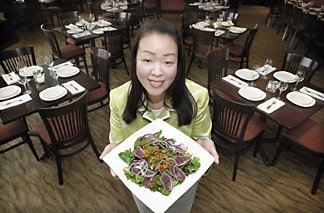
FAIRFIELD - If you go to Sticky Rice Bistro hoping for a white box of General Tso's Chicken and some fortune cookies, you will probably be disappointed.
The restaurant, located in the Wiseman Building on Business Center Drive, opened earlier this month. The building will hold its formal grand opening ceremony on Tuesday.
Owners Molly Tou and her uncle, James Jung, are trying to offer a classy, international take on the world of Chinese food, which has long been characterized by dingy take-out restaurants, greasy food and goofy fortunes, they said.
Tou is quick to point out how Stick Rice Bistro differs. Rather than being a hole-in-the-wall with dim lighting, the restaurant is roomy with a stylish, modern look. There is a 60-seat patio along a large, artificial pond behind the building.
Also noteworthy is the menu, which is based on Jung's experience running a Chinese restaurant in Vallejo as well as cooking in Thai, Italian, Japanese and Russian restaurants.
"We took a traditional Chinese restaurant menu and kept the things we thought are absolute favorites and we added some new things," Tou said.
They offer standard favorites such as broccoli beef and kung pao chicken, but much of the menu consists of options such as mandarin rib-eye steak strips, steamed sea bass, walnut pineapple prawns and a seaweed salad topped with raw tuna.
"A lot of my dishes, I assure you, you won't be able to find anywhere else," Jung said.
Jung spent several months putting together the menu from popular offerings at his Vallejo restaurant, dishes he had cooked elsewhere and family recipes, he said. He was generally happy with the menu but wanted the freedom to change it from time to time, although Tou said they would likely keep some of the traditional items on the menu.
"We have to have a certain type of dish so people don't come in and feel totally lost," she said.
Jung's personal favorite dishes are the walnut pineapple prawns and the scallops with spicy garlic sauce, he said. Tou also listed the prawns dish as one of her favorites.
The restaurant has a full bar, something Tou said is a recent trend among more upscale Chinese restaurants. She plans to start offering happy hour specials on Thursday. Sticky Rice Bistro offers to-go food but Tou said the restaurant was envisioned as "a full dining experience."
The food is served family-style and the price of entrees ranges from about $8 to $15. Altogether, Tou said an average customer would spend $20 to $25 during a dinner visit.
Reach Ben Antonius at 427-6977 or bantonius@dailyrepublic.net.
Sticky Rice Bistro
Owners: Molly Tou and James Jung
Hours: 11 a.m. to 10 p.m. Sunday through Thursday, 11 a.m. to 11 p.m. Friday and Saturday
Address: 5030-100 Business Center Drive, Fairfield
Phone: 863-7500
Opened for business: Sept. 19
A Pocket of History
A Pocket of History -- Cordelia Offers Glimpses Into What Central Solano Used To Be
By Barry Eberling

Old Town Cordelia resident Bob Lockefeer sits next to a portrait of his grandfather Deitrich Glusen who moved to Cordelia in the 1870s to become the town's blacksmith. (Gary Goldsmith/Daily Republic photos)
Editor's note: Solano County in the late 1800s had a half-dozen additional towns trying to become the next Big Thing, only to disappear or enter long twilights.
But these towns are more than colorful stories from the county's Wild West past. Some linger today as peaceful places threatened by subdivisions creeping from nearby cities. Others are remote and all-but-forgotten, yet are still candidates to play in important role in the county's future.
This series is about Solano County towns that disappeared or faded. Today's installment looks at Cordelia.
FAIRFIELD - Small, proud Cordelia is being squeezed by its bigger neighbor.
The town still looks like a remnant from the county's past, with its scattering of homes both grand and humble, lack of sidewalks and, of course, saloon. But Fairfield has crept near on three sides with new businesses and subdivisions. The slick city seems poised to swallow its rustic neighbor.
Those new homes and apartments are visible from Cordelia resident Bob Lockefeer's hillside home. Lockefeer, whose grandfather came to Cordelia in 1870 to start a blacksmith shop, is among those who hope Fairfield keeps its distance.
"I think most of the people feel as myself - what advantage do we have to become part of Fairfield, other than to pay more taxes?" Lockefeer said.
Cordelia has no museum - it has little more than houses, the Cordelia fire house and the Thompson's Corner bar. People such as Lockefeer are the keepers of the town's history. With a smile, he's willing to share what he knows.
"I used to shoot birds and squirrels over there, where they're building houses right now," he said, pointing at the land below his hill.
The reason Fairfield is building all those homes is it started annexing land around Cordelia in 1971 - a huge leap, given that city limits had been about eight miles away. Lockefeer doesn't blame Fairfield for growing that direction. But he clearly wishes things had been different.
"It ruined the opportunity for the people in this community to ever have their own city," Lockefeer said.
Fairfield and Cordelia have had their destinies interwoven since pioneer days. Capt. Robert Waterman, the famous clipper ship captain turned real estate speculator, founded both of them.
Cordelia came first, in the early 1850s, along a slough for shipping agricultural products to market. But rival ship Capt. Josiah Wing founded Suisun City, which proved a better shipping point. Waterman then founded Fairfield next to Suisun City and Cordelia never achieved its promise to become central Solano County's dominant city.
But Cordelia's origin is a convoluted story. Waterman seems to have founded the original Cordelia about a mile to the west of the present town, then founded Bridgeport at the location of the present town. The original Cordelia died and Bridgeport lived, only to take on the name of its predecessor when the U.S Postal Service said California already had a Bridgeport.
Both names had a personal connection to Waterman, though. Cordelia was the name of his wife and Bridgeport the name of her Connecticut hometown.
By the early 1900s, Cordelia had five saloons, a livery stable, a butcher shop, three dance halls and a train station. It had a nearby quarry at Nelson Hill that provided jobs.
Lockefeer's father in 1919 started a garage in a livery stable. By 1921, he had sold enough Red Crown gasoline - the forerunner of Standard - to tear down the stable and construct his own garage, where he sold Model Ts. The Lockefeer garage later became the Cordelia fire house.
Lockefeer, born in 1932, can remember Cordelia at a time when the town had reached its zenith. He remembers riding bikes down the wooden walkway of Studer's saloon, now the Thompson's Corner bar. The noise made people mad enough to throw beer bottles at them.
He and a friend could walk around with a rifle to shoot birds and squirrels. Today, a kid doing that would probably have a SWAT team responding.
"That's how things have changed," Lockefeer said. "That's one of the things I liked about Cordelia when I was a kid."
By 1939, the Lockefeers lived about a mile outside of Cordelia, near what is today the interstates 80 and 680 interchange. But they came to town on June 20 that year to watch Cordelia's own apocalypse, when a fire wiped out virtually the entire business district.
The fire started in the back of the Cordelia Meat Market early that morning. The meat market, the post office, the barber shop, a warehouse and the Southern Pacific passenger depot all were destroyed. The two remaining business buildings were the Studer saloon and the old Lockefeer garage, then owned by the Cordelia Fire Department.
Lockefeer, then a child, sat at the Moiles Hotel and watched the town burn. He can recall how the flames destroyed Siebes general store, which had operated for 60 years. The heat started a fire in the right-hand corner. The fire climbed to the attic, then broke out all over.
"I can see it like the day it happened," Lockefeer said.
Firefighters from Suisun, Rio Vista, Elmira and Benicia came to fight the fire. But a strong west wind thwarted efforts to extinguish the blaze. As Lockefeer noted, there were no fire hydrants then and many of the buildings were made of redwood.
After the fire, Cordelia entered its long twilight. Much of the town was wiped out and much of it was uninsured. The business section never got rebuilt.
"It's never been the same again," Lockefeer said. "No, it hasn't."
Cordelia had a chance to wake from its slumber and become a city in the late 1940s. Would-be developers came up with a plan for homes near Cordelia.
"My father worked with the people in the community," Lockefeer said. "They wanted to get the bylaws of incorporation. My father worked hundreds of hours on that stuff."
But the plan for the homes never worked out and Cordelia continued its slumber.
Meanwhile, others were busy.
The Aster Corp. and Ford Foundation bought 2,400 acres of ranchland near Cordelia in 1968. They liked the location near the intersection of newly built interstates 80 and 680. They laid plans to build a town of 20,000 people to help fill the need for moderately priced Bay Area housing.
Motorists from there could easily reach Napa, the Bay Area and Contra Costa County, making this prime land for development, a spokesman for the new owners said. But he played coy over what nearby city would get to oversee the development, saying the landowners might choose Fairfield or Vallejo.
Cordelia itself wasn't in the running. The town of 100 people had no elected body to govern it, nor the resources to provide water and sewer service. Fairfield annexed the Aster/Ford land for its Cordelia Villages and other developments.
That set in motion events in that area that continue to this day: Fairfield builds and Cordelia remains largely the same, except for the additional traffic that goes through town.
Fairfield Mayor Harry Price said his city has no plans to annex Cordelia.
"I think Old Town is one of those unique areas that should be preserved unto itself," Price said. "I see it remaining as county. It's one of those quaint places that should be preserved, unless the residents decide they want city services."
But that's not to say Fairfield couldn't someday annex Cordelia. City voters in 2003 approved growth boundaries surrounding Fairfield and Cordelia is within those boundaries.
Having Fairfield annex Cordelia makes sense "in the long haul," Supervisor Duane Kromm said. Cordelia for the most part has suburban-style lots and already uses city water and sewer services, he said.
For now, Cordelia remains a time capsule of the county's rural past embraced by a fast-growing, neighboring city.
Next Monday: Elmira
Reach Barry Eberling at 425-4646 Ext. 232 or beberling@dailyrepublic.net.
By Barry Eberling
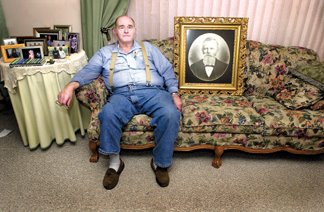
Old Town Cordelia resident Bob Lockefeer sits next to a portrait of his grandfather Deitrich Glusen who moved to Cordelia in the 1870s to become the town's blacksmith. (Gary Goldsmith/Daily Republic photos)
Editor's note: Solano County in the late 1800s had a half-dozen additional towns trying to become the next Big Thing, only to disappear or enter long twilights.
But these towns are more than colorful stories from the county's Wild West past. Some linger today as peaceful places threatened by subdivisions creeping from nearby cities. Others are remote and all-but-forgotten, yet are still candidates to play in important role in the county's future.
This series is about Solano County towns that disappeared or faded. Today's installment looks at Cordelia.
FAIRFIELD - Small, proud Cordelia is being squeezed by its bigger neighbor.
The town still looks like a remnant from the county's past, with its scattering of homes both grand and humble, lack of sidewalks and, of course, saloon. But Fairfield has crept near on three sides with new businesses and subdivisions. The slick city seems poised to swallow its rustic neighbor.
Those new homes and apartments are visible from Cordelia resident Bob Lockefeer's hillside home. Lockefeer, whose grandfather came to Cordelia in 1870 to start a blacksmith shop, is among those who hope Fairfield keeps its distance.
"I think most of the people feel as myself - what advantage do we have to become part of Fairfield, other than to pay more taxes?" Lockefeer said.
Cordelia has no museum - it has little more than houses, the Cordelia fire house and the Thompson's Corner bar. People such as Lockefeer are the keepers of the town's history. With a smile, he's willing to share what he knows.
"I used to shoot birds and squirrels over there, where they're building houses right now," he said, pointing at the land below his hill.
The reason Fairfield is building all those homes is it started annexing land around Cordelia in 1971 - a huge leap, given that city limits had been about eight miles away. Lockefeer doesn't blame Fairfield for growing that direction. But he clearly wishes things had been different.
"It ruined the opportunity for the people in this community to ever have their own city," Lockefeer said.
Fairfield and Cordelia have had their destinies interwoven since pioneer days. Capt. Robert Waterman, the famous clipper ship captain turned real estate speculator, founded both of them.
Cordelia came first, in the early 1850s, along a slough for shipping agricultural products to market. But rival ship Capt. Josiah Wing founded Suisun City, which proved a better shipping point. Waterman then founded Fairfield next to Suisun City and Cordelia never achieved its promise to become central Solano County's dominant city.
But Cordelia's origin is a convoluted story. Waterman seems to have founded the original Cordelia about a mile to the west of the present town, then founded Bridgeport at the location of the present town. The original Cordelia died and Bridgeport lived, only to take on the name of its predecessor when the U.S Postal Service said California already had a Bridgeport.
Both names had a personal connection to Waterman, though. Cordelia was the name of his wife and Bridgeport the name of her Connecticut hometown.
By the early 1900s, Cordelia had five saloons, a livery stable, a butcher shop, three dance halls and a train station. It had a nearby quarry at Nelson Hill that provided jobs.
Lockefeer's father in 1919 started a garage in a livery stable. By 1921, he had sold enough Red Crown gasoline - the forerunner of Standard - to tear down the stable and construct his own garage, where he sold Model Ts. The Lockefeer garage later became the Cordelia fire house.
Lockefeer, born in 1932, can remember Cordelia at a time when the town had reached its zenith. He remembers riding bikes down the wooden walkway of Studer's saloon, now the Thompson's Corner bar. The noise made people mad enough to throw beer bottles at them.
He and a friend could walk around with a rifle to shoot birds and squirrels. Today, a kid doing that would probably have a SWAT team responding.
"That's how things have changed," Lockefeer said. "That's one of the things I liked about Cordelia when I was a kid."
By 1939, the Lockefeers lived about a mile outside of Cordelia, near what is today the interstates 80 and 680 interchange. But they came to town on June 20 that year to watch Cordelia's own apocalypse, when a fire wiped out virtually the entire business district.
The fire started in the back of the Cordelia Meat Market early that morning. The meat market, the post office, the barber shop, a warehouse and the Southern Pacific passenger depot all were destroyed. The two remaining business buildings were the Studer saloon and the old Lockefeer garage, then owned by the Cordelia Fire Department.
Lockefeer, then a child, sat at the Moiles Hotel and watched the town burn. He can recall how the flames destroyed Siebes general store, which had operated for 60 years. The heat started a fire in the right-hand corner. The fire climbed to the attic, then broke out all over.
"I can see it like the day it happened," Lockefeer said.
Firefighters from Suisun, Rio Vista, Elmira and Benicia came to fight the fire. But a strong west wind thwarted efforts to extinguish the blaze. As Lockefeer noted, there were no fire hydrants then and many of the buildings were made of redwood.
After the fire, Cordelia entered its long twilight. Much of the town was wiped out and much of it was uninsured. The business section never got rebuilt.
"It's never been the same again," Lockefeer said. "No, it hasn't."
Cordelia had a chance to wake from its slumber and become a city in the late 1940s. Would-be developers came up with a plan for homes near Cordelia.
"My father worked with the people in the community," Lockefeer said. "They wanted to get the bylaws of incorporation. My father worked hundreds of hours on that stuff."
But the plan for the homes never worked out and Cordelia continued its slumber.
Meanwhile, others were busy.
The Aster Corp. and Ford Foundation bought 2,400 acres of ranchland near Cordelia in 1968. They liked the location near the intersection of newly built interstates 80 and 680. They laid plans to build a town of 20,000 people to help fill the need for moderately priced Bay Area housing.
Motorists from there could easily reach Napa, the Bay Area and Contra Costa County, making this prime land for development, a spokesman for the new owners said. But he played coy over what nearby city would get to oversee the development, saying the landowners might choose Fairfield or Vallejo.
Cordelia itself wasn't in the running. The town of 100 people had no elected body to govern it, nor the resources to provide water and sewer service. Fairfield annexed the Aster/Ford land for its Cordelia Villages and other developments.
That set in motion events in that area that continue to this day: Fairfield builds and Cordelia remains largely the same, except for the additional traffic that goes through town.
Fairfield Mayor Harry Price said his city has no plans to annex Cordelia.
"I think Old Town is one of those unique areas that should be preserved unto itself," Price said. "I see it remaining as county. It's one of those quaint places that should be preserved, unless the residents decide they want city services."
But that's not to say Fairfield couldn't someday annex Cordelia. City voters in 2003 approved growth boundaries surrounding Fairfield and Cordelia is within those boundaries.
Having Fairfield annex Cordelia makes sense "in the long haul," Supervisor Duane Kromm said. Cordelia for the most part has suburban-style lots and already uses city water and sewer services, he said.
For now, Cordelia remains a time capsule of the county's rural past embraced by a fast-growing, neighboring city.
Next Monday: Elmira
Reach Barry Eberling at 425-4646 Ext. 232 or beberling@dailyrepublic.net.
City Takes Snapshot of Available Vacant Land
City Takes Snapshot of Available Vacant Land
By Brian Miller and Karl Dumas
FAIRFIELD - With all the commercial development activity around Fairfield in the last few years, some folks may wonder if we're running out of office and industrial land.
Recently, the city's Community Development Department compiled data from parcel maps, zoning maps, aerial photos, broker data, Geographic Information Systems and Internet databases to generate a comprehensive inventory of vacant industrial and office land within the city's Urban Limit Line in Fairfield. Here is a glimpse of the findings.
There are about 1,123 acres of vacant office, industrial and service commercial acreage available. However, much of this land isn't on the market and available for new development due to environmental, infrastructure or market constraints.
About 582 acres of the vacant land can be considered unrestricted. This land will accommodate about 8.5 million square feet of building area for industrial and office development. Of this vacant land, about 308 acres is zoned limited or general industrial and will accommodate about 4.7 million square feet. Land zoned for office commercial or industrial business park is 218 acres, which will accommodate about 3.2 million square feet of office space.
About 25 acres of vacant industrial land is built out each year to accommodate an average annual construction of 379,000 square feet. Based upon this rate of development, land zoned limited or general industrial could be built out in about 12 years. We estimate that roughly 10 acres of office development occurs per year, so the present supply of land zoned for office commercial and industrial business park represents a build out period of more than 20 years.
It is important to note, however, that large, unrestricted sites and general industrial sites are in short supply. Private property owners and the city can take actions to open up the amount of unrestricted industrial land with infrastructure investments and permit processing.
The Community Development Department also reviewed the supply of vacant buildings in the city. There are about 2.6 million square feet of vacant industrial and office buildings available in Fairfield today. Almost 1 million square feet of this space is located in the two buildings formerly occupied by Saint Gobain on Fermi Drive.
The northeastern part of Fairfield has 270,000 square feet of building space available. North Cordelia, south Cordelia (excluding Saint Gobain's former buildings), the west side of Fairfield and central Fairfield each have less than 150,000 square feet of space available and a combined total of 320,000 square feet of building space.
Industrial zoning is by far the largest designation for Fairfield's vacant buildings. Limited Industrial has the most building space available - more than 2 million square feet. General industrial building space totals 250,000 square feet and industrial business park has 200,000 square feet available. There is a little more than 100,000 square feet of built office space available.
All of the large vacant buildings (more than 100,000 square feet) have an industrial zoning designation. There are six buildings vacant with between 100,000 and 200,000 square feet available. Only five buildings are available that are between 50,000 and 100,000 square feet. A total of about 90,000 square feet of vacant space is comprised of small suites under 5,000 square feet in size.
So what does the information gathered in this snapshot of available land, industrial land absorption, office land absorption and vacant buildings really mean?
We have land available to produce job growth in the years to come, but need to look at removing constraints on the restricted land and identify larger parcels.
Economic Notes is an update from Fairfield City Hall written by Brian Miller and Karl Dumas of the Fairfield Planning and Development Department. They can be contacted at 428-7461 or e-mail at kdumas@ci.fairfield.ca.us or bkmiller@ci.fairfield.ca.us.
By Brian Miller and Karl Dumas
FAIRFIELD - With all the commercial development activity around Fairfield in the last few years, some folks may wonder if we're running out of office and industrial land.
Recently, the city's Community Development Department compiled data from parcel maps, zoning maps, aerial photos, broker data, Geographic Information Systems and Internet databases to generate a comprehensive inventory of vacant industrial and office land within the city's Urban Limit Line in Fairfield. Here is a glimpse of the findings.
There are about 1,123 acres of vacant office, industrial and service commercial acreage available. However, much of this land isn't on the market and available for new development due to environmental, infrastructure or market constraints.
About 582 acres of the vacant land can be considered unrestricted. This land will accommodate about 8.5 million square feet of building area for industrial and office development. Of this vacant land, about 308 acres is zoned limited or general industrial and will accommodate about 4.7 million square feet. Land zoned for office commercial or industrial business park is 218 acres, which will accommodate about 3.2 million square feet of office space.
About 25 acres of vacant industrial land is built out each year to accommodate an average annual construction of 379,000 square feet. Based upon this rate of development, land zoned limited or general industrial could be built out in about 12 years. We estimate that roughly 10 acres of office development occurs per year, so the present supply of land zoned for office commercial and industrial business park represents a build out period of more than 20 years.
It is important to note, however, that large, unrestricted sites and general industrial sites are in short supply. Private property owners and the city can take actions to open up the amount of unrestricted industrial land with infrastructure investments and permit processing.
The Community Development Department also reviewed the supply of vacant buildings in the city. There are about 2.6 million square feet of vacant industrial and office buildings available in Fairfield today. Almost 1 million square feet of this space is located in the two buildings formerly occupied by Saint Gobain on Fermi Drive.
The northeastern part of Fairfield has 270,000 square feet of building space available. North Cordelia, south Cordelia (excluding Saint Gobain's former buildings), the west side of Fairfield and central Fairfield each have less than 150,000 square feet of space available and a combined total of 320,000 square feet of building space.
Industrial zoning is by far the largest designation for Fairfield's vacant buildings. Limited Industrial has the most building space available - more than 2 million square feet. General industrial building space totals 250,000 square feet and industrial business park has 200,000 square feet available. There is a little more than 100,000 square feet of built office space available.
All of the large vacant buildings (more than 100,000 square feet) have an industrial zoning designation. There are six buildings vacant with between 100,000 and 200,000 square feet available. Only five buildings are available that are between 50,000 and 100,000 square feet. A total of about 90,000 square feet of vacant space is comprised of small suites under 5,000 square feet in size.
So what does the information gathered in this snapshot of available land, industrial land absorption, office land absorption and vacant buildings really mean?
We have land available to produce job growth in the years to come, but need to look at removing constraints on the restricted land and identify larger parcels.
Economic Notes is an update from Fairfield City Hall written by Brian Miller and Karl Dumas of the Fairfield Planning and Development Department. They can be contacted at 428-7461 or e-mail at kdumas@ci.fairfield.ca.us or bkmiller@ci.fairfield.ca.us.
First Step in Developing Downtown Suisun City
First Step in Developing Downtown Suisun City
By Ian Thompson
SUISUN CITY - The first major construction in Old Town Suisun City in several years finally kicked off Friday with the groundbreaking for the much-awaited Harbor Center project.
Work starts Monday on Main Street West Partners' first project - Harbor Square, which will cover 38,500 square feet of commercial and retail stores designed around a central courtyard.
Officials promoted Harbor Square as the launching point for more Old Town development that will soon include a 12,000-square-foot building across Solano Street.
Work on several of the other 12 sites along Main Street that Main Street West controls will follow, as well putting housing on the former Crystal School site.
Mike Rice of Main Street West promised there will soon be more projects in the offing, alluding to a major project in works but giving no details at this time.
Mayor Jim Spering called the ground-breaking "a very important day for Suisun City" and the culmination of a massive multimillion dollar redevelopment effort that started more than a decade ago with building City Hall and razing the crime-blighted Crescent neighborhood.
"We wanted to carve a niche that was unique," Spering said of the city's long-term plans.
The effort hit a stumbling block when the city redevelopment efforts weren't followed by private investment, "something we did not calculate on happening," Spering said.
Suisun City revived its campaign last year by hiring Main Street West to oversee the Old Town redevelopment efforts and sold it 8.4 acres of land around Main Street for $3.7 million.
The city had spent the last 15 years spending $14.2 million to purchase, clean up and improve these sites that run from large parcels near One Harbor Center to Crystal School.
Earlier this year, the city sweetened the pot by selling the vacant Crystal School site to Main Street West to build a housing development.
The city's leaders hope developing these sites with a mix of commercial, retail and some residential development will finally bring in more commercial development, they said.
The last few years have been tough for those businesses that did invest, Spering said. This project will help change that, he added.
"Hopefully, this is the light at the end of the tunnel for all of you who kept the faith," Spering said.
Rice lauded Harbor Square as the start of the next phase of Suisun City's Old Town redevelopment efforts.
"This is an example of how public-private partnerships work," Rice said.
Reach Ian Thompson at 427-6976 or at ithompson@dailyrepublic.net.
By Ian Thompson
SUISUN CITY - The first major construction in Old Town Suisun City in several years finally kicked off Friday with the groundbreaking for the much-awaited Harbor Center project.
Work starts Monday on Main Street West Partners' first project - Harbor Square, which will cover 38,500 square feet of commercial and retail stores designed around a central courtyard.
Officials promoted Harbor Square as the launching point for more Old Town development that will soon include a 12,000-square-foot building across Solano Street.
Work on several of the other 12 sites along Main Street that Main Street West controls will follow, as well putting housing on the former Crystal School site.
Mike Rice of Main Street West promised there will soon be more projects in the offing, alluding to a major project in works but giving no details at this time.
Mayor Jim Spering called the ground-breaking "a very important day for Suisun City" and the culmination of a massive multimillion dollar redevelopment effort that started more than a decade ago with building City Hall and razing the crime-blighted Crescent neighborhood.
"We wanted to carve a niche that was unique," Spering said of the city's long-term plans.
The effort hit a stumbling block when the city redevelopment efforts weren't followed by private investment, "something we did not calculate on happening," Spering said.
Suisun City revived its campaign last year by hiring Main Street West to oversee the Old Town redevelopment efforts and sold it 8.4 acres of land around Main Street for $3.7 million.
The city had spent the last 15 years spending $14.2 million to purchase, clean up and improve these sites that run from large parcels near One Harbor Center to Crystal School.
Earlier this year, the city sweetened the pot by selling the vacant Crystal School site to Main Street West to build a housing development.
The city's leaders hope developing these sites with a mix of commercial, retail and some residential development will finally bring in more commercial development, they said.
The last few years have been tough for those businesses that did invest, Spering said. This project will help change that, he added.
"Hopefully, this is the light at the end of the tunnel for all of you who kept the faith," Spering said.
Rice lauded Harbor Square as the start of the next phase of Suisun City's Old Town redevelopment efforts.
"This is an example of how public-private partnerships work," Rice said.
Reach Ian Thompson at 427-6976 or at ithompson@dailyrepublic.net.
Solano Jobless Rate Drops 4.8 Percent in August
Solano Jobless Rate Drops 4.8 Percent in August
By Daily Republic staff
FAIRFIELD - The unemployment rate in Solano County dropped to 4.8 percent in August, down from the 5.2 percent posted in July and well below the 5.4 percent unemployment rate of August 2005, a state report said.
The number of jobs in Solano County grew 2.5 percent in the past year, with the biggest growth in trade, transportation and utilities; and educational and health services. The number of jobs grew from 129,800 in August 2005 to 133,000 last month.
Solano County's unemployment rate was below the 4.9 percent average for the state but above the national average of 4.6 percent during the same period.
Ribbon-cutting for new business center
FAIRFIELD - The Wiseman Co. will celebrate the grand opening of the new Green Valley Executive Center and Sticky Rice Bistro, a restaurant located in the building, next week.
The ribbon-cutting is set for 11 a.m. Tuesday at 5030 Business Center Drive, followed by refreshments provided by Sticky Rice Bistro at 11:30 a.m.
For more information or to RSVP, call 427-1212 or pmagee@WisemanCo.com.
By Daily Republic staff
FAIRFIELD - The unemployment rate in Solano County dropped to 4.8 percent in August, down from the 5.2 percent posted in July and well below the 5.4 percent unemployment rate of August 2005, a state report said.
The number of jobs in Solano County grew 2.5 percent in the past year, with the biggest growth in trade, transportation and utilities; and educational and health services. The number of jobs grew from 129,800 in August 2005 to 133,000 last month.
Solano County's unemployment rate was below the 4.9 percent average for the state but above the national average of 4.6 percent during the same period.
Ribbon-cutting for new business center
FAIRFIELD - The Wiseman Co. will celebrate the grand opening of the new Green Valley Executive Center and Sticky Rice Bistro, a restaurant located in the building, next week.
The ribbon-cutting is set for 11 a.m. Tuesday at 5030 Business Center Drive, followed by refreshments provided by Sticky Rice Bistro at 11:30 a.m.
For more information or to RSVP, call 427-1212 or pmagee@WisemanCo.com.
Friday, September 29, 2006
Solano Group Opposes Prop. 90
Solano Group Opposes Prop. 90
Board Says the Nov. 7 Ballot Measure, if Approved, Will Stifle Private and Public Development Projects.
By Reporter Staff
Some top business leaders in Solano County on Thursday offered staunch opposition to Proposition 90 on the Nov. 7 state ballot, arguing it could cripple, or even halt, local economic development initiatives.
The board of directors of Solano Economic Development Corporation, a public-private partnership of businesses and local governments devoted to luring new employers to local cities, unanimously voted to oppose the measure that aims to significantly increase requirements to compensate property owners for economic losses resulting from new laws or rules.
Mike Ammann, president of the organization, said it would not only stifle business development and public works projects, but also make it difficult to protect the environment or enact new consumer protection laws.
He noted the main benefactor of the Prop. 90 campaign comes from New York.
Representatives of the local transit agency, cities and developers characterized the measure as a trap to stifle California's development, making it less competitive with other states, all under the guise of protection from eminent domain.
They insist homeowners already are protected from such government intervention, noting that local redevelopment agencies are prohibited from using eminent domain to take private homes.
Board Says the Nov. 7 Ballot Measure, if Approved, Will Stifle Private and Public Development Projects.
By Reporter Staff
Some top business leaders in Solano County on Thursday offered staunch opposition to Proposition 90 on the Nov. 7 state ballot, arguing it could cripple, or even halt, local economic development initiatives.
The board of directors of Solano Economic Development Corporation, a public-private partnership of businesses and local governments devoted to luring new employers to local cities, unanimously voted to oppose the measure that aims to significantly increase requirements to compensate property owners for economic losses resulting from new laws or rules.
Mike Ammann, president of the organization, said it would not only stifle business development and public works projects, but also make it difficult to protect the environment or enact new consumer protection laws.
He noted the main benefactor of the Prop. 90 campaign comes from New York.
Representatives of the local transit agency, cities and developers characterized the measure as a trap to stifle California's development, making it less competitive with other states, all under the guise of protection from eminent domain.
They insist homeowners already are protected from such government intervention, noting that local redevelopment agencies are prohibited from using eminent domain to take private homes.
Thursday, September 28, 2006
Fate of Dixon Downs Likely in Council's Hands
Fate of Dixon Downs Likely in Council's Hands
By Ben Antonius
DIXON - The Dixon Downs project looks to be entering the home stretch.
The City Planning Commission gave the go-ahead to the racetrack project on most of the major counts on Wednesday night.
Canada-based Magna Entertainment Corporation has been seeking to build a horse racing track and amphitheater on 250 acres along Interstate 80 in northeast Dixon.
Late Wednesday, the commissioners had approved four of the five items necessary to send the issue to the City Council and discussion was under way on the fifth item.
Commissioners unanimously approved a study of the impacts the project would have on the surrounding area. Commissioner Doug Uhlik departed from his colleagues on the other three votes, casting the lone dissenting vote.
Most of the time Wednesday was spent as commissioners discussed a litany of topics, including the height of signs along the freeway, how the project would affect the small-town atmosphere and whether traffic would affect tomato trucks going to the nearby Campbell's plant.
"I think there's no doubt there will be impacts but I put a lot of stock in the (police) chief saying they will be manageable impacts," said commissioner Wayne Williams.
Proponents have said the racetrack would be a state-of-the-art project with good restaurants, shopping and hotel components. They have said it would bring jobs and economic development, as well as boost the city's finances.
Detractors - many of whom wore shirts and buttons with critical slogans on Wednesday - have said the project would choke intersections in the area with traffic and that the gambling aspect of the racetrack could attract crime.
At one point, commissioners discussed whether the benefits of the project would outweigh the negative impacts. They discussed the consequences of a "worst-case scenario" in which the track is built but fails before reaching its second phase of construction.
Even in that case, they agreed, the city would come out favorably because it would have received much-needed infrastructure improvements to the area around the track.
"There are people out there waiting (to move to Dixon) for this to happen," said commissioner Dave Cornejo. "There's some infrastructure out there that are really needed."
If commissioners do approve all five conditions, as they were expected to, the Dixon City Council could start its deliberations as early as tonight.
The council discussion is expected to take several days, possibly running into mid-October.
Staff writer Ian Thompson contributed to this report. Reach Ben Antonius at bantonius@dailyrepublic.net or 427-6977.
By Ben Antonius
DIXON - The Dixon Downs project looks to be entering the home stretch.
The City Planning Commission gave the go-ahead to the racetrack project on most of the major counts on Wednesday night.
Canada-based Magna Entertainment Corporation has been seeking to build a horse racing track and amphitheater on 250 acres along Interstate 80 in northeast Dixon.
Late Wednesday, the commissioners had approved four of the five items necessary to send the issue to the City Council and discussion was under way on the fifth item.
Commissioners unanimously approved a study of the impacts the project would have on the surrounding area. Commissioner Doug Uhlik departed from his colleagues on the other three votes, casting the lone dissenting vote.
Most of the time Wednesday was spent as commissioners discussed a litany of topics, including the height of signs along the freeway, how the project would affect the small-town atmosphere and whether traffic would affect tomato trucks going to the nearby Campbell's plant.
"I think there's no doubt there will be impacts but I put a lot of stock in the (police) chief saying they will be manageable impacts," said commissioner Wayne Williams.
Proponents have said the racetrack would be a state-of-the-art project with good restaurants, shopping and hotel components. They have said it would bring jobs and economic development, as well as boost the city's finances.
Detractors - many of whom wore shirts and buttons with critical slogans on Wednesday - have said the project would choke intersections in the area with traffic and that the gambling aspect of the racetrack could attract crime.
At one point, commissioners discussed whether the benefits of the project would outweigh the negative impacts. They discussed the consequences of a "worst-case scenario" in which the track is built but fails before reaching its second phase of construction.
Even in that case, they agreed, the city would come out favorably because it would have received much-needed infrastructure improvements to the area around the track.
"There are people out there waiting (to move to Dixon) for this to happen," said commissioner Dave Cornejo. "There's some infrastructure out there that are really needed."
If commissioners do approve all five conditions, as they were expected to, the Dixon City Council could start its deliberations as early as tonight.
The council discussion is expected to take several days, possibly running into mid-October.
Staff writer Ian Thompson contributed to this report. Reach Ben Antonius at bantonius@dailyrepublic.net or 427-6977.
Wednesday, September 27, 2006
Vallejo Planning University Village
Vallejo Planning University Village
By Rachel Raskin-Zrihen/Times-Herald, Vallejo
Plans for a university village on Mare Island's north end will be unveiled next week. Touro University and a consortium of "private, well-known developers" will present the project to the Vallejo City Council, officials said Monday.
Touro Vice President Richard Hassel said the project includes student housing and more, but declined to give specifics. "It's what was promised 10 years ago - jobs and sales tax related to the resources we have," he said. "It's a huge turning point in the economic recovery of the area."
Already, Touro generates $27.5 million for Solano County's economy and supports 229 jobs, according to an economic impact study released Tuesday. The osteopathic medical school - which expects to triple in size in the next few years - had 761 students enrolled this year.
Lennar Mare Island, Mare Island's main developer, and Touro, its anchor tenant, had been working together since June on development possibilities, said Craig Whittom, Vallejo's community development director.
Though Lennar's exclusive rights to negotiate north end development expired in April and Touro recently partnered with others, Whittom said city staff still thinks the university should work with Lennar.
Hassel said he couldn't yet disclose why Touro ceased working with Lennar.
Lennar Spokesman Jason Keadjian said Lennar officials question the wherewithal and expertise of other developers in dealing with the Navy parcels.
"We also believe having a single developer and master plan for the whole island is more efficient," Keadjian said. "And we continue to believe the best course is cooperation between the entities."
Lennar has already developed much of the island's 650 acres, mostly with homes and businesses on the island's east side. It wants to transform 191 more acres on the north end.
Some city officials, however, are frustrated with the pace of the island's business development, and hope a new developer might shake things up.
"I like the idea of mixing it up with developers out there," said City Councilwoman Stephanie Gomes.
By Rachel Raskin-Zrihen/Times-Herald, Vallejo
Plans for a university village on Mare Island's north end will be unveiled next week. Touro University and a consortium of "private, well-known developers" will present the project to the Vallejo City Council, officials said Monday.
Touro Vice President Richard Hassel said the project includes student housing and more, but declined to give specifics. "It's what was promised 10 years ago - jobs and sales tax related to the resources we have," he said. "It's a huge turning point in the economic recovery of the area."
Already, Touro generates $27.5 million for Solano County's economy and supports 229 jobs, according to an economic impact study released Tuesday. The osteopathic medical school - which expects to triple in size in the next few years - had 761 students enrolled this year.
Lennar Mare Island, Mare Island's main developer, and Touro, its anchor tenant, had been working together since June on development possibilities, said Craig Whittom, Vallejo's community development director.
Though Lennar's exclusive rights to negotiate north end development expired in April and Touro recently partnered with others, Whittom said city staff still thinks the university should work with Lennar.
Hassel said he couldn't yet disclose why Touro ceased working with Lennar.
Lennar Spokesman Jason Keadjian said Lennar officials question the wherewithal and expertise of other developers in dealing with the Navy parcels.
"We also believe having a single developer and master plan for the whole island is more efficient," Keadjian said. "And we continue to believe the best course is cooperation between the entities."
Lennar has already developed much of the island's 650 acres, mostly with homes and businesses on the island's east side. It wants to transform 191 more acres on the north end.
Some city officials, however, are frustrated with the pace of the island's business development, and hope a new developer might shake things up.
"I like the idea of mixing it up with developers out there," said City Councilwoman Stephanie Gomes.
Tuesday, September 26, 2006
Touro to Develop Mare Island North End
Touro to Develop Mare Island North End
By RACHEL RASKIN-ZRIHEN/Times-Herald staff writer
Vallejo Times Herald
A university village on Mare Island's north end.
That's what Touro University and a consortium of developers plan to propose to the Vallejo City Council in about a week, city and university officials said Monday. Little can be revealed about the group or its plans until the proposal is official, they said.
Vallejo's community development director Craig Whittom said Lennar Mare Island, the island's main developer and Touro, its anchor tenant, have been working since June on ways to develop the island's north end. He said that though Touro has recently partnered with outside developers; city staff still thinks the university should work with Lennar. Lennar's exclusive right to negotiate the island's north end development expired in April, he said.
Several weeks ago, Touro officials said they were putting together their own team to develop the area independently, Whittom said.
Touro vice president Richard Hassel said he couldn't yet disclose the reason Touro turned to other partners.
Lennar has already developed much of 650 acres, mostly with homes and businesses on the island's east side. It wants to transform 191 more in the north between Hwy. 37 and G Street to the north and south, and the Napa River and Azuar Drive to the east and west.
Lennar spokesman Jason Keadjian said Lennar officials question the wherewithal and expertise of any other developers and the wisdom of selecting anyone new.
"The north island is one of 10 parcels needing to go through early transfer process from the Navy and Lennar is one of very few developers in the country that has successfully negotiated this process," Keadjian said. A snag in that process could delay the transfer of other parcels, he added. Plus, the development of Mare Island's north end is so complicated and expensive that it's best to leave it to the experts, he said.
"Lennar is in the best position to implement the reuse of Mare Island," Keadjian said. "We also believe having a single developer and master plan for the whole island is more efficient. And we continue to believe the best course is cooperation between the entities."
Hassel said the group's plan includes student housing and more, but declined to give specifics. An economic impact study to be released today shows Touro generates millions of dollars and hundreds of jobs annually. Its officials hope to increase both, he said. (See related story on A1.)
"It's what was promised 10 years ago - jobs and sales tax related to the resources we have," he said.
With some city officials reportedly frustrated with the pace of business development on Mare Island, there is hope a new developer might shake things up. Vallejo City Councilman Tom Bartee said several businesses have tried and failed to locate or relocate on Mare Island without success. A small container ship-building enterprise, for instance, has been trying for several years to find a home there, as has a multi-million dollar bio-tech firm. Touro wants to partner with the biotech company, Coeur Scientific, Inc., Hassel said.
"This is exactly the kind of business we're looking at possibly for the north end," Bartee said, though he declined to provide further details.
Hassel described the Touro entity as "a group of private, well-known developers" with "very exciting ideas" for the island.
"It's a huge turning point in the economic recovery of the area," Hassel said. "The idea is to create a university village. This is neat stuff. Just what our community needs to take it to the next level."
City Council member Stephanie Gomes said she is aware of a new entity vying for the right to develop Mare Island's north end, though she said she couldn't disclose details.
"I like the idea of mixing it up with developers out there," she said.
If approved, the Touro group will be the fourth developer to take on revamping Mare Island's north end. Lincoln Property Company signed a deal to do it in 1998, but withdrew in 2002. A team of Weston Solutions and Harvest Properties in 2003 began negotiations for the project but backed out about a year and a half later.
-- E-mail Rachel Raskin-Zrihen at RachelZ@thnewsnet.com or call 553-6824.
By RACHEL RASKIN-ZRIHEN/Times-Herald staff writer
Vallejo Times Herald
A university village on Mare Island's north end.
That's what Touro University and a consortium of developers plan to propose to the Vallejo City Council in about a week, city and university officials said Monday. Little can be revealed about the group or its plans until the proposal is official, they said.
Vallejo's community development director Craig Whittom said Lennar Mare Island, the island's main developer and Touro, its anchor tenant, have been working since June on ways to develop the island's north end. He said that though Touro has recently partnered with outside developers; city staff still thinks the university should work with Lennar. Lennar's exclusive right to negotiate the island's north end development expired in April, he said.
Several weeks ago, Touro officials said they were putting together their own team to develop the area independently, Whittom said.
Touro vice president Richard Hassel said he couldn't yet disclose the reason Touro turned to other partners.
Lennar has already developed much of 650 acres, mostly with homes and businesses on the island's east side. It wants to transform 191 more in the north between Hwy. 37 and G Street to the north and south, and the Napa River and Azuar Drive to the east and west.
Lennar spokesman Jason Keadjian said Lennar officials question the wherewithal and expertise of any other developers and the wisdom of selecting anyone new.
"The north island is one of 10 parcels needing to go through early transfer process from the Navy and Lennar is one of very few developers in the country that has successfully negotiated this process," Keadjian said. A snag in that process could delay the transfer of other parcels, he added. Plus, the development of Mare Island's north end is so complicated and expensive that it's best to leave it to the experts, he said.
"Lennar is in the best position to implement the reuse of Mare Island," Keadjian said. "We also believe having a single developer and master plan for the whole island is more efficient. And we continue to believe the best course is cooperation between the entities."
Hassel said the group's plan includes student housing and more, but declined to give specifics. An economic impact study to be released today shows Touro generates millions of dollars and hundreds of jobs annually. Its officials hope to increase both, he said. (See related story on A1.)
"It's what was promised 10 years ago - jobs and sales tax related to the resources we have," he said.
With some city officials reportedly frustrated with the pace of business development on Mare Island, there is hope a new developer might shake things up. Vallejo City Councilman Tom Bartee said several businesses have tried and failed to locate or relocate on Mare Island without success. A small container ship-building enterprise, for instance, has been trying for several years to find a home there, as has a multi-million dollar bio-tech firm. Touro wants to partner with the biotech company, Coeur Scientific, Inc., Hassel said.
"This is exactly the kind of business we're looking at possibly for the north end," Bartee said, though he declined to provide further details.
Hassel described the Touro entity as "a group of private, well-known developers" with "very exciting ideas" for the island.
"It's a huge turning point in the economic recovery of the area," Hassel said. "The idea is to create a university village. This is neat stuff. Just what our community needs to take it to the next level."
City Council member Stephanie Gomes said she is aware of a new entity vying for the right to develop Mare Island's north end, though she said she couldn't disclose details.
"I like the idea of mixing it up with developers out there," she said.
If approved, the Touro group will be the fourth developer to take on revamping Mare Island's north end. Lincoln Property Company signed a deal to do it in 1998, but withdrew in 2002. A team of Weston Solutions and Harvest Properties in 2003 began negotiations for the project but backed out about a year and a half later.
-- E-mail Rachel Raskin-Zrihen at RachelZ@thnewsnet.com or call 553-6824.
Subscribe to:
Posts (Atom)
Solano's Got It!

The Best That Northern California Has To Offer.


