Med school moving in, bulking up - Sacramento Business Journal:: "Sacramento Business Journal - December 11, 2006
http://sacramento.bizjournals.com/sacramento/stories/2006/12/11/story2.html
Med school moving in, bulking up
UC Davis plans $35M expansion of brand-new education building
Sacramento Business Journal - December 8, 2006
by Kathy Robertson
Staff Writer
Story Images
Even as University of California Davis prepares to open a $46 million medical-education building at its Sacramento medical-center campus, planners are working to expand the new space by one-third to make room for more students and programs.
The university's $35 million expansion plan would include a 40,000-square-foot addition to the new building, which opens this month. The addition would serve as a statewide telecommunications hub to support medical care in rural areas. It would also have an expanded 'virtual care' center to allow med students to practice on robots before they work on patients.
The big plans are part of a much broader vision for the University of California system to train many more healthcare professionals to serve a growing need.
The UC Davis School of Medicine will formally move from Davis to Sacramento next month, bringing all th"
Friday, December 15, 2006
Cooling market could squeeze Solano property owners
: "
Cooling market could squeeze property owners
Article Launched:12/14/2006 06:29:44 AM PST
Due to recent softening of the residential housing market, some property owners in Solano County may be seeking temporary tax relief.
Requirements for such relief have been announced by Mark Tonnesen, the county's Assessor-Recorder.
Tonnesen said the residential home market has cooled off from the unprecedented value appreciation experienced in Solano County communities over the past several years.
Tonnesen notes there does not appear to be a significant number of properties that have suffered a decline in values throughout the county this 2006 calendar year. He is concerned that some residential properties purchased in 2005 may have suffered a decline in value.
'The assessor's role,' Tonnesen said, 'is to provide fair and equitable assessments and that is true even when it means reducing homeowners' property taxes.'
State law provides for a temporary reduction of the assessed value of real property if its market value as of Jan. 1 is less than its assessed value.
If a temporary value reduction is appropriate, the assessor's office will reduce the value, which will reduce your property taxes for the 2007-2008 fiscal year. Your assessment will be reviewed yearly and adjusted until it returns to the original Proposition 13 valu"
Cooling market could squeeze property owners
Article Launched:12/14/2006 06:29:44 AM PST
Due to recent softening of the residential housing market, some property owners in Solano County may be seeking temporary tax relief.
Requirements for such relief have been announced by Mark Tonnesen, the county's Assessor-Recorder.
Tonnesen said the residential home market has cooled off from the unprecedented value appreciation experienced in Solano County communities over the past several years.
Tonnesen notes there does not appear to be a significant number of properties that have suffered a decline in values throughout the county this 2006 calendar year. He is concerned that some residential properties purchased in 2005 may have suffered a decline in value.
'The assessor's role,' Tonnesen said, 'is to provide fair and equitable assessments and that is true even when it means reducing homeowners' property taxes.'
State law provides for a temporary reduction of the assessed value of real property if its market value as of Jan. 1 is less than its assessed value.
If a temporary value reduction is appropriate, the assessor's office will reduce the value, which will reduce your property taxes for the 2007-2008 fiscal year. Your assessment will be reviewed yearly and adjusted until it returns to the original Proposition 13 valu"

Solano home prices, sales continue to fall
Home prices, sales continue to fall: "
Posted on Thu, Dec. 14, 2006
Home prices, sales continue to fall
By Barbara E. Hernandez
CONTRA COSTA TIMES
Bay Area home prices continued their downward spiral while home sales reached a five-year low, a real estate information service reported Thursday.
Nowhere was that drop felt more keenly than in Solano County, where the median sales price dropped 9 percent -- or from $490,000 to $446,000 -- from November 2005 and homes sales fell 27 percent, according to DataQuick Information Systems.
In Contra Costa County sales fell 28.3 percent from last year while values dropped from $589,000 to $562,000, a 4.6 percent drop. In Alameda County sales also fell 28.3 percent and prices dropped from $587,000 to $581,000, a 1 percent dip.
The median price paid for a home in the nine-county Bay Area was $616,000 in November. That was 0.3 percent higher than $614,000 in October but down 1.4 percent from $625,000 in November last year.
Last month's year-over-year decline was the steepest since prices fell 2.1 percent in February 2002. In September this year the median fell 0.8 percent from last year, marking the first annual decline since March 2002, when prices declined 1.3 percent.
Last month's median was 4.3 percent below"
Posted on Thu, Dec. 14, 2006
Home prices, sales continue to fall
By Barbara E. Hernandez
CONTRA COSTA TIMES
Bay Area home prices continued their downward spiral while home sales reached a five-year low, a real estate information service reported Thursday.
Nowhere was that drop felt more keenly than in Solano County, where the median sales price dropped 9 percent -- or from $490,000 to $446,000 -- from November 2005 and homes sales fell 27 percent, according to DataQuick Information Systems.
In Contra Costa County sales fell 28.3 percent from last year while values dropped from $589,000 to $562,000, a 4.6 percent drop. In Alameda County sales also fell 28.3 percent and prices dropped from $587,000 to $581,000, a 1 percent dip.
The median price paid for a home in the nine-county Bay Area was $616,000 in November. That was 0.3 percent higher than $614,000 in October but down 1.4 percent from $625,000 in November last year.
Last month's year-over-year decline was the steepest since prices fell 2.1 percent in February 2002. In September this year the median fell 0.8 percent from last year, marking the first annual decline since March 2002, when prices declined 1.3 percent.
Last month's median was 4.3 percent below"
Solano Supervisors approve 1,039 acre Lynch Canyon agreement
December 13, 2006
Supervisors approve Lynch Canyon agreement
By Barry Eberling
FAIRFIELD - Come late spring, people should be able to enjoy 1,039-acre Lynch Canyon and its miles of trails without waiting for a docent-led event.
The county Board of Supervisors on Tuesday voted to enter into an agreement with the Solano Land Trust, which owns the open space land. The county plans to manage the land as part of the county parks system for three years at a total cost of about $750,000.
If all goes as expected, the county will hire rangers and open the property to the public from Wednesday through Sunday.
Lynch Canyon is in the hills between Fairfield and Vallejo, near Interstate 80. The non-profit Solano Land Trust bought the land in phases during the 1990s using grants that required the park be open for recreation uses.
The board approved the agreement by a 3-1 vote. Supervisors John Silva, John Vasquez and Barbara Kondylis voted "yes" and Supervisor Mike Reagan voted "no." Supervisor Duane Kromm abstained because his wife, Fairfield City Councilwoman Marilyn Farley, is executive director of the Land Trust.
Reagan voiced a number of criticisms, such as a lack of a business plan or clear objectives on how many people using the park constitutes success. He objected to using taxpayers' money to help the Land Trust meet its public access obligations.
But Kondylis saw a downside to viewing all parks as business propositions, saying that the result is something like a Disneyland.
Cordelia Fire District Chief Jay Huyssoon expressed concern how his financially strapped, volunteer department can serve a Lynch Canyon park. The district doesn't have a helicopter or the type of vehicles needed to reach injured park users on distant trails, he said.
Huyssoon asked supervisors to delay the vote until after a meeting scheduled today between fire and county officials.
"I'd like to have the county give us some sort of definitive answer on whether Cordelia is going to be compensated," Huyssoon said.
Silva saw no need to delay the vote. Lynch Canyon is part of the Cordelia district and the county expects the fire district to support the county's endeavors, he said.
The Land Trust also owns about 3,900 additional acres in the hills between Fairfield and Vallejo. Whatever future agreements the county and Land Trust may strike will hinge on how the three-year Lynch Canyon agreement turns out.
"It's our test case, to see what happens, to see how it works," Silva said.
The county will also get a seat on the Land Trust board. Supervisors appointed Vasquez as their representative.
Reach Barry Eberling at 425-4646 Ext. 232 or at beberling@dailyrepublic.net.
Supervisors approve Lynch Canyon agreement
By Barry Eberling
FAIRFIELD - Come late spring, people should be able to enjoy 1,039-acre Lynch Canyon and its miles of trails without waiting for a docent-led event.
The county Board of Supervisors on Tuesday voted to enter into an agreement with the Solano Land Trust, which owns the open space land. The county plans to manage the land as part of the county parks system for three years at a total cost of about $750,000.
If all goes as expected, the county will hire rangers and open the property to the public from Wednesday through Sunday.
Lynch Canyon is in the hills between Fairfield and Vallejo, near Interstate 80. The non-profit Solano Land Trust bought the land in phases during the 1990s using grants that required the park be open for recreation uses.
The board approved the agreement by a 3-1 vote. Supervisors John Silva, John Vasquez and Barbara Kondylis voted "yes" and Supervisor Mike Reagan voted "no." Supervisor Duane Kromm abstained because his wife, Fairfield City Councilwoman Marilyn Farley, is executive director of the Land Trust.
Reagan voiced a number of criticisms, such as a lack of a business plan or clear objectives on how many people using the park constitutes success. He objected to using taxpayers' money to help the Land Trust meet its public access obligations.
But Kondylis saw a downside to viewing all parks as business propositions, saying that the result is something like a Disneyland.
Cordelia Fire District Chief Jay Huyssoon expressed concern how his financially strapped, volunteer department can serve a Lynch Canyon park. The district doesn't have a helicopter or the type of vehicles needed to reach injured park users on distant trails, he said.
Huyssoon asked supervisors to delay the vote until after a meeting scheduled today between fire and county officials.
"I'd like to have the county give us some sort of definitive answer on whether Cordelia is going to be compensated," Huyssoon said.
Silva saw no need to delay the vote. Lynch Canyon is part of the Cordelia district and the county expects the fire district to support the county's endeavors, he said.
The Land Trust also owns about 3,900 additional acres in the hills between Fairfield and Vallejo. Whatever future agreements the county and Land Trust may strike will hinge on how the three-year Lynch Canyon agreement turns out.
"It's our test case, to see what happens, to see how it works," Silva said.
The county will also get a seat on the Land Trust board. Supervisors appointed Vasquez as their representative.
Reach Barry Eberling at 425-4646 Ext. 232 or at beberling@dailyrepublic.net.
The Solano Land Trust begins work on a new $1.2 million nature center at Rush Ranch
December 14, 2006
Work begins on nature center
By Barry Eberling
FAIRFIELD - Work on a new $1.2 million nature center at Rush Ranch kicks off on Friday with a celebration.
The Solano Land Trust will hold a groundbreaking ceremony for the construction project at 10:30 a.m. The public is invited. Rush Ranch is located on Grizzly Island Road a few miles south of Suisun City.
Rush Ranch is a historic cattle ranch adjacent to the wetlands of Suisun Marsh. Ranch operations date back to the late 1800s. The Solano Land Trust bought the 2,070-acre property in 1986 as an open-space preserve.
Today, people can hike on the ranch. Hundreds of children visit the ranch each year with classes to hear presentations on the marsh and the Native Americans who once lived there.
By summer 2007, a brand-new nature center should join the decades-old barn, blacksmith house, water tower and small home.
"We have a national, natural treasure right here in Solano County and now we will have an excellent showcase for this unique property," Land Trust Board President Bob Berman said in a press release.
The Nature Center came about because the Rush Ranch in 2003 became part of the San Francisco Bay National Esturaine Research Reserve. Scientists and researchers will go to the preserve to study the marsh. The Nature Center will provide them with a place to live and work.
Rush Ranch visitors will also be able to use the Nature Center, which will have exhibits. The center will be powered by wind turbines and solar panels, because the Rush Ranch has no link to the electric power grid.
Reach Barry Eberling at 425-4646 Ext. 232 or at beberling@dailyrepublic.net.
Work begins on nature center
By Barry Eberling
FAIRFIELD - Work on a new $1.2 million nature center at Rush Ranch kicks off on Friday with a celebration.
The Solano Land Trust will hold a groundbreaking ceremony for the construction project at 10:30 a.m. The public is invited. Rush Ranch is located on Grizzly Island Road a few miles south of Suisun City.
Rush Ranch is a historic cattle ranch adjacent to the wetlands of Suisun Marsh. Ranch operations date back to the late 1800s. The Solano Land Trust bought the 2,070-acre property in 1986 as an open-space preserve.
Today, people can hike on the ranch. Hundreds of children visit the ranch each year with classes to hear presentations on the marsh and the Native Americans who once lived there.
By summer 2007, a brand-new nature center should join the decades-old barn, blacksmith house, water tower and small home.
"We have a national, natural treasure right here in Solano County and now we will have an excellent showcase for this unique property," Land Trust Board President Bob Berman said in a press release.
The Nature Center came about because the Rush Ranch in 2003 became part of the San Francisco Bay National Esturaine Research Reserve. Scientists and researchers will go to the preserve to study the marsh. The Nature Center will provide them with a place to live and work.
Rush Ranch visitors will also be able to use the Nature Center, which will have exhibits. The center will be powered by wind turbines and solar panels, because the Rush Ranch has no link to the electric power grid.
Reach Barry Eberling at 425-4646 Ext. 232 or at beberling@dailyrepublic.net.
Bay Area home prices drop in November, sales at 5-year low - Silicon Valley/San Jose Business Journal:
Bay Area home prices drop in November, sales at 5-year low - Silicon Valley/San Jose Business Journal:: "Silicon Valley/San Jose Business Journal - December 14, 2006
http://sanjose.bizjournals.com/sanjose/stories/2006/12/11/daily46.html
Business News - Local News
Business Pulse Survey:
Which of the Bay Area's major pro sports teams is the best run, businesswise?
Bay Area home prices drop in November, sales at 5-year low
Silicon Valley/San Jose Business Journal - 10:19 AM PST Thursday
Bay Area home prices dropped in November below year-ago levels for the second time in the past three months, a real estate information service reported Thursday.
DataQuick Information Systems said sales held steady at a five-year low.
The median price paid for a home in the nine-county Bay Area was $616,000 in November. That was 0.3 percent higher than $614,000 in October but down 1.4 percent from $625,000 in November last year.
Median prices rose year-to-year, however, in Santa Clara County (up 1.8 percent to $665,000) and San Francisco (up 0.7 percent to $754,000). They were down 1 percent to $726,000 in San Mateo County and by 4.6 percent to $562,000 in Contra Costa.
Last month's year-over-year decline in the Bay Area was the steepest since prices fell 2.1 percent in February 2002. In September this year the"
http://sanjose.bizjournals.com/sanjose/stories/2006/12/11/daily46.html
Business News - Local News
Business Pulse Survey:
Which of the Bay Area's major pro sports teams is the best run, businesswise?
Bay Area home prices drop in November, sales at 5-year low
Silicon Valley/San Jose Business Journal - 10:19 AM PST Thursday
Bay Area home prices dropped in November below year-ago levels for the second time in the past three months, a real estate information service reported Thursday.
DataQuick Information Systems said sales held steady at a five-year low.
The median price paid for a home in the nine-county Bay Area was $616,000 in November. That was 0.3 percent higher than $614,000 in October but down 1.4 percent from $625,000 in November last year.
Median prices rose year-to-year, however, in Santa Clara County (up 1.8 percent to $665,000) and San Francisco (up 0.7 percent to $754,000). They were down 1 percent to $726,000 in San Mateo County and by 4.6 percent to $562,000 in Contra Costa.
Last month's year-over-year decline in the Bay Area was the steepest since prices fell 2.1 percent in February 2002. In September this year the"
Solano Home Prices Drop More Than Rest of Bay Area
Solano Home Prices Drop More Than Rest of Bay Area
Down 9 percent instead of projected 12
By Rachel Raskin-Zrihen, Times-Herald staff writer
Vallejo Times Herald
Solano County's median home price has fallen farther than anywhere else in the Bay Area over last year, according to a report released Thursday.
The good news is that according to the latest DataQuick figures, it's only fallen 9 percent instead of the expected 12 percent or more, said Jeff Dennis of Benicia's Coldwell Banker Solano Pacific.
At $446,000, Solano County's median home price is also still the Bay Area's lowest, the figures show.
"All in all, it hasn't been as bad as some had expected," Dennis said.
But, worse than the price drop, are the falling sales, Dennis said. The number of homes sold in Solano County dropped 27 percent in November, DataQuick revealed, which falls in the middle of Bay Area counties. Some of that may be seasonal, Dennis added.
Dennis, the incoming Solano Association of Realtors president, said he has noticed a spike in real estate activity lately, which may help explain why the median price
didn't decline as deeply as expected.
The steepest drops have been in the north part of the county, Dennis said.
"In Benicia, we've seen prices drop only slightly, and in Vallejo, we've actually seen them go up slightly over the past year," Dennis said.
E-mail Rachel Raskin-Zrihen at RachelZ@thnewsnet.com or call 553-6824.
Down 9 percent instead of projected 12
By Rachel Raskin-Zrihen, Times-Herald staff writer
Vallejo Times Herald
Solano County's median home price has fallen farther than anywhere else in the Bay Area over last year, according to a report released Thursday.
The good news is that according to the latest DataQuick figures, it's only fallen 9 percent instead of the expected 12 percent or more, said Jeff Dennis of Benicia's Coldwell Banker Solano Pacific.
At $446,000, Solano County's median home price is also still the Bay Area's lowest, the figures show.
"All in all, it hasn't been as bad as some had expected," Dennis said.
But, worse than the price drop, are the falling sales, Dennis said. The number of homes sold in Solano County dropped 27 percent in November, DataQuick revealed, which falls in the middle of Bay Area counties. Some of that may be seasonal, Dennis added.
Dennis, the incoming Solano Association of Realtors president, said he has noticed a spike in real estate activity lately, which may help explain why the median price
didn't decline as deeply as expected.
The steepest drops have been in the north part of the county, Dennis said.
"In Benicia, we've seen prices drop only slightly, and in Vallejo, we've actually seen them go up slightly over the past year," Dennis said.
E-mail Rachel Raskin-Zrihen at RachelZ@thnewsnet.com or call 553-6824.
Solano Expected to Be Among Growth Leaders
Solano Expected to Be Among Growth Leaders
By Barry Eberling
OAKLAND - Solano County's population will grow 39 percent by 2035, the highest expected percentage increase among the nine Bay Area counties, according to growth projections released Thursday.
But Solano can't compete with Santa Clara, Alameda and Contra Costa counties when it comes to sheer numbers of predicted newcomers. It isn't even close.
Solano County could have 585,800 people in three decades, compared to 421,600 today. The Association of Bay Area Governments unveiled the prediction at its Projections 2007 symposium at the MetroCenter in Oakland Thursday.
Santa Clara County already has 1.7 million people. That base would allow it to add an ABAG prediction of 617,400 people - more people than who live in Solano County today or are expected to live here in 2035 - and still trail Solano County in terms of percentage growth.
The Bay Area's population should grow from about 7.1 million to 9.1 million, with San Jose, Oakland and San Francisco among the hot spots, the study predicts.
"We don't take a position on whether it's a good or bad thing," said Paul Fassinger, research director for ABAG. "It's something that's going to happen, and you have to deal with the impact."
The Bay Area of 2035 should have more high density developments in places, such as near mass transit centers, Fassinger said. But he thinks the region will still resemble the Bay Area of today. The growth won't be spread out evenly. He still expects to see natural, open space areas.
Also, the Bay Area is expected to grow more slowly than some parts of California, such as Southern California and the Central Valley, he said.
In Solano County, Vallejo and Fairfield are expected to be the growth leaders, each adding close to 39,000 people over the coming three decades. Vacaville is just behind, with a predicted increase of 30,900.
The place expected to see the most dramatic change is Rio Vista, a town of 7,300 people in the eastern county along the Sacramento River. The ABAG forecast says Rio Vista in three decades should have 24,500 people - a 235 percent increase.
Rio Vista Mayor Eddie Woodruff isn't surprised.
"We originally thought we'd be there by 2020, but some of the developments have been slow to take off and some haven't begun," Woodruff said.
Rio Vista could grow to 24,500 people without expanding its city limits, Woodruff said. He pointed to the expanses of vacant land between the Trilogy subdivision on the western side of town and the historic part of the city.
Most of the growth will be single-family homes, Woodruff said. Some areas will have a mix of single-family and multi-family homes, he said.
Solano County is a little different than other parts of the Bay Area, Fassinger said. It interacts both with the southern Bay Area and the Sacramento area, with commuters going to each, he said.
While Solano County should get more high-density development near transit centers, these projects will look different than similar efforts in the more urban areas, he said.
In Solano County, a density of 38 residences per acre is enormous, Fassinger said. Yet places such as Oakland and San Francisco would consider this density too low, he said.
Still, the "smart growth" idea of high-density development near mass transit should leave a mark on Solano County.
For example, Fairfield plans to build apartments and condominiums near its proposed train station at Peabody and Vanden roads. Vallejo is planning multi-story live/work developments near its ferry terminal.
Reach Barry Eberling at 425-4646 Ext. 232 or at beberling@dailyrepublic.net.
By Barry Eberling
OAKLAND - Solano County's population will grow 39 percent by 2035, the highest expected percentage increase among the nine Bay Area counties, according to growth projections released Thursday.
But Solano can't compete with Santa Clara, Alameda and Contra Costa counties when it comes to sheer numbers of predicted newcomers. It isn't even close.
Solano County could have 585,800 people in three decades, compared to 421,600 today. The Association of Bay Area Governments unveiled the prediction at its Projections 2007 symposium at the MetroCenter in Oakland Thursday.
Santa Clara County already has 1.7 million people. That base would allow it to add an ABAG prediction of 617,400 people - more people than who live in Solano County today or are expected to live here in 2035 - and still trail Solano County in terms of percentage growth.
The Bay Area's population should grow from about 7.1 million to 9.1 million, with San Jose, Oakland and San Francisco among the hot spots, the study predicts.
"We don't take a position on whether it's a good or bad thing," said Paul Fassinger, research director for ABAG. "It's something that's going to happen, and you have to deal with the impact."
The Bay Area of 2035 should have more high density developments in places, such as near mass transit centers, Fassinger said. But he thinks the region will still resemble the Bay Area of today. The growth won't be spread out evenly. He still expects to see natural, open space areas.
Also, the Bay Area is expected to grow more slowly than some parts of California, such as Southern California and the Central Valley, he said.
In Solano County, Vallejo and Fairfield are expected to be the growth leaders, each adding close to 39,000 people over the coming three decades. Vacaville is just behind, with a predicted increase of 30,900.
The place expected to see the most dramatic change is Rio Vista, a town of 7,300 people in the eastern county along the Sacramento River. The ABAG forecast says Rio Vista in three decades should have 24,500 people - a 235 percent increase.
Rio Vista Mayor Eddie Woodruff isn't surprised.
"We originally thought we'd be there by 2020, but some of the developments have been slow to take off and some haven't begun," Woodruff said.
Rio Vista could grow to 24,500 people without expanding its city limits, Woodruff said. He pointed to the expanses of vacant land between the Trilogy subdivision on the western side of town and the historic part of the city.
Most of the growth will be single-family homes, Woodruff said. Some areas will have a mix of single-family and multi-family homes, he said.
Solano County is a little different than other parts of the Bay Area, Fassinger said. It interacts both with the southern Bay Area and the Sacramento area, with commuters going to each, he said.
While Solano County should get more high-density development near transit centers, these projects will look different than similar efforts in the more urban areas, he said.
In Solano County, a density of 38 residences per acre is enormous, Fassinger said. Yet places such as Oakland and San Francisco would consider this density too low, he said.
Still, the "smart growth" idea of high-density development near mass transit should leave a mark on Solano County.
For example, Fairfield plans to build apartments and condominiums near its proposed train station at Peabody and Vanden roads. Vallejo is planning multi-story live/work developments near its ferry terminal.
Reach Barry Eberling at 425-4646 Ext. 232 or at beberling@dailyrepublic.net.
Cordelia Welcomes New Library
Cordelia Welcomes New Library
By Ben Antonius
Cordelia celebrated the opening of a new library on Thursday. (Photo by Gary Goldsmith/Daily Republic)
FAIRFIELD - Finally.
After about six years of talking, planning and eventually building, the city opened the Cordelia library to the public Thursday morning.
Politicians, city employees, library workers and students from nearby schools listened to a series of speakers before barreling through the doors at about 11 a.m.
"It's a wonderful day in the neighborhood," said Solano County Librarian Ann Cousineau, paraphrasing kids TV host Mister Rogers.
The two-story building on Business Center Drive will house not only the library but also some city offices and a private tenant whose rent will help cover operating costs for the building.
The library is clearly the big draw though. Until now, Cordelia residents had to drive into town to go to the city's main library on Kentucky Street.
As his sons filled out applications for new library cards, Jim Patchen said his family has been going to Benicia to use the library there.
"It's just a great addition to our community," he said.
Ten-year-old Matthew Patchen was planning to check out a big reference book about birds and 8-year-old Joseph Patchen was clutching a book on dental care careers.
The new building is "really nice," Matthew said.
"These are community gathering places," Assemblywoman Lois Wolk said before the library opened. "They are safe places to be after school and on the weekends."
As librarians predicted before the opening, the computers, DVDs and children's book section were the most popular for the morning crowd. The bank of computers by the front was occupied only moments after the doors opened.
The library will have 40 public computers, group study rooms, a quiet study area and meeting space. Librarians said the most popular programs, including children's story hour, would likely be held in the meeting rooms.
There are separate areas for reference books, DVDs, young adult literature and books in Spanish. At the rear of the library is a large section dedicated to children's books.
In his remarks, Fairfield Mayor Harry Price recalled the six-year "odyssey" of getting money for the building after California voters approved a $600 million library bond in 2000.
After its first application was rejected, the city tried again, bringing letters from grade-school students asking for the library. Wolk and state Sen. Mike Machado, D-Linden, who both testified on behalf of the city's application, were the keynote speakers Thursday.
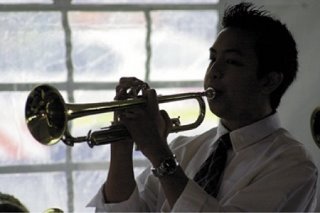
Machado said his mother's 45-year career as a librarian convinced him of their importance. He also discussed the importance of education in general, praising the Green Valley Middle School jazz band - which performed at the event - as an example of why "support of the arts in schools is so very, very important."
Reach Ben Antonius at 427-6977 or bantonius@dailyrepublic.net.
At A Glance
CORDELIA LIBRARY
Location: 5050 Business Center Dr., Fairfield
Hours: 10 a.m. to 6 p.m. Monday, Wednesday; 10 a.m. to 9 p.m. Tuesday, Thursday; 10 a.m. to 5 p.m. Friday, Saturday; 1 to 5 p.m. Sunday.
Number of items: 47,000, including books, DVDs, CDs and audio books
By Ben Antonius

Cordelia celebrated the opening of a new library on Thursday. (Photo by Gary Goldsmith/Daily Republic)
FAIRFIELD - Finally.
After about six years of talking, planning and eventually building, the city opened the Cordelia library to the public Thursday morning.
Politicians, city employees, library workers and students from nearby schools listened to a series of speakers before barreling through the doors at about 11 a.m.
"It's a wonderful day in the neighborhood," said Solano County Librarian Ann Cousineau, paraphrasing kids TV host Mister Rogers.
The two-story building on Business Center Drive will house not only the library but also some city offices and a private tenant whose rent will help cover operating costs for the building.
The library is clearly the big draw though. Until now, Cordelia residents had to drive into town to go to the city's main library on Kentucky Street.
As his sons filled out applications for new library cards, Jim Patchen said his family has been going to Benicia to use the library there.
"It's just a great addition to our community," he said.
Ten-year-old Matthew Patchen was planning to check out a big reference book about birds and 8-year-old Joseph Patchen was clutching a book on dental care careers.
The new building is "really nice," Matthew said.
"These are community gathering places," Assemblywoman Lois Wolk said before the library opened. "They are safe places to be after school and on the weekends."
As librarians predicted before the opening, the computers, DVDs and children's book section were the most popular for the morning crowd. The bank of computers by the front was occupied only moments after the doors opened.
The library will have 40 public computers, group study rooms, a quiet study area and meeting space. Librarians said the most popular programs, including children's story hour, would likely be held in the meeting rooms.
There are separate areas for reference books, DVDs, young adult literature and books in Spanish. At the rear of the library is a large section dedicated to children's books.
In his remarks, Fairfield Mayor Harry Price recalled the six-year "odyssey" of getting money for the building after California voters approved a $600 million library bond in 2000.
After its first application was rejected, the city tried again, bringing letters from grade-school students asking for the library. Wolk and state Sen. Mike Machado, D-Linden, who both testified on behalf of the city's application, were the keynote speakers Thursday.
Machado said his mother's 45-year career as a librarian convinced him of their importance. He also discussed the importance of education in general, praising the Green Valley Middle School jazz band - which performed at the event - as an example of why "support of the arts in schools is so very, very important."
Reach Ben Antonius at 427-6977 or bantonius@dailyrepublic.net.
At A Glance
CORDELIA LIBRARY
Location: 5050 Business Center Dr., Fairfield
Hours: 10 a.m. to 6 p.m. Monday, Wednesday; 10 a.m. to 9 p.m. Tuesday, Thursday; 10 a.m. to 5 p.m. Friday, Saturday; 1 to 5 p.m. Sunday.
Number of items: 47,000, including books, DVDs, CDs and audio books
Thursday, December 14, 2006
Suisun Has Plans For Upscale Waterfront Restaurant
Suisun Has Plans For Upscale Waterfront Restaurant
By Ian Thompson
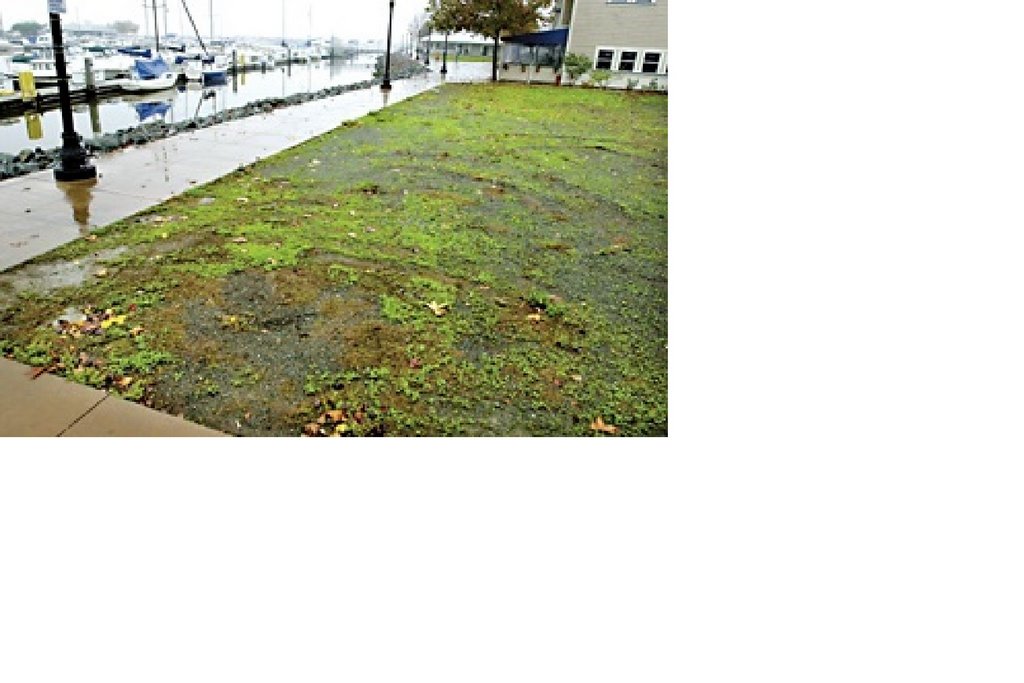
SUISUN CITY - Suisun City may get a waterfront restaurant and banquet room - but Main Street West Partners, Old Town's master developer, is not saying who.
"We hope to bring a lot of new people in," said Mike Rice of Main Street West of what he plans to be an upscale steak and seafood restaurant. "It will be a draw of significance."
Just who the restaurant will be, Rice expects to announce as soon as the negotiations are finished and the construction is started.
"They have not disclosed the name yet," Suisun City Assistant Planner John Kearns said of the application that was submitted in late September.
The Suisun City Planning Commissioners gave the project their unanimous approval Tuesday with only minor changes. Some said they were glad to see a banquet facility coming downtown.
This could fit in with plans to get a 102-room, limited-service hotel built between One Harbor Center and Driftwood Drive. The hotel's application is now under review and could go before the Planning Commission in late February or early March.
The proposed restaurant site is the same one where Winters-based Buckhorn Restaurant wanted to build a 5,685-square-foot restaurant back in 2000. But it pulled out in favor of building in Napa.
Main Street West wants to construct a two-story building that would house a 4,060-square-foot restaurant on the ground floor and a 3,616-square-foot banquet room on the top floor.
The building will have the same appearance as the Athenian Grill to the south and the Miller-Sorg building to the west.
"This is will be our first waterfront restaurant that we are doing," Rice said. "Our hope is that it will include a banquet facility that will be used for weddings and reunions."
The restaurant proposal now goes to the Suisun City Redevelopment Agency for approval.
If everything goes according to plan, construction will start in spring 2007 and the eatery will open in time for the holiday season next year.
This is the second project Main Street West has proposed since it became the Old Town area's master developer last year.
In late September, Main Street West broke ground on Harbor Plaza, one of two proposed mixed-use buildings flanking Solano Street on Main Street's east side.
Unforeseen problems with utilities slowed work, but once those are resolved, it will continue, Rice said.
Reach Ian Thompson at 427-6976 or at ithompson@dailyrepublic.net.
By Ian Thompson
SUISUN CITY - Suisun City may get a waterfront restaurant and banquet room - but Main Street West Partners, Old Town's master developer, is not saying who.
"We hope to bring a lot of new people in," said Mike Rice of Main Street West of what he plans to be an upscale steak and seafood restaurant. "It will be a draw of significance."
Just who the restaurant will be, Rice expects to announce as soon as the negotiations are finished and the construction is started.
"They have not disclosed the name yet," Suisun City Assistant Planner John Kearns said of the application that was submitted in late September.
The Suisun City Planning Commissioners gave the project their unanimous approval Tuesday with only minor changes. Some said they were glad to see a banquet facility coming downtown.
This could fit in with plans to get a 102-room, limited-service hotel built between One Harbor Center and Driftwood Drive. The hotel's application is now under review and could go before the Planning Commission in late February or early March.
The proposed restaurant site is the same one where Winters-based Buckhorn Restaurant wanted to build a 5,685-square-foot restaurant back in 2000. But it pulled out in favor of building in Napa.
Main Street West wants to construct a two-story building that would house a 4,060-square-foot restaurant on the ground floor and a 3,616-square-foot banquet room on the top floor.
The building will have the same appearance as the Athenian Grill to the south and the Miller-Sorg building to the west.
"This is will be our first waterfront restaurant that we are doing," Rice said. "Our hope is that it will include a banquet facility that will be used for weddings and reunions."
The restaurant proposal now goes to the Suisun City Redevelopment Agency for approval.
If everything goes according to plan, construction will start in spring 2007 and the eatery will open in time for the holiday season next year.
This is the second project Main Street West has proposed since it became the Old Town area's master developer last year.
In late September, Main Street West broke ground on Harbor Plaza, one of two proposed mixed-use buildings flanking Solano Street on Main Street's east side.
Unforeseen problems with utilities slowed work, but once those are resolved, it will continue, Rice said.
Reach Ian Thompson at 427-6976 or at ithompson@dailyrepublic.net.
Work Begins on Nature Center
Work Begins on Nature Center
By Barry Eberling
FAIRFIELD - Work on a new $1.2 million nature center at Rush Ranch kicks off on Friday with a celebration.
The Solano Land Trust will hold a groundbreaking ceremony for the construction project at 10:30 a.m. The public is invited. Rush Ranch is located on Grizzly Island Road a few miles south of Suisun City.
Rush Ranch is a historic cattle ranch adjacent to the wetlands of Suisun Marsh. Ranch operations date back to the late 1800s. The Solano Land Trust bought the 2,070-acre property in 1986 as an open-space preserve.
Today, people can hike on the ranch. Hundreds of children visit the ranch each year with classes to hear presentations on the marsh and the Native Americans who once lived there.
By summer 2007, a brand-new nature center should join the decades-old barn, blacksmith house, water tower and small home.
"We have a national, natural treasure right here in Solano County and now we will have an excellent showcase for this unique property," Land Trust Board President Bob Berman said in a press release.
The Nature Center came about because the Rush Ranch in 2003 became part of the San Francisco Bay National Esturaine Research Reserve. Scientists and researchers will go to the preserve to study the marsh. The Nature Center will provide them with a place to live and work.
Rush Ranch visitors will also be able to use the Nature Center, which will have exhibits. The center will be powered by wind turbines and solar panels, because the Rush Ranch has no link to the electric power grid.
Reach Barry Eberling at 425-4646 Ext. 232 or at beberling@dailyrepublic.net.
By Barry Eberling
FAIRFIELD - Work on a new $1.2 million nature center at Rush Ranch kicks off on Friday with a celebration.
The Solano Land Trust will hold a groundbreaking ceremony for the construction project at 10:30 a.m. The public is invited. Rush Ranch is located on Grizzly Island Road a few miles south of Suisun City.
Rush Ranch is a historic cattle ranch adjacent to the wetlands of Suisun Marsh. Ranch operations date back to the late 1800s. The Solano Land Trust bought the 2,070-acre property in 1986 as an open-space preserve.
Today, people can hike on the ranch. Hundreds of children visit the ranch each year with classes to hear presentations on the marsh and the Native Americans who once lived there.
By summer 2007, a brand-new nature center should join the decades-old barn, blacksmith house, water tower and small home.
"We have a national, natural treasure right here in Solano County and now we will have an excellent showcase for this unique property," Land Trust Board President Bob Berman said in a press release.
The Nature Center came about because the Rush Ranch in 2003 became part of the San Francisco Bay National Esturaine Research Reserve. Scientists and researchers will go to the preserve to study the marsh. The Nature Center will provide them with a place to live and work.
Rush Ranch visitors will also be able to use the Nature Center, which will have exhibits. The center will be powered by wind turbines and solar panels, because the Rush Ranch has no link to the electric power grid.
Reach Barry Eberling at 425-4646 Ext. 232 or at beberling@dailyrepublic.net.
Wednesday, December 13, 2006
County Plan Gets More Funds
County Plan Gets More Funds
By Erin Pursell/Staff Writer
TheReporter.Com
An additional $9.3 million was approved Tuesday for South County Government Center projects by the Solano County Board of Supervisors, bringing funding to $52.4 million.
The additional dollars for the center - involving construction in Vallejo and Fairfield - are needed mainly due to increases in prices of materials and departmental needs identified during planning phases, according to County Architect Kanon Artiche.
"We make conceptual assumptions as we begin the project," he said. "As we learn more about the extent and kind of space needed, that translates into revised costs."
Under a revised project scope, also approved by the supervisors, the main component - a 70,000-square-foot health and social services facility - has been reduced to 65,000 square feet.
Even though more expensive components might be required, the needs of the more than 30 different groups affected by the project can be met with slightly less space, Artiche explained.
Meetings were held during the programming phase with the affected groups to help identify those needs.
As outlined in the South County Master Plan, the project includes three major facets:
• a 65,000-square-foot facility in Vallejo to house health and social services, offices for county supervisors and veterans' affairs;
• a 30,000-square-foot facility on Beck Avenue in Fairfield to house the Public Health Laboratory and Clinic and a forensics lab overseen by the District Attorney;
• improvements to a county health and social services facility on Courage Drive in Fairfield that will continue to house health and social services, and improvements on two buildings on Tuolumne Street in Vallejo housing court-related agencies and health and social services.
"It's a pretty thorough renovation," Artiche said of plans for improving the Vallejo facility. "It needs a major overhaul."
The new facility in Fairfield includes provisions for expansion to 60,000 square feet.
Supervisor Barbara Kondylis expressed concern over lack of childcare for county employees who will work at the facilities.
It's not just that there's a need," she commented on the importance of childcare, "It's setting a good example."
Staff members, however, noted concerns regarding clients such as paroled sex offenders that need to meet in those buildings but cannot be near children.
"We have certain kinds of clients that shouldn't be around children," explained Assistant County Administrator Veronica Ferguson, adding that staff is working to develop childcare options in the vicinity of the facilities.
The largest chunk of funding for the South County project - $37.3 million - will come from a bond. The remaining $15 million will be paid through a past settlement agreement and departmental operating budgets for furnishings, fixtures and equipment.
All facets of the project should be completed by 2010, Artiche said.
Erin Pursell can be reached at county@thereporter.com.
By Erin Pursell/Staff Writer
TheReporter.Com
An additional $9.3 million was approved Tuesday for South County Government Center projects by the Solano County Board of Supervisors, bringing funding to $52.4 million.
The additional dollars for the center - involving construction in Vallejo and Fairfield - are needed mainly due to increases in prices of materials and departmental needs identified during planning phases, according to County Architect Kanon Artiche.
"We make conceptual assumptions as we begin the project," he said. "As we learn more about the extent and kind of space needed, that translates into revised costs."
Under a revised project scope, also approved by the supervisors, the main component - a 70,000-square-foot health and social services facility - has been reduced to 65,000 square feet.
Even though more expensive components might be required, the needs of the more than 30 different groups affected by the project can be met with slightly less space, Artiche explained.
Meetings were held during the programming phase with the affected groups to help identify those needs.
As outlined in the South County Master Plan, the project includes three major facets:
• a 65,000-square-foot facility in Vallejo to house health and social services, offices for county supervisors and veterans' affairs;
• a 30,000-square-foot facility on Beck Avenue in Fairfield to house the Public Health Laboratory and Clinic and a forensics lab overseen by the District Attorney;
• improvements to a county health and social services facility on Courage Drive in Fairfield that will continue to house health and social services, and improvements on two buildings on Tuolumne Street in Vallejo housing court-related agencies and health and social services.
"It's a pretty thorough renovation," Artiche said of plans for improving the Vallejo facility. "It needs a major overhaul."
The new facility in Fairfield includes provisions for expansion to 60,000 square feet.
Supervisor Barbara Kondylis expressed concern over lack of childcare for county employees who will work at the facilities.
It's not just that there's a need," she commented on the importance of childcare, "It's setting a good example."
Staff members, however, noted concerns regarding clients such as paroled sex offenders that need to meet in those buildings but cannot be near children.
"We have certain kinds of clients that shouldn't be around children," explained Assistant County Administrator Veronica Ferguson, adding that staff is working to develop childcare options in the vicinity of the facilities.
The largest chunk of funding for the South County project - $37.3 million - will come from a bond. The remaining $15 million will be paid through a past settlement agreement and departmental operating budgets for furnishings, fixtures and equipment.
All facets of the project should be completed by 2010, Artiche said.
Erin Pursell can be reached at county@thereporter.com.
Cordelia Library to Open Thursday
Cordelia Library to Open Thursday
By Ben Antonius
FAIRFIELD - The wait is almost over for Cordelia residents.
City officials will hold a grand opening ceremony for the new Cordelia library and civic center at 10 a.m. on Thursday. The library is located at 5050 Business Center Dr., next to the Wiseman Building.
The ground level of the two-story building is occupied by the library; the upstairs will house city offices and a private, rent-paying tenant.
Assistant City Manager Nancy Huston said the rent would help cover the ongoing costs of the building for the cash-strapped city, though it does not have a tenant lined up yet.
"This will be great," Huston said. "I really think it brings educational materials but it also brings a sense of community with the residents in Cordelia. I predict that this place will be packed as soon as we open it."
The $14 million project was paid for by a state library bond that voters approved in 2000, as well as contributions from the city and county.
Fairfield will move the offices of its local access TV channel to the new location, which will also be equipped to broadcast city council meetings and serve as a backup emergency operations center.
The library will have 40 public computers, group study rooms, a quiet study area and meeting space. Librarians said the most popular programs, including children's story hour, would likely be held in the meeting rooms.
There are separate areas for reference books, DVDs, young adult literature and books in Spanish. At the rear of the library is a large section dedicated to children's books.
Nearby is a landscaped retention pond and bike path, which provides an impressive view out of the back windows.
The opening day collection will not be expanded much beyond its current size, although librarians said they would continue to rotate books in and out to keep it fresh.
Reach Ben Antonius at 427-6977 or bantonius@dailyrepublic.net.
CORDELIA LIBRARY
Location: 5050 Business Center Dr., Fairfield
Opening ceremony: 10 a.m. Thursday
Hours: Monday, Wednesday: 10 a.m. to 6 p.m.; Tuesday, Thursday: 10 a.m. to 9 p.m.; Friday, Saturday: 10 a.m. to 5 p.m.; Sunday: 1 p.m. to 5 p.m.
Number of items: 47,000, including books, DVDs, CDs and audio books
Number of public computers: 40
Number of employees: 11
Size: 16,459 square feet for library, 2,000 square feet for city offices, 7,000 square feet for private tenant
By Ben Antonius
FAIRFIELD - The wait is almost over for Cordelia residents.
City officials will hold a grand opening ceremony for the new Cordelia library and civic center at 10 a.m. on Thursday. The library is located at 5050 Business Center Dr., next to the Wiseman Building.
The ground level of the two-story building is occupied by the library; the upstairs will house city offices and a private, rent-paying tenant.
Assistant City Manager Nancy Huston said the rent would help cover the ongoing costs of the building for the cash-strapped city, though it does not have a tenant lined up yet.
"This will be great," Huston said. "I really think it brings educational materials but it also brings a sense of community with the residents in Cordelia. I predict that this place will be packed as soon as we open it."
The $14 million project was paid for by a state library bond that voters approved in 2000, as well as contributions from the city and county.
Fairfield will move the offices of its local access TV channel to the new location, which will also be equipped to broadcast city council meetings and serve as a backup emergency operations center.
The library will have 40 public computers, group study rooms, a quiet study area and meeting space. Librarians said the most popular programs, including children's story hour, would likely be held in the meeting rooms.
There are separate areas for reference books, DVDs, young adult literature and books in Spanish. At the rear of the library is a large section dedicated to children's books.
Nearby is a landscaped retention pond and bike path, which provides an impressive view out of the back windows.
The opening day collection will not be expanded much beyond its current size, although librarians said they would continue to rotate books in and out to keep it fresh.
Reach Ben Antonius at 427-6977 or bantonius@dailyrepublic.net.
CORDELIA LIBRARY
Location: 5050 Business Center Dr., Fairfield
Opening ceremony: 10 a.m. Thursday
Hours: Monday, Wednesday: 10 a.m. to 6 p.m.; Tuesday, Thursday: 10 a.m. to 9 p.m.; Friday, Saturday: 10 a.m. to 5 p.m.; Sunday: 1 p.m. to 5 p.m.
Number of items: 47,000, including books, DVDs, CDs and audio books
Number of public computers: 40
Number of employees: 11
Size: 16,459 square feet for library, 2,000 square feet for city offices, 7,000 square feet for private tenant
County Seeks Money to Study Collinville Campus
County Seeks Money to Study Collinville Campus
By Barry Eberling
FAIRFIELD - Tiny, remote Collinsville through the decades has been proposed as the site for a San Francisco-sized city, a deep water port, a chemical plant and an atomic power plant.
The county Board of Supervisors could play a role in exploring the latest idea - putting a California State University campus there.
Supervisors voted Tuesday to seek $250,000 in federal funds to help study the issue. They did so as part of a larger federal appropriations strategy that seeks $30 million for a variety of projects.
"The county is interested in exploring the possible economic development opportunities that may exist in Collinsville - particularly when coupled with a CSU campus," a county memorandum said.
But Supervisor Barbara Kondylis voiced some misgivings about the proposed Collinsville transformation.
"This has not been discussed by the county as a policy issue and it's a large policy issue," Kondylis said.
Collinsville is a town of a few dozen people located at the confluence of the Sacramento and San Joaquin rivers. It's only about four miles from the sprawling cities and bright lights of Contra Contra county, but those are on the other side of the water and seem a world away. The Solano County side around Collinsville is marshland and miles of rolling hills.
But, remote as Collinsville is, it has a potential deep water port. That has fed the dreams for development through the years. Solano County has the land zoned as industrial, in case the port ever becomes a reality.
One Vision Park of San Francisco has worked on development plans for about 2,700 acres in the area. It has the right to buy land there from the Sacramento Municipal Utility District, which has put up electricity generating wind turbines nearby.
An idea is to turn the area into a "green energy" center, with solar panels in the hills and tide devices in the water, county Supervisor Mike Reagan said. Other ventures in the area could include the deep water port and the California State University. Reagan noted that enrollment at the existing university campuses is growing.
One Vision Park approached the university system about building a research/classroom/laboratory facility at Collinsville. Elvyra F. San Juan, the system's vice chancellor of capital planning, design and construction, wrote back in September 2005 expressing interest.
The university would need to acquire 100 acres and could do so through a gift, San Juan wrote. An endowment could be set up to pay for the initial facility. A university foundation could be a limited partner in development related to the university's educational mission, such as port tug and barge operations, marine transportation and recycling plant operations, the letter said.
The system's California Maritime Academy in Vallejo is one of only seven degree-granting maritime academies in the nation and the only one on West Coast, San Juan wrote.
"Therefore, (the academy) would be very interested in all aspects of the wharf operation," San Juan wrote.
Kondylis is among those who has suggested changing the zoning at Collinsville to agriculture. She questioned whether such infrastructure as roads, water and sewer can be extended to Collinsville at a reasonable cost.
Reach Barry Eberling at 425-4646 Ext. 232 or at beberling@dailyrepublic.net.
By Barry Eberling
FAIRFIELD - Tiny, remote Collinsville through the decades has been proposed as the site for a San Francisco-sized city, a deep water port, a chemical plant and an atomic power plant.
The county Board of Supervisors could play a role in exploring the latest idea - putting a California State University campus there.
Supervisors voted Tuesday to seek $250,000 in federal funds to help study the issue. They did so as part of a larger federal appropriations strategy that seeks $30 million for a variety of projects.
"The county is interested in exploring the possible economic development opportunities that may exist in Collinsville - particularly when coupled with a CSU campus," a county memorandum said.
But Supervisor Barbara Kondylis voiced some misgivings about the proposed Collinsville transformation.
"This has not been discussed by the county as a policy issue and it's a large policy issue," Kondylis said.
Collinsville is a town of a few dozen people located at the confluence of the Sacramento and San Joaquin rivers. It's only about four miles from the sprawling cities and bright lights of Contra Contra county, but those are on the other side of the water and seem a world away. The Solano County side around Collinsville is marshland and miles of rolling hills.
But, remote as Collinsville is, it has a potential deep water port. That has fed the dreams for development through the years. Solano County has the land zoned as industrial, in case the port ever becomes a reality.
One Vision Park of San Francisco has worked on development plans for about 2,700 acres in the area. It has the right to buy land there from the Sacramento Municipal Utility District, which has put up electricity generating wind turbines nearby.
An idea is to turn the area into a "green energy" center, with solar panels in the hills and tide devices in the water, county Supervisor Mike Reagan said. Other ventures in the area could include the deep water port and the California State University. Reagan noted that enrollment at the existing university campuses is growing.
One Vision Park approached the university system about building a research/classroom/laboratory facility at Collinsville. Elvyra F. San Juan, the system's vice chancellor of capital planning, design and construction, wrote back in September 2005 expressing interest.
The university would need to acquire 100 acres and could do so through a gift, San Juan wrote. An endowment could be set up to pay for the initial facility. A university foundation could be a limited partner in development related to the university's educational mission, such as port tug and barge operations, marine transportation and recycling plant operations, the letter said.
The system's California Maritime Academy in Vallejo is one of only seven degree-granting maritime academies in the nation and the only one on West Coast, San Juan wrote.
"Therefore, (the academy) would be very interested in all aspects of the wharf operation," San Juan wrote.
Kondylis is among those who has suggested changing the zoning at Collinsville to agriculture. She questioned whether such infrastructure as roads, water and sewer can be extended to Collinsville at a reasonable cost.
Reach Barry Eberling at 425-4646 Ext. 232 or at beberling@dailyrepublic.net.
Tuesday, December 12, 2006
Solano's Passenger Railroad Revival May Be Key in a Congested Future
Solano's Passenger Railroad Revival May Be Key in a Congested Future
By Barry Eberling
SUISUN CITY - Dawnelda Scott is among those reaping benefits from the Solano County passenger railroad revival that began 15 years ago today.
Scott recently stood at the Suisun City station platform at 7:35 a.m. She needed to get to Richmond so she could catch BART and continue on to her job. She left the driving to the Capitol Corridor trains, which travel between Sacramento and San Jose.
"It's a good opportunity to kick back a little, read a book, let someone handle the trials and tribulations of commuting, get that quality time for yourself," Scott said, white gloves and a black coat protecting her against the early morning chill.
Railroad revival? Make that railroad revolution. The Capitol Corridor service has as many trains zipping along its lines as the famed northeast corridor between Boston and New York.
"At the times people want to travel, we have a train available," said Eugene Skoropowski, managing director of the Capitol Corridor Joint Powers Authority.
Oscar Valenzuela of Fairfield takes the train to Davis to attend the University of California, Davis. He can choose between six eastbound trips in the morning.
"The bus has inconvenient hours," Valenzuela said as he sat on a bench inside the station. "To go to Davis, they only have two buses. One is at 6:55 a.m. The other is at noon."
But the railroad revolution started slowly Dec. 12, 1991. The very first Capitol Corridor train pulled up to a then-ramshackle Suisun-Fairfield station at 8 a.m. for its only westbound morning visit. Only eight people waited in the fog and entered cars about one-third full.
"There are quite a few people for the first day," said Amtrak conductor Gene Springer, who wore a dark-blue uniform and collected ticket money.
Optimism was the name of the game. After all, the state had launched the service with a splash. Only the previous day, it had run a ceremonial train for dignitaries only along the line, complete with balloons and Dixieland jazz band, to drum up interest.
Former Assemblyman Tom Hannigan of Fairfield rode that ceremonial train and recalled how the Capitols got started. A constituent came to his office in the 1980s and said that rail line between Sacramento and San Jose could be used for passenger service, as well as freight.
"I did what any politician would do: I suggested we do a study," Hannigan said 15 years ago.
That study concluded the rail line should work. But the Capitals took awhile to pick up speed.
By 1994, the service averaged between 20,000 and 30,000 passengers a month, far short of the goal of 42,000 passengers. Only 1,400 people used the Suisun City station each month, making it the least-frequented station on the route. The service offered only three round-trips daily.
Things have changed. The Capitols on their 15th birthday have record ridership that tops 100,000 passengers a month, with more than 120,000 riding in October. More than 7,000 passengers use the Suisun City station monthly. The service offers 16 roundtrips daily.
The turnabout came when the Capitols started adding more trains, Skoropowski said. In the beginning, there was just that one train in the morning. Passengers, fittingly enough, called it "the morning train."
Then came the "early morning" train and the "late-morning train," also known as the "slackers' train," Skoropowski said. When the Capitols added a seventh round trip in 2000, ridership rose 40 percent and there were too many trains for the regular riders to honor with nicknames.
Suddenly, the Capitols had enough trains that commuters, as well as casual travelers, could use the service. The railroad revolution had reached critical mass.
Jim Spering was Suisun City's mayor in 1991 and has just left the post to become a county supervisor in January 2007. He believes the Capitols made a difference for his city.
"It has brought people to our downtown," he said. "We're starting to see people who ride that train get off in Suisun. It's given our community a lot of exposure."
The Capitols coincidentally arrived just as Suisun City launched its waterfront and Old Town renovation efforts. Old, decrepit buildings got razed and a public marina got built. Among the first projects was the renovation of the century-old train depot.
"The timing was perfect," Spering said. "We wanted to restore the train station, so that certainly helped justify that."
Despite all the Capitol Corridor's success stories - despite the 1.2 million passengers annually and the cities along the line clamoring to have stations - it has had only minimal effect on the daily commute. The U.S. Census shows that less than 1 percent of Bay Area commuters in 2005 took the train. For Solano County, the figure was .1 percent.
But Spering is looking to the future. Interstate 80 won't be widened, except for car pool lanes, he said.
"It's going to get more congested," Spering said. "In time, people will need an alternative form of transportation."
The Capitols are up and running, he said. More trains can be added, he said.
"Transportation is generally behind the demand," Spering said. "We're trying to put some things in place that meet that future demand."
Solano County had its first railroad revolution in 1868, when the California Pacific Railroad laid down tracks and ran the first local trains. Suisun City, Dixon, Benicia and Elmira all got stations in subsequent years. People suddenly had a new travel option, in addition to boat and horse.
Trains remained a major form of transportation for decades. But after the state highway came through the area in 1915, autos gradually grew popular. Passenger trains faded.
Now they're back to help ease the pressure on congested freeways. The Capitols are leading the local railroad revival - and the new railroad revolution.
Reach Barry Eberling at 425-4646 Ext. 232 or at beberling@dailyrepublic.net.
By Barry Eberling
SUISUN CITY - Dawnelda Scott is among those reaping benefits from the Solano County passenger railroad revival that began 15 years ago today.
Scott recently stood at the Suisun City station platform at 7:35 a.m. She needed to get to Richmond so she could catch BART and continue on to her job. She left the driving to the Capitol Corridor trains, which travel between Sacramento and San Jose.
"It's a good opportunity to kick back a little, read a book, let someone handle the trials and tribulations of commuting, get that quality time for yourself," Scott said, white gloves and a black coat protecting her against the early morning chill.
Railroad revival? Make that railroad revolution. The Capitol Corridor service has as many trains zipping along its lines as the famed northeast corridor between Boston and New York.
"At the times people want to travel, we have a train available," said Eugene Skoropowski, managing director of the Capitol Corridor Joint Powers Authority.
Oscar Valenzuela of Fairfield takes the train to Davis to attend the University of California, Davis. He can choose between six eastbound trips in the morning.
"The bus has inconvenient hours," Valenzuela said as he sat on a bench inside the station. "To go to Davis, they only have two buses. One is at 6:55 a.m. The other is at noon."
But the railroad revolution started slowly Dec. 12, 1991. The very first Capitol Corridor train pulled up to a then-ramshackle Suisun-Fairfield station at 8 a.m. for its only westbound morning visit. Only eight people waited in the fog and entered cars about one-third full.
"There are quite a few people for the first day," said Amtrak conductor Gene Springer, who wore a dark-blue uniform and collected ticket money.
Optimism was the name of the game. After all, the state had launched the service with a splash. Only the previous day, it had run a ceremonial train for dignitaries only along the line, complete with balloons and Dixieland jazz band, to drum up interest.
Former Assemblyman Tom Hannigan of Fairfield rode that ceremonial train and recalled how the Capitols got started. A constituent came to his office in the 1980s and said that rail line between Sacramento and San Jose could be used for passenger service, as well as freight.
"I did what any politician would do: I suggested we do a study," Hannigan said 15 years ago.
That study concluded the rail line should work. But the Capitals took awhile to pick up speed.
By 1994, the service averaged between 20,000 and 30,000 passengers a month, far short of the goal of 42,000 passengers. Only 1,400 people used the Suisun City station each month, making it the least-frequented station on the route. The service offered only three round-trips daily.
Things have changed. The Capitols on their 15th birthday have record ridership that tops 100,000 passengers a month, with more than 120,000 riding in October. More than 7,000 passengers use the Suisun City station monthly. The service offers 16 roundtrips daily.
The turnabout came when the Capitols started adding more trains, Skoropowski said. In the beginning, there was just that one train in the morning. Passengers, fittingly enough, called it "the morning train."
Then came the "early morning" train and the "late-morning train," also known as the "slackers' train," Skoropowski said. When the Capitols added a seventh round trip in 2000, ridership rose 40 percent and there were too many trains for the regular riders to honor with nicknames.
Suddenly, the Capitols had enough trains that commuters, as well as casual travelers, could use the service. The railroad revolution had reached critical mass.
Jim Spering was Suisun City's mayor in 1991 and has just left the post to become a county supervisor in January 2007. He believes the Capitols made a difference for his city.
"It has brought people to our downtown," he said. "We're starting to see people who ride that train get off in Suisun. It's given our community a lot of exposure."
The Capitols coincidentally arrived just as Suisun City launched its waterfront and Old Town renovation efforts. Old, decrepit buildings got razed and a public marina got built. Among the first projects was the renovation of the century-old train depot.
"The timing was perfect," Spering said. "We wanted to restore the train station, so that certainly helped justify that."
Despite all the Capitol Corridor's success stories - despite the 1.2 million passengers annually and the cities along the line clamoring to have stations - it has had only minimal effect on the daily commute. The U.S. Census shows that less than 1 percent of Bay Area commuters in 2005 took the train. For Solano County, the figure was .1 percent.
But Spering is looking to the future. Interstate 80 won't be widened, except for car pool lanes, he said.
"It's going to get more congested," Spering said. "In time, people will need an alternative form of transportation."
The Capitols are up and running, he said. More trains can be added, he said.
"Transportation is generally behind the demand," Spering said. "We're trying to put some things in place that meet that future demand."
Solano County had its first railroad revolution in 1868, when the California Pacific Railroad laid down tracks and ran the first local trains. Suisun City, Dixon, Benicia and Elmira all got stations in subsequent years. People suddenly had a new travel option, in addition to boat and horse.
Trains remained a major form of transportation for decades. But after the state highway came through the area in 1915, autos gradually grew popular. Passenger trains faded.
Now they're back to help ease the pressure on congested freeways. The Capitols are leading the local railroad revival - and the new railroad revolution.
Reach Barry Eberling at 425-4646 Ext. 232 or at beberling@dailyrepublic.net.
Monday, December 11, 2006
SF Bay Area Regional economy healthy, group says
Regional economy healthy, group says
By George Avalos/Contra Costa Times
Article Launched:12/09/2006 07:22:20 AM PST
Local business executives believe the Bay Area economy will chug ahead at a brisk pace in the coming months, according to a survey released Friday.
And the regional economy is strong enough that nearly five times as many company managers are gearing up to hire more employees in the next six months than those who are planning to reduce their staffing levels, the latest Bay Area Business Confidence Survey shows.
"It looks like we are rocking and rolling," said Jim Wunderman, president of the Bay Area Council, which commissioned the survey. "The CEOs we surveyed are telling us they are very much bullish about the Bay Area economy."
About 37 percent of executives surveyed said they intended to increase the size of their Bay Area workforce. Eight percent planned to reduce employees.
"Things look pretty solid right now," Wunderman said.
Even the battered technology sector seems to be doing better, a welcome reversal.
"About 50 percent of the tech executives we surveyed say their industry is better, and about 75 percent say things will get better in the next six months," Wunderman said. "The traffic between the East Bay and San Jose is increasing on a daily basis. Welcome back, Sunol Grade."
The top executive with Berkeley-based Web development firm Aeronet Communications Corp. is seeing a lot of demand.
"Business is good," said Ben Fajen, president of Aeronet. "We are getting a lot of requests for proposals to set up Web sites. The second half of this year, things have really picked up."
By George Avalos/Contra Costa Times
Article Launched:12/09/2006 07:22:20 AM PST
Local business executives believe the Bay Area economy will chug ahead at a brisk pace in the coming months, according to a survey released Friday.
And the regional economy is strong enough that nearly five times as many company managers are gearing up to hire more employees in the next six months than those who are planning to reduce their staffing levels, the latest Bay Area Business Confidence Survey shows.
"It looks like we are rocking and rolling," said Jim Wunderman, president of the Bay Area Council, which commissioned the survey. "The CEOs we surveyed are telling us they are very much bullish about the Bay Area economy."
About 37 percent of executives surveyed said they intended to increase the size of their Bay Area workforce. Eight percent planned to reduce employees.
"Things look pretty solid right now," Wunderman said.
Even the battered technology sector seems to be doing better, a welcome reversal.
"About 50 percent of the tech executives we surveyed say their industry is better, and about 75 percent say things will get better in the next six months," Wunderman said. "The traffic between the East Bay and San Jose is increasing on a daily basis. Welcome back, Sunol Grade."
The top executive with Berkeley-based Web development firm Aeronet Communications Corp. is seeing a lot of demand.
"Business is good," said Ben Fajen, president of Aeronet. "We are getting a lot of requests for proposals to set up Web sites. The second half of this year, things have really picked up."
The Sunny Side of the Street
The Sunny Side of the Street
New Development Offers Solar Panels as Standard Feature
By Amanda Janis/Business Editor
TheReporter.Com
Sunshine and innovation are two of the key ingredients making up Vacaville's newest subdivision, Ventana. Bordering Ulatis Creek and Hawkins Park, just off Ulatis Drive and Nut Tree Road, Ventana is the city's first subdivision to be built with solar roof tiles as a standard feature.
"That's probably the thing we're most excited about," said Chris Gatley, vice president of Larkspur-based Edenbridge Homes. "We wanted to find a way to set ourselves apart and truly differentiate our new home product."
The system being installed, Gatley said, should not only blend in with roof tiles, but reduce consumers' electricity bills by about 50 percent. Owners will even be able to monitor their homes' solar performance via the Internet.
For Edenbridge - which developed Suisun's Amberwood community and has numerous other Solano County projects in the pipeline - this is its first venture into Vacaville, and its first time offering solar as a standard feature.
To do so, it partnered with Berkeley-headquartered PowerLight Corp., a global provider of solar power systems.
"I think you'll start seeing more and more builders doing this as a standard feature," said Bill Kelly, vice president of PowerLight's residential division. Currently, he said, only about 1 percent of new homes constructed in California come equipped with solar features.
"Edenbridge is really stepping out in front of the pack and leading the market," Kelly said.
The Ventana community has many other features Edenbridge's Gatley raves about, notably a unique design that encourages interaction among neighbors.
"We've created landscaped paseo pathways that meander between the fronts of the homes and these landscaped pathways serve respective homes on each side of the pathway," Gatley explained. "Each home, in addition to its normal entry porch, also includes a front patio that ranges in size up to 100 square feet."
This design is enhanced by the fact that the homes' two-car garages are located toward the back of the houses, serviced by private alleys.
"All the living spaces are oriented to front of homes," he said.
The three- and four-bedroom, two-and-a-half bath houses range from approximately 1,665 square feet to 2,120 square feet, and are priced from the high $400,000s. Homes are located approximately 25 feet to 30 feet apart, on lots that average between 2,500 square feet and 3,000 square feet.
Features include gourmet kitchens, interior laundry rooms, and master suites with oval tubs, separate showers, dual vanities and walk-in closets.
Neighborhood amenities include a small, private park and bocce ball court.
"There wasn't enough room on the site to build a great big recreational facility," Gatley explained, "but there's a lovely (public) park directly next door. We've also got a public trail system that runs along Ulatis Creek."
Close proximity to the creek shouldn't pose a problem for potential buyers concerned about flooding, he noted.
"The flooding that went on last year was no problem relative to this site location," Gatley said. "We're well above the high water mark on the creek."
Model homes and the sales center opened last weekend, with nine of the community's 47 homes currently available for purchase. The subdivision's official grand opening will likely be in January.
Ventana's first residents will be able to move in in February, with all construction expected to be completed in approximately a year, Gatley said.
For more information, call 447-4531.
New Development Offers Solar Panels as Standard Feature
By Amanda Janis/Business Editor
TheReporter.Com
Sunshine and innovation are two of the key ingredients making up Vacaville's newest subdivision, Ventana. Bordering Ulatis Creek and Hawkins Park, just off Ulatis Drive and Nut Tree Road, Ventana is the city's first subdivision to be built with solar roof tiles as a standard feature.
"That's probably the thing we're most excited about," said Chris Gatley, vice president of Larkspur-based Edenbridge Homes. "We wanted to find a way to set ourselves apart and truly differentiate our new home product."
The system being installed, Gatley said, should not only blend in with roof tiles, but reduce consumers' electricity bills by about 50 percent. Owners will even be able to monitor their homes' solar performance via the Internet.
For Edenbridge - which developed Suisun's Amberwood community and has numerous other Solano County projects in the pipeline - this is its first venture into Vacaville, and its first time offering solar as a standard feature.
To do so, it partnered with Berkeley-headquartered PowerLight Corp., a global provider of solar power systems.
"I think you'll start seeing more and more builders doing this as a standard feature," said Bill Kelly, vice president of PowerLight's residential division. Currently, he said, only about 1 percent of new homes constructed in California come equipped with solar features.
"Edenbridge is really stepping out in front of the pack and leading the market," Kelly said.
The Ventana community has many other features Edenbridge's Gatley raves about, notably a unique design that encourages interaction among neighbors.
"We've created landscaped paseo pathways that meander between the fronts of the homes and these landscaped pathways serve respective homes on each side of the pathway," Gatley explained. "Each home, in addition to its normal entry porch, also includes a front patio that ranges in size up to 100 square feet."
This design is enhanced by the fact that the homes' two-car garages are located toward the back of the houses, serviced by private alleys.
"All the living spaces are oriented to front of homes," he said.
The three- and four-bedroom, two-and-a-half bath houses range from approximately 1,665 square feet to 2,120 square feet, and are priced from the high $400,000s. Homes are located approximately 25 feet to 30 feet apart, on lots that average between 2,500 square feet and 3,000 square feet.
Features include gourmet kitchens, interior laundry rooms, and master suites with oval tubs, separate showers, dual vanities and walk-in closets.
Neighborhood amenities include a small, private park and bocce ball court.
"There wasn't enough room on the site to build a great big recreational facility," Gatley explained, "but there's a lovely (public) park directly next door. We've also got a public trail system that runs along Ulatis Creek."
Close proximity to the creek shouldn't pose a problem for potential buyers concerned about flooding, he noted.
"The flooding that went on last year was no problem relative to this site location," Gatley said. "We're well above the high water mark on the creek."
Model homes and the sales center opened last weekend, with nine of the community's 47 homes currently available for purchase. The subdivision's official grand opening will likely be in January.
Ventana's first residents will be able to move in in February, with all construction expected to be completed in approximately a year, Gatley said.
For more information, call 447-4531.
Genentech in Deal for a New Drug
Genentech in Deal for a New Drug
Biotech giant inks $300 million licensing agreement with Swiss firm for Alzheimer's antibody.
By Steve Johnson/Mercury News
Biotechnology giant Genentech has signed a licensing deal worth up to $300 million for a potential Alzheimer's disease treatment being developed by AC Immune of Switzerland, the companies announced Thursday.
The deal involves AC Immune's early-stage research into fighting Alzheimer's by coaxing the patient's immune system to create antibodies against the beta amyloid protein, which causes a sticky plaque believed to inhibit brain functions.
South San Francisco-based Genentech already has a variety of treatments for everything from cancer and psoriasis to arthritis and asthma.
Even so, "we're always open to pursuing research in other areas," said Genentech spokeswoman Caroline Pecquet. "This is just part of our business development strategy."
In October, Genentech announced it would pay CGI Pharmaceuticals of Branford, Conn., up to $500 million for treatments CGI is developing for cancer and autoimmune ailments. And in July, Genentech announced a similar deal worth up to $405 million with Inotek Pharmaceuticals of Beverly, Mass., for a cancer treatment Inotek is working on.
Under the licensing deal with AC Immune, Genentech will make payments potentially totaling $300 million if AC Immune meets milestones in developing the Alzheimer's treatment.
The companies didn't explain what those milestones were. They also did not disclose how much money South San Francisco-based Genentech would pay initially or the length of the licensing arrangement. Genentech has a manufacturing facility in Vacaville.
Biotech giant inks $300 million licensing agreement with Swiss firm for Alzheimer's antibody.
By Steve Johnson/Mercury News
Biotechnology giant Genentech has signed a licensing deal worth up to $300 million for a potential Alzheimer's disease treatment being developed by AC Immune of Switzerland, the companies announced Thursday.
The deal involves AC Immune's early-stage research into fighting Alzheimer's by coaxing the patient's immune system to create antibodies against the beta amyloid protein, which causes a sticky plaque believed to inhibit brain functions.
South San Francisco-based Genentech already has a variety of treatments for everything from cancer and psoriasis to arthritis and asthma.
Even so, "we're always open to pursuing research in other areas," said Genentech spokeswoman Caroline Pecquet. "This is just part of our business development strategy."
In October, Genentech announced it would pay CGI Pharmaceuticals of Branford, Conn., up to $500 million for treatments CGI is developing for cancer and autoimmune ailments. And in July, Genentech announced a similar deal worth up to $405 million with Inotek Pharmaceuticals of Beverly, Mass., for a cancer treatment Inotek is working on.
Under the licensing deal with AC Immune, Genentech will make payments potentially totaling $300 million if AC Immune meets milestones in developing the Alzheimer's treatment.
The companies didn't explain what those milestones were. They also did not disclose how much money South San Francisco-based Genentech would pay initially or the length of the licensing arrangement. Genentech has a manufacturing facility in Vacaville.
Group to Meet
Group to Meet
The Solano Economic Development Corporation's annual meeting will be held Jan. 25 at Fairfield's Hilton Garden Inn.
Registration for the event begins at 11 a.m. The cost is $40 per person, or $300 for a table of eight.
A $1,000 sponsorship for the event includes a table for eight with priority seating, signage at event; literature or handout on sponsor table with signage; recognition in all press releases; e-mail notice with link to sponsors website; public recognition during introduction and closing of event.
For more information, contact Pat Uhrich at 864-1855 or pat@solanoedc.org.
The Solano Economic Development Corporation's annual meeting will be held Jan. 25 at Fairfield's Hilton Garden Inn.
Registration for the event begins at 11 a.m. The cost is $40 per person, or $300 for a table of eight.
A $1,000 sponsorship for the event includes a table for eight with priority seating, signage at event; literature or handout on sponsor table with signage; recognition in all press releases; e-mail notice with link to sponsors website; public recognition during introduction and closing of event.
For more information, contact Pat Uhrich at 864-1855 or pat@solanoedc.org.
Education is Key to Prosperity
Education is Key to Prosperity
By Doug Ford
Solano County is planning its first Solano Economic Summit for early in 2007. Up till now, the county has been only minimally involved in planning for economic development, while its seven cities and the Solano Economic Development Corp. have dominated the development scene.
But few counties are better situated than is Solano for strong economic growth during the next several decades. Its location on the Interstate 80 corridor between the Bay Area and Sacramento, with excellent land, sea and air connections, outstanding climate and good educational and recreational facilities make it an attractive place for new or expanding businesses to locate.
One factor in economic development that keeps growing in importance is education. This is where the cities and the county could work together to greatly increase Solano's attractiveness to growing businesses.
As Thomas Kalil recently pointed out, "California's strength in knowledge-intensive industries is so great that many policymakers take it for granted. After all, California hosts more top-ranked universities than Europe and Japan combined."
Solano sits between the two most highly rated campuses of the University of California in terms of knowledge productiveness, with UC Davis on one side and UC Berkeley a short distance down I-80 on the other. Stanford University and other UC and California State University campuses are not too much farther away. And don't forget Solano Community College in the middle of the county with extension centers in Vacaville and Vallejo.
But as was pointed out in the Bay Area Economic Forum's Economic Profile earlier this year: "In contrast to the Bay Area's world-class universities, too many local K-12 public school students lack the skills to contribute to the knowledge-based economy." This is not a fault of our educators. The problem is with the support they have been provided.
Educators in California have much greater problems to deal with than do their peers in the rest of the country. With 12 percent of the nation's population, California has more than 30 percent of the English language learners, and we have the largest number of children per adult in the country. But currently, California ranks 44th in the nation in per student funding.
Statewide, California has twice as many high-tech workers on a per capita basis as the rest of the country. Their average annual income is $73,500 per worker, while all other non-farm workers in California average about $37,500. The knowledge and skills most needed among high-tech workers are in science and mathematics, but here is where California schools are the weakest. The Center for the Future of Teaching and Learning recently reported that "1 in 5 math and life science teachers, and nearly one-third of high school physical science teachers are not qualified to teach the subjects assigned." This is probably the most important reason that far too few California students are unqualified in science and math.
In China, 49 percent of college graduates earn degrees in science and technology; in the United States, 15 percent do. But in California, fewer than 10 percent do. In 2007, about 100,000 Americans are expected to graduate with science and technology degrees, but China will graduate about 1 million.
The best way for Solano leaders to make the county strong economically is to establish a strong alliance with our local education systems, with the goal of ensuring that every Solano science and mathematics teacher is fully competent in their field by 2010. Both state and federal legislation is in process that could provide most of the needed funding. Nothing is more needed to make Solano the prosperous place it ought to be in the years ahead.
The author is retired from the U.S. Air Force, lives in Dixon and serves on the Solano County Board of Education.
By Doug Ford
Solano County is planning its first Solano Economic Summit for early in 2007. Up till now, the county has been only minimally involved in planning for economic development, while its seven cities and the Solano Economic Development Corp. have dominated the development scene.
But few counties are better situated than is Solano for strong economic growth during the next several decades. Its location on the Interstate 80 corridor between the Bay Area and Sacramento, with excellent land, sea and air connections, outstanding climate and good educational and recreational facilities make it an attractive place for new or expanding businesses to locate.
One factor in economic development that keeps growing in importance is education. This is where the cities and the county could work together to greatly increase Solano's attractiveness to growing businesses.
As Thomas Kalil recently pointed out, "California's strength in knowledge-intensive industries is so great that many policymakers take it for granted. After all, California hosts more top-ranked universities than Europe and Japan combined."
Solano sits between the two most highly rated campuses of the University of California in terms of knowledge productiveness, with UC Davis on one side and UC Berkeley a short distance down I-80 on the other. Stanford University and other UC and California State University campuses are not too much farther away. And don't forget Solano Community College in the middle of the county with extension centers in Vacaville and Vallejo.
But as was pointed out in the Bay Area Economic Forum's Economic Profile earlier this year: "In contrast to the Bay Area's world-class universities, too many local K-12 public school students lack the skills to contribute to the knowledge-based economy." This is not a fault of our educators. The problem is with the support they have been provided.
Educators in California have much greater problems to deal with than do their peers in the rest of the country. With 12 percent of the nation's population, California has more than 30 percent of the English language learners, and we have the largest number of children per adult in the country. But currently, California ranks 44th in the nation in per student funding.
Statewide, California has twice as many high-tech workers on a per capita basis as the rest of the country. Their average annual income is $73,500 per worker, while all other non-farm workers in California average about $37,500. The knowledge and skills most needed among high-tech workers are in science and mathematics, but here is where California schools are the weakest. The Center for the Future of Teaching and Learning recently reported that "1 in 5 math and life science teachers, and nearly one-third of high school physical science teachers are not qualified to teach the subjects assigned." This is probably the most important reason that far too few California students are unqualified in science and math.
In China, 49 percent of college graduates earn degrees in science and technology; in the United States, 15 percent do. But in California, fewer than 10 percent do. In 2007, about 100,000 Americans are expected to graduate with science and technology degrees, but China will graduate about 1 million.
The best way for Solano leaders to make the county strong economically is to establish a strong alliance with our local education systems, with the goal of ensuring that every Solano science and mathematics teacher is fully competent in their field by 2010. Both state and federal legislation is in process that could provide most of the needed funding. Nothing is more needed to make Solano the prosperous place it ought to be in the years ahead.
The author is retired from the U.S. Air Force, lives in Dixon and serves on the Solano County Board of Education.
Subscribe to:
Posts (Atom)
Solano's Got It!

The Best That Northern California Has To Offer.


